
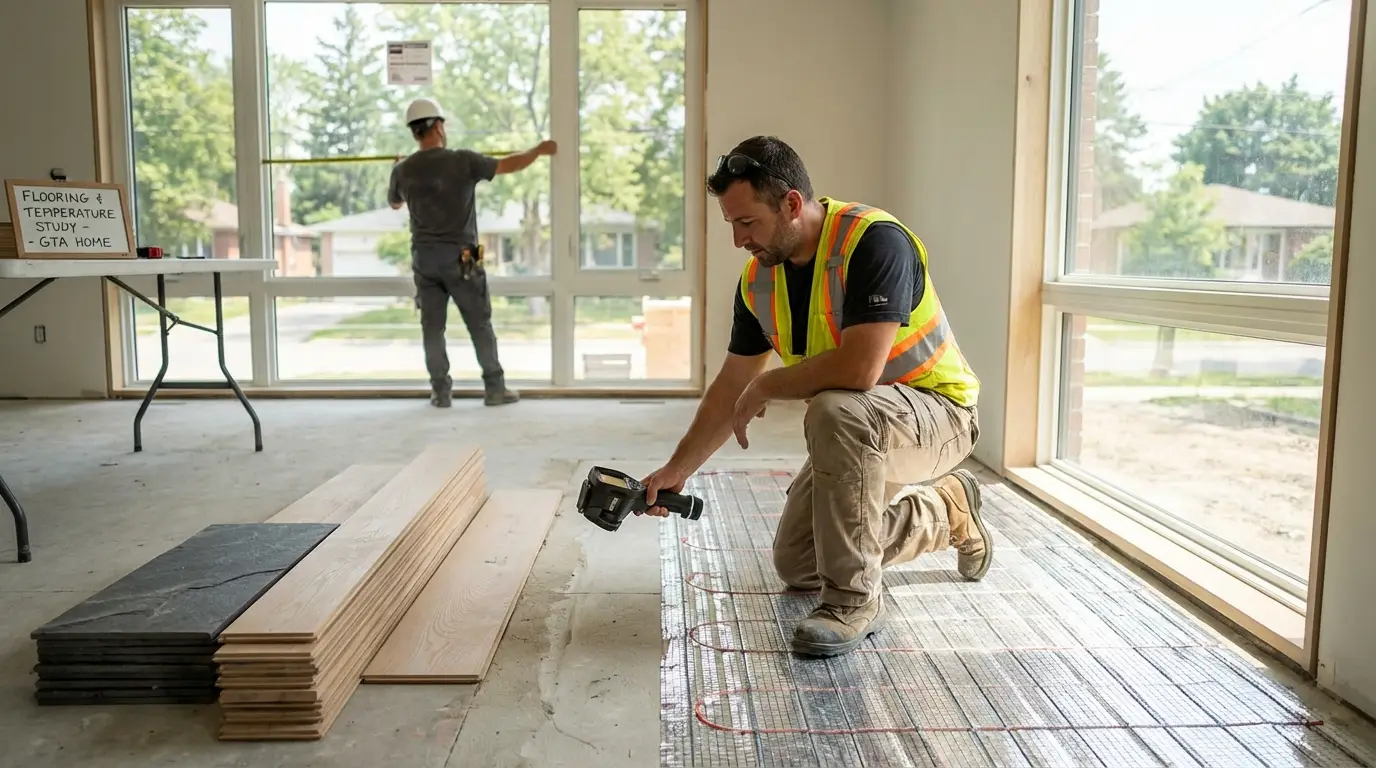
Understanding how flooring influences home temperature is critical for homeowners across the Greater Toronto Area, including Toronto, Vaughan, Mississauga, Brampton, Oakville, and Richmond Hill. The local climate variations, featuring humid summers and cold winters, put significant stress on building materials and internal comfort systems. This often requires strategic choices in flooring that go beyond aesthetics, playing a vital role in thermal insulation and energy efficiency.
Flooring is a foundational component in temperature regulation within residential properties. Selecting the right floor materials can either amplify heat retention during chilly months or boost cooling efficiency when temperatures rise. Homeowners planning renovations or new builds should recognize how these decisions impact not only immediate comfort but also long-term energy savings and structural durability under Ontario’s specific climatic conditions.
How Different Floor Materials Influence Thermal Insulation and Home Temperature Regulation
At the core of understanding flooring’s impact on home temperature is the concept of thermal conductivity: the rate at which heat passes through a material. Materials such as hardwood, laminate, vinyl, tile, and carpet each have distinct thermal properties influencing how heat is absorbed, stored, and released within the home.
For example, hardwood floors, commonly preferred for their elegance and durability, have moderate thermal conductivity. They can absorb some heat and release it slowly, contributing to consistent temperature regulation. However, without proper subfloor insulation, hardwood can feel cold during Ontario’s long winters, potentially requiring supplementary heating solutions.
Vinyl and laminate flooring offer different properties, often featuring synthetic layers that provide added insulation and resist moisture—critical traits to combat the region’s seasonal humidity fluctuations. However, these materials vary widely in their heat retention capabilities based on thickness and composition.
Tile and stone are notable for their high thermal mass, meaning they absorb heat quickly and store it effectively. This makes them excellent for absorbing warmth during the day, especially in rooms with abundant sunlight, and gradually releasing it in the evening. Conversely, tile floors can feel uncomfortably cold during winter without radiant heating systems.
Carpet, while often overlooked in terms of structural value, acts as a natural insulator by trapping air within its fibers. This can greatly enhance warmth in colder months but may hinder cooling during summer. Carpet’s insulation properties underline its role not just for comfort but as a strategic component in overall home temperature management.
Underlying these flooring choices is the subfloor and underlayment system, often ignored but essential to thermal performance. Proper insulation beneath flooring can prevent heat loss into the ground, particularly important in foundations and basements prevalent in Toronto and surrounding cities. Ignoring this aspect reduces the overall efficiency of any chosen floor material and can increase the burden on HVAC systems.
Choosing flooring is thus a balance between aesthetic preference, durability, and how it interacts with the home’s heating and cooling systems under the specific environmental conditions in Ontario.
Critical Contractor-Level Insights on Flooring Impacting Heat Retention and Cooling Efficiency
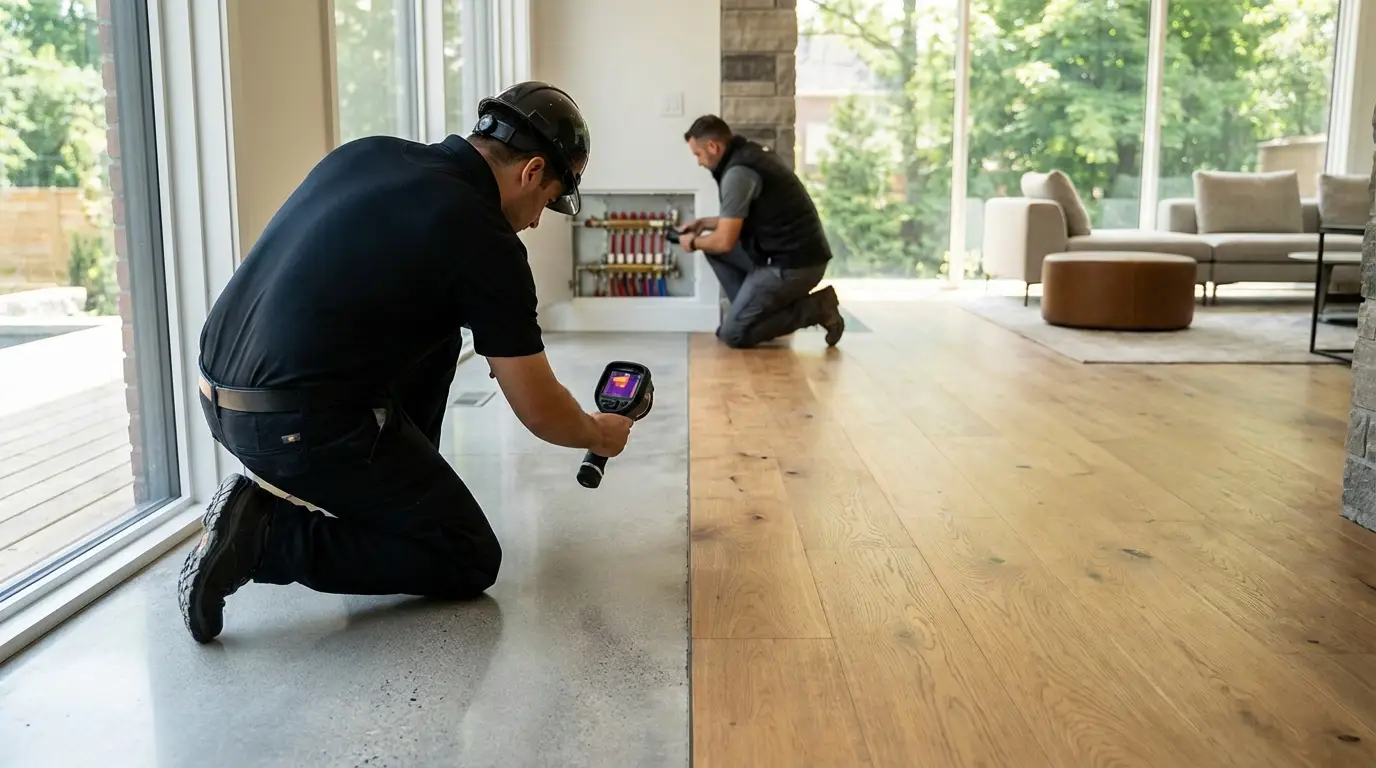
From a contractor’s perspective, the technical “why” behind flooring impacting home temperature lies beneath the visible surface. The installation method, materials chosen, and integration with the building envelope dictate long-term performance and comfort. More specifically, thermal bridging, moisture intrusion, and substrate stability are key factors informing flooring strategies in the Toronto climate.
Thermal bridging occurs when there are gaps or conductive materials that allow heat to bypass insulation layers, resulting in cold spots. In flooring, this can happen if subfloor materials or fasteners interrupt insulation. Selecting the right underlayment and ensuring meticulous installation practices prevent these thermal leaks and maintain even temperature control throughout the living space.
Moisture control is another technical challenge. Ontario’s climate sees significant seasonal variations with humidity that can penetrate subfloors if waterproof membranes and vapor barriers are not properly installed. Moisture reduces thermal insulation capacity and damages flooring materials, leading to warping, mold growth, and long-term structural compromise. Specialists therefore recommend flooring removal and preparation performed by experts to mitigate these risks effectively when upgrading or repairing floors.
Subfloor durability also links directly to thermal performance. For example, plywood subfloors, if not appropriately treated and installed with adequate spacing, may degrade due to Ontario’s humidity cycles, impacting how well flooring materials maintain temperature regulation. Concrete subfloors, often found in basements, require precise moisture sealing and possibly radiant heating integration to maximize thermal comfort.
Lastly, the thermal characteristics of floor finishes must be considered in relation to the entire home layout. Strategic placement of tile or stone floors in sun-exposed areas can leverage their thermal mass for heat storage, reducing heating system demand in winter. Conversely, softer materials can be prioritized in rooms where sustained warmth or cooling is desired without drastic temperature fluctuation.
Contractors in the GTA often integrate these comprehensive factors when advising on flooring solutions, balancing material longevity with temperature regulation to protect investment and enhance home comfort.
Understanding Thermal Insulation Layers in Flooring Systems
Properly designed flooring systems include layers engineered to maximize thermal insulation and minimize heat transfer losses. This typically involves combining a subfloor with an insulating underlayment and a carefully selected surface flooring material. For instance, cork underlayment, sometimes used beneath hardwood, offers excellent thermal and acoustic insulation, which is increasingly popular in urban homes of Toronto and Vaughan.
Subfloor treatments in cold climates such as Mississauga and Richmond Hill might also include radiant heat systems embedded under tiles or engineered wood to deliver warmth efficiently from the ground up. Proper installation is crucial here, requiring professional expertise during flooring preparation as addressed in flooring removal and preparation services.
Seven Contractor Recommendations for Flooring Choices That Enhance Home Temperature Control
- Evaluate the Thermal Conductivity of Flooring Materials: Understand how specific floor types conduct heat before selection. In regions like Oakville, materials with moderate conductivity such as engineered wood balance heat retention and comfort adequately.
- Invest in Quality Subfloor Insulation: Use high-grade insulation materials and ensure professional installation under the flooring surface to minimize heat loss into foundations common in Toronto homes.
- Incorporate Moisture Barriers Strategically: Prevent humidity from undermining insulation and flooring durability, which is critical in areas with humid summers like Brampton.
- Consider Radiant Heating Integration: Complement floor materials with radiant heat systems where applicable, especially in tile or concrete floors, for optimized thermal comfort in the GTA.
- Match Flooring to Room Layout and Sun Exposure: Leverage thermal mass properties of tile or stone in sunlit areas to boost natural heat storage and cycling.
- Prioritize Durable, Low-Maintenance Materials: Choose flooring solutions that sustain thermal properties without degrading under Ontario’s seasonal wear, supporting long-term investment value.
- Engage Expert Contractors for Floor Removal and Laydown: Precision in handling subfloor and underlayment layers ensures airtight installation necessary for consistent temperature regulation.
- Opt for Slip-Resistant Finishes with Thermal Efficiency: Combine safety and temperature control by choosing specialized microcement finishes, especially in high-traffic zones prone to moisture.
- Balance Aesthetics and Practicality: Avoid trends that compromise thermal comfort, opting instead for styles that enhance investment longevity and structural integrity.
- Plan for Seasonal Adjustments in Flooring Care: Regular maintenance ensures thermal performance remains optimal through transitions between warm summers and cold winters.
Contractor Pro-Tip: When inspecting flooring for thermal performance, listen for hollow sounds beneath hardwood or laminate surfaces—this often indicates poor subfloor contact causing thermal bridges. Remedying this with professional reinstallation and added underlayment can drastically improve home comfort.
How CNG Contracting Addresses Flooring-Related Thermal Challenges in GTA Homes
CNG Contracting approaches every flooring project in Toronto and surrounding areas with a holistic perspective. The process begins with a Professional Diagnostic Visit, essential for diagnosing thermal inefficiencies related to existing flooring and subfloor systems. The diagnostic fee is fully credited toward the final repair or installation project, demonstrating commitment to transparency and investment value.
During the on-site assessment, our specialists evaluate thermal insulation layers, moisture barriers, floor material conditions, and integration with heating systems. This detailed inspection is critical in formulating a tailored flooring solution that optimizes home temperature control while addressing durability and long-term maintenance in Ontario’s diverse climates.
Following diagnostics, experts provide recommendations covering removal preparation, choice of insulation materials, and the installation of underlayments or radiant heat where beneficial. The company’s extensive experience ensures all projects honor the structural integrity of homes while enhancing comfort and reducing energy consumption.
Leveraging our flooring solutions means investing in expert craftsmanship and technical precision. Homeowners across Mississauga, Vaughan, and Oakville trust these methods to maintain property value and enjoy year-round comfort regardless of temperature extremes.
Comparison of Flooring Scenarios, Risk Levels, and Proactive Benefits for Thermal Performance
| Situation / Strategy | Risk Level | Proactive Benefit |
|---|---|---|
| Hardwood installed directly on uninsulated concrete | High | Cold floors, increased heating demand, potential for subfloor moisture issues |
| Tile flooring with radiant heating embedded | Low | Enhanced warmth retention, energy-efficient heating, comfort in cold climates |
| Laminate flooring with quality underlayment on insulated subfloor | Low | Improved thermal comfort, moisture resistance, reduced thermal bridging |
| Carpet over thick cork underlayment | Moderate | Natural insulation, sound dampening, improved warmth during winters |
| Vinyl flooring without vapor barrier in humid rooms | High | Moisture problems, reduced insulation effectiveness, floor damage risks |
Exploring how strategic flooring choices influence thermal comfort and energy efficiency in residential settings offers homeowners insight beyond aesthetics.
Understanding layered flooring systems and thermal barriers helps professionals optimize installation for better temperature regulation.
Professional Call to Action for Enhanced Home Comfort Through Flooring Expertise
For property owners in Toronto, Vaughan, Mississauga, and beyond, ensuring flooring supports temperature regulation is a significant step towards a resilient home investment. Contact CNG Contracting at (647) 669-7346 to schedule a Professional Diagnostic Visit. This assessment clarifies specific needs related to your flooring and thermal insulation. Remember, the initial diagnostic fee will be credited toward any subsequent project, allowing for a seamless transition from evaluation to precise implementation.
Alternatively, visit the Contact Us page to arrange your comprehensive inspection and start optimizing your home’s efficiency and comfort today.
Technical Glossary of Key Flooring and Thermal Terms
- Thermal Conductivity: The rate at which a material passes heat through it, influencing how flooring affects room temperature.
- Thermal Bridging: Heat loss through gaps or conductive materials interrupting insulation layers, common under flooring fasteners or joints.
- Subfloor: The layer beneath the visible flooring, providing structural support and influencing thermal performance.
- Radiant Heating: Heating systems embedded under floors that provide warmth by radiating heat upwards, improving energy efficiency.
- Vapor Barrier: A material used beneath flooring to prevent moisture from penetrating insulation and structural components.
How does flooring choice affect energy savings in GTA homes?
Selecting flooring with appropriate thermal properties reduces dependence on heating and cooling systems by better retaining or dissipating heat. This directly impacts energy consumption and costs.
What flooring materials are best for heat retention during Canadian winters?
Tile with radiant heating, hardwood with insulated underlayment, and carpet over cork underlayment efficiently retain warmth, making them suitable choices for cold climates like Toronto and surrounding cities.
Why is subfloor insulation important in temperature regulation?
The subfloor prevents heat loss to the ground and reduces cold spots. Proper insulation here is crucial to maintain consistent indoor temperatures throughout the year.
Can moisture undermine the thermal performance of flooring?
Yes, moisture reduces insulation efficiency and damages flooring materials. Installing vapor barriers and managing humidity are key to preserving thermal properties and structural integrity.
What professional services can help optimize flooring for temperature control?
Expert assessment and installation services focusing on subfloor preparation, proper insulation, vapor barriers, and integrating radiant heating systems ensure flooring supports efficient temperature management.