
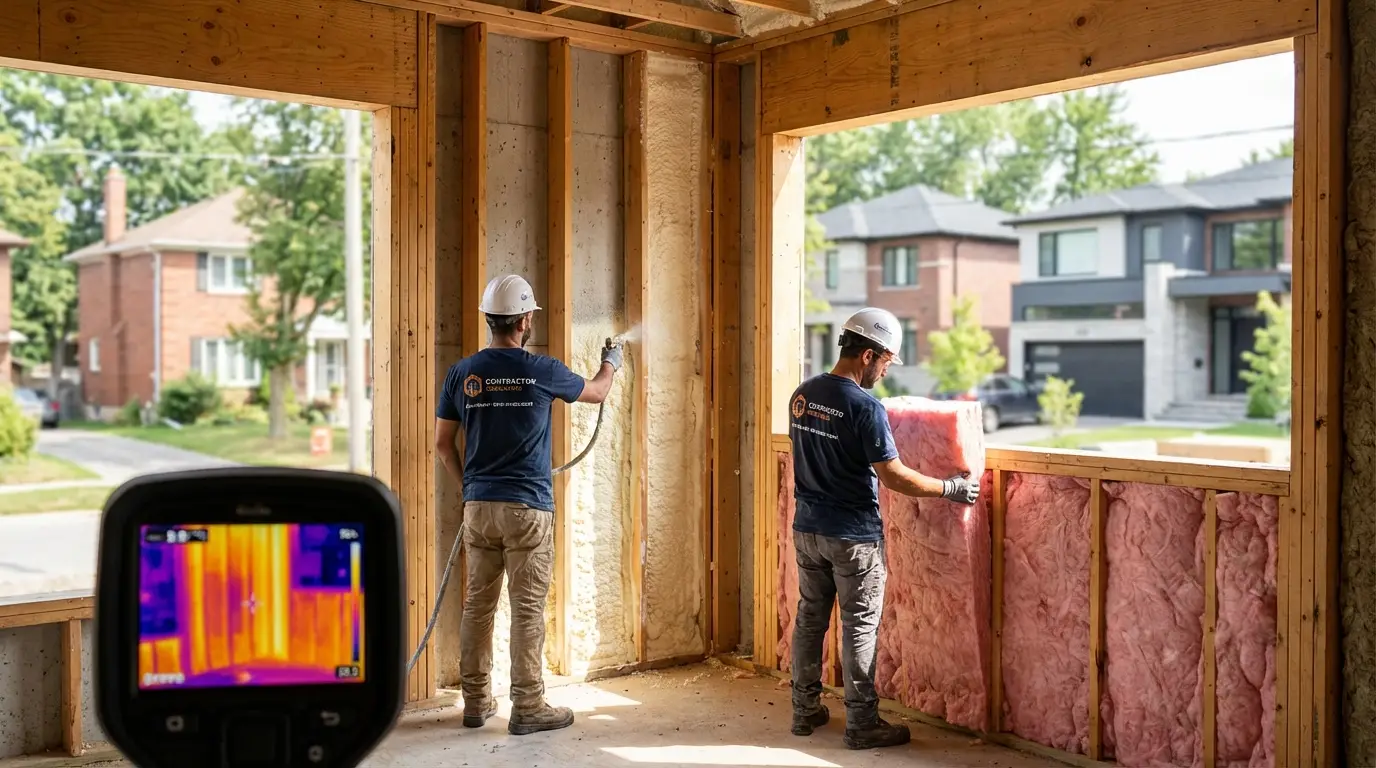
Discovering that modern insulation solutions can reduce utility bills by up to 40% underscores a crucial opportunity for homeowners throughout the Greater Toronto Area. With the region’s distinctive climate, featuring cold, biting winters and hot, humid summers, inefficient insulation can dramatically increase heating and cooling expenses. Homeowners in Toronto, Vaughan, Mississauga, Brampton, Oakville, and Richmond Hill face fluctuating seasonal temperatures that challenge home energy efficiency, making it essential to address thermal insulation deficiencies. This article delves into the multifaceted benefits of upgrading insulation, offering insights applicable to local properties aiming to optimize energy conservation and significantly lower utility costs.
Energy savings through modern insulation not only contribute to immediate cost reduction but form part of a comprehensive approach to sustainable living and property value enhancement. The climate in Southern Ontario demands well-planned thermal barriers to maintain indoor comfort and reduce HVAC system strain. With energy consumption for heating and cooling typically accounting for the biggest slice of household utility bills, adopting advanced insulation strategies directly translates into measurable savings and improved home resilience. Understanding the technical background of insulation performance and selecting the right materials are foundational steps toward achieving these goals within the unique context of GTA homes.
How Modern Insulation Technologies Enhance Energy Efficiency in GTA Homes
Modern insulation in residential properties is more than just a layer of material; it is a sophisticated system designed to create a consistent thermal envelope. The core function lies in resisting heat transfer between a home’s interior and exterior, which directly impacts HVAC workload. In cities like Toronto and Oakville, maintaining this thermal balance throughout the year prevents excessive energy consumption during both cooling in summer and heating in winter.
Behind walls, ceilings, floors, and crawl spaces, insulation materials work as thermal resistors, characterized by their R-value, which measures the material’s ability to resist heat flow. Higher R-values represent better insulation performance. Contemporary materials such as spray foam insulation offer notable advantages over traditional fiberglass batts by providing superior air sealing coupled with heat resistance. These materials adapt well to various structural components, including irregular wall cavities, rim joists, and attic floors that are critical areas where energy loss occurs.
Additionally, advanced insulation types incorporate moisture and vapor barriers that protect home structures from mold and decay prevalent in Ontario’s moist climate during spring and fall. The result is a healthier and more durable living environment with enhanced structural integrity. Proper installation techniques play a vital role, as even the highest-rated insulation can underperform if gaps or compression occur during installation.
Thermal insulation also indirectly supports other energy-efficient home upgrades, such as improved window sealing and HVAC system modernization, by stabilizing the internal environment. This stabilization reduces operational strain and extends mechanical longevity, creating a sustainable master plan for home maintenance in communities like Vaughan and Richmond Hill. Ultimately, modern insulation solutions are a critical component of home energy conservation that multiply benefits across utility bills and overall home value.

Strategic Steps to Maximize Insulation Benefits and Reduce Energy Costs
- Conduct a Comprehensive Energy Assessment: Begin with a professional diagnostic visit to identify weak points in your current insulation, utilizing infrared thermal imaging to detect heat leaks in critical areas like attics and basements.
- Prioritize Air Sealing Before Insulation: Effective energy savings commence with sealing cracks and gaps around windows, doors, and structural joints to prevent air infiltration.
- Choose Materials with Appropriate R-Values: Select high-performance insulation materials defined by climate-specific R-value recommendations relevant to the GTA’s seasonal variations.
- Insulate Key Areas Thoroughly: Focus on attics, exterior walls, basements, and crawl spaces as primary zones where heat transfer impairs energy efficiency.
- Consider Moisture and Vapor Control: Incorporate vapor barriers where necessary to guard against Ontario’s humidity, preventing mold growth and preserving material durability.
- Schedule Upgrades During Seasonal Services: Tackling insulation and air sealing during off-peak seasons can optimize project timing and reduce disruption.
- Integrate Insulation with HVAC Modernization: Coordinated upgrades amplify energy savings by reducing system workload and extending equipment lifespan.
- Maintain Insulation Integrity: Annual maintenance plans help identify evolving conditions and preserve energy efficiency over time.
- Educate Yourself on Material Longevity and Environmental Impact: Opt for environmentally responsible materials that align with long-term home sustainability goals.
- Leverage Professional Expertise for Installation: Proper installation is key to achieving expected savings, avoiding suboptimal performance due to installation errors often seen with DIY efforts.
Contractor Pro-Tip: When inspecting insulation, use a thermal imaging camera on windy days to identify air infiltration spots that aren’t visible to the naked eye. Pay special attention to transitions between different materials like where the foundation meets the framing; these areas often require targeted sealing and insulation enhancements to achieve optimal results.
The CNG Professional Solution to Energy Conservation Through Insulation
CNG Contracting specializes in delivering comprehensive home insulation upgrades tailored to the unique architectural and climate demands of the Toronto area. Our approach begins with an expert-led Diagnostic Visit that thoroughly evaluates your home’s existing insulation and energy loss factors. This visit not only identifies targeted interventions but also integrates the fee as a credit toward your project’s final cost, ensuring transparent value for your investment.
Our professionals install modern insulation products that combine high R-values, moisture resistance, and air-sealing capabilities. By focusing on strategic locations such as attics, basements, foundation walls, and critical framing junctures, we optimize your home’s energy envelope. Our craftsmanship ensures installations meet or exceed Ontario building codes and ENERGY STAR guidelines, enhancing your property’s comfort, durability, and market appeal throughout communities including Mississauga and Brampton.
Beyond installation, CNG emphasizes continuous care through tailored annual maintenance and timely seasonal services, keeping insulation performance at peak and your energy bills consistently lower. Homeowners benefit not just from immediate cost reduction but from long-term improvements in property value and environmental footprint. Partnering with CNG means embracing a sustainable master plan—one that aligns modern insulation with your home’s greater energy efficiency aspirations.
Comparing Insulation Scenarios for Homeowners in Toronto and Surrounding Areas
| Situation / Strategy | Risk Level | Proactive Benefit |
|---|---|---|
| Existing Insulation with Air Leaks | High | Increased energy bills, uneven indoor temperatures, potential moisture damage |
| Adding Fiberglass Batts in Walls Only | Medium | Moderate energy savings and some comfort improvement, but vulnerable to air infiltration |
| Comprehensive Spray Foam Insulation Including Attic & Basement | Low | Maximum energy conservation, reduced HVAC workload, enhanced air sealing, improved structural integrity |
| Insulation Without Vapor Barriers in Humid Areas | High | Risk of mold growth, material degradation, and indoor air quality issues |
| Professional Installation with Annual Maintenance Plan | Very Low | Consistent performance, prolonged insulation lifespan, steady reduction in utility bills |
Take the Next Step Toward Lower Utility Costs with CNG Contracting
Homeowners in Toronto, Vaughan, Mississauga, Brampton, Oakville, and Richmond Hill looking to substantially reduce their energy expenses should consider a proactive approach to insulation. Contact CNG Contracting at (647) 669-7346 or visit our Contact Us page to arrange a Professional Diagnostic Visit. Remember, the visit fee is fully credited toward your insulation upgrade project, providing clear, upfront value.
Investing in modern insulation is not just an expense; it’s a strategic move towards sustainable energy efficiency, long-term comfort, and enhanced property value in the GTA’s fluctuating climate. Trust CNG Contracting’s expertise to guide you through this essential upgrade with precision and professionalism.
Understanding Essential Technical Terms Related to Modern Home Insulation
- R-Value: A measurement of an insulation material’s capacity to resist heat flow; the higher the R-value, the better the insulation.
- Air Sealing: The process of closing gaps and cracks in the building envelope to prevent air leakage and increase energy efficiency.
- Vapor Barrier: A material applied to prevent moisture from passing through walls, roofs, or floors to avoid mold and structural damage.
- Thermal Envelope: The physical barrier that separates the interior conditioned space from the exterior environment, maintained by insulation and sealing.
- Energy Star Certification: A program identifying energy-efficient products and building practices that meet rigorous standards for reducing energy consumption.
How does modern insulation reduce utility bills by such a significant margin?
Modern insulation improves the home’s ability to retain heat in winter and block heat in summer, drastically lowering the need for heating and cooling, which are major contributors to utility bills.
Which areas of a home are most critical to insulate for energy savings?
Attics, exterior walls, basements, crawl spaces, and around ductwork are essential areas to insulate because these are common points of significant heat loss or gain.
Why should homeowners choose professional insulation installation services?
Professional installation ensures materials are applied correctly, preventing gaps, compression, and moisture problems, which could negate energy savings.
Can upgrading insulation add value to a home in the GTA?
Yes, proper insulation enhances indoor comfort, energy efficiency, and durability, making the home more attractive to buyers and potentially increasing resale value.
How does insulation impact indoor air quality?
By sealing drafts and preventing moisture intrusion, insulation helps maintain a stable indoor environment that reduces mold risks and airborne contaminants, thereby improving air quality.