
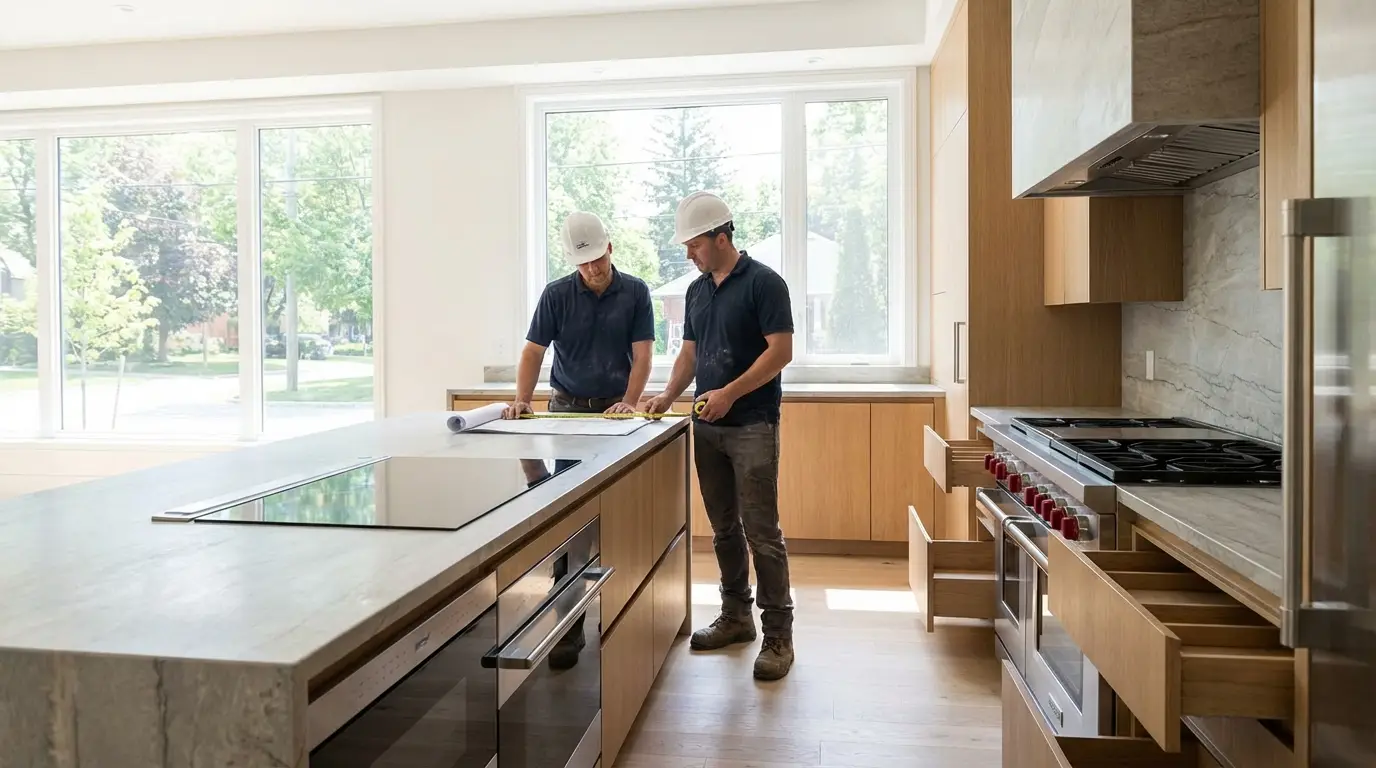
Kitchen safety remains a pivotal concern for Toronto-area homeowners, reflecting a broader awareness that spans Vaughan, Mississauga, Brampton, Oakville, and Richmond Hill. The kitchen is more than a cooking area; it’s a central hub where family, friends, and everyday routines converge. However, hidden hazards and design faults frequently mar this vital space, putting residents at risk. Traditional and modern layouts alike sometimes fall short on safety, ergonomics, and workflow efficiency, leading to dangerous kitchen environments.
The climatic conditions intrinsic to the Greater Toronto Area, with cold winters and humid summers, accentuate the importance of durable, well-planned kitchen designs that resist wear and maintain structural integrity. Poor layout choices not only reduce the value and longevity of a home but also introduce practical risks that homeowners must address. Understanding and identifying common kitchen design pitfalls empower property owners to make informed decisions and plan effective renovations that prioritize safety and functionality.
Key Points to Watch For in Kitchen Layout Safety:
- Workflow disruption: Poor space planning hampers movement, increasing the risk of accidents.
- Unsafe appliance placement: Incorrect positioning of stoves, refrigerators, and sinks can create hazardous conditions.
- Insufficient lighting and ventilation: Compromised visibility and air quality contribute to kitchen safety risks.
- Clutter and workspace inefficiency: Overcrowded counters and inaccessible cupboards reduce safe, productive cooking.
- Ignoring ergonomic principles: Layouts that neglect kitchen ergonomics lead to repetitive strain and discomfort.
Technical Foundations Behind Dangerous Kitchen Layouts and Design Faults
Behind the visible surfaces of any kitchen lies a complex network of spatial relationships and engineering choices that dictate the space’s safety and efficiency. The term kitchen ergonomics refers to designing kitchen elements—counters, appliances, and storage—in a way that aligns with human movement and minimizes stress on the body. When this principle is compromised, the risk of injury and kitchen hazards escalates.
One critical element is the kitchen triangle—an established design principle that optimizes the distance between the stove, sink, and refrigerator to streamline workflow. Deviations from this approach disrupt the natural flow, forcing unnecessary steps and creating congestion points. For example, placing the refrigerator far from the cooking zone or the sink too close to the stove without adequate counter space can lead to awkward, unsafe maneuvers during food preparation.
Equally important is appliance placement. Appliances demand specific clearances for safety and usability. Restricted access can result in blocked exhausts, inefficient ventilation, or dangerous heat accumulation. In Toronto’s variable climate, materials around cooking areas must withstand humidity and temperature fluctuations to prevent warping and degradation that accentuate safety risks.
Consider cabinetry and countertops as structural components with functional impact. Cabinets that are excessively deep or placed in corner spaces without pull-out mechanisms cause users to overreach, increasing fall or strain risk. Countertops cluttered with small appliances or decorative items reduce usable work surfaces essential for safe food handling.
Seven Critical Kitchen Design Faults to Correct Immediately
- Ignore the kitchen triangle: Failing to position the sink, stove, and refrigerator within a 4 to 9 feet range disrupts workflow and safety.
- Forcing an oversized island: Insufficient clearances (minimum 36 inches) around kitchen islands create bottlenecks and increase accident risk.
- Overcrowded countertops: Limit decorative and small appliances on counters to maintain efficiency and reduce hazards near hot surfaces.
- Choosing ultra-deep cabinetry: Depths beyond standard sizes hinder accessibility, requiring specialized pull-out shelves to avoid overreaching injuries.
- Poor lighting strategy: Improper layering of ambient, task, and accent lighting leads to shadows and obscure work zones, elevating risk.
- Neglecting ventilation needs: Inadequate range hoods or blocked vents can cause fumes and moisture buildup, affecting air quality and fire safety.
- Ignoring ergonomic clearance: Excluding sufficient legroom at breakfast bars and workspaces leads to discomfort and reduced usability.
Contractor Pro-Tip: When inspecting a kitchen layout for potential hazards, place yourself in the user’s position during peak activity times—meal preparation or cleanup. Pay attention to sightlines between the stove, sink, and fridge, and verify that all clearances accommodate simultaneous multiple-users safely. Look beyond aesthetics to practical movement and spaces prone to congestion.
The CNG Professional Approach to Safe Kitchen Design in Toronto and Surrounding Areas
CNG Contracting develops kitchen layouts that balance safety, ergonomic flow, and long-term durability, tailored to the unique demands of GTA homes. Our process begins with a comprehensive Professional Diagnostic Visit—covering site measurements, appliance clearance verification, and workflow analysis. This visit identifies design faults early and informs a precision plan that enhances kitchen safety without compromising aesthetics.
This diagnostic consultation fee is fully credited towards your remodeling project, allowing homeowner investments to be wholly directed toward lasting improvements rather than preliminary assessments. Our expertise integrates high-performance material selection ideal for Ontario’s climate, ensuring kitchens maintain their structural integrity and remain safe throughout seasonal shifts.
By partnering with CNG, residents of Toronto, Vaughan, Mississauga, Brampton, Oakville, and Richmond Hill enjoy kitchens designed with “smart layout” principles that optimize space use, proper appliance placement, and task-centric lighting. Our solutions reduce kitchen hazards by accommodating real-life cooking habits and household dynamics, promoting health and safety as foundational project objectives.
Comparative Table of Common Kitchen Layout Scenarios and Their Implications
| Situation / Strategy | Risk Level | Proactive Benefit |
|---|---|---|
| Forcing an Island in a Small Kitchen | High | Improved traffic flow by opting for a smaller mobile island or peninsula |
| Ignoring Work Triangle Principles | Very High | Enhanced efficiency and safety by adjusting appliance layout |
| Cluttered Counters near Cooking Zones | Moderate | Clear prep zones by installing additional storage solutions |
| Poor Lighting and Shadow Zones | Moderate to High | Layered lighting design enhances visibility and ambiance |
| Deep Cabinets with No Accessibility Solutions | Moderate | Improved organization with pull-out shelves and lazy Susans |
Empowering Homeowners with Actionable Steps to Enhance Kitchen Safety
- Plan your kitchen layout around the work triangle to foster a safe, ergonomic workflow.
- Allocate at least 36 inches clearance around islands and major appliances for unobstructed movement.
- Clear clutter regularly from countertops, especially near heat sources and sinks.
- Incorporate layered lighting including task-focused under-cabinet lights and ambient ceiling fixtures.
- Opt for cabinetry with personalized storage solutions such as pull-out trays and vertical dividers to reduce overreach.
- Ensure appliance placement aligns with daily routines, minimizing unnecessary travel between zones.
- Integrate ventilation systems designed for local conditions to maintain indoor air quality and reduce fire risks.
- Choose durable, moisture-resistant materials that hold up against Ontario’s variable climate to guarantee longevity.
- Consult professionals early for diagnostic visits to identify hidden risk factors before remodeling begins.
- Engage in regular maintenance and updates via comprehensive home technical updates to preserve kitchen safety over time.
Professional Invitation to Secure a Safe Kitchen with CNG Contracting
For homeowners in Toronto and the GTA seeking to eradicate kitchen hazards and elevate design, CNG Contracting offers tailored, professional remodeling services. Our Diagnostic Visit provides a detailed onsite assessment that identifies potential safety concerns and design inefficiencies, enabling a remodeling plan built on smart, durable solutions. This visit is credited towards any future project cost, emphasizing investment in quality and long-term value.
Contact us today by phone at (647) 669-7346 or through our Contact Us page to schedule your Professional Diagnostic Visit. Take the first step toward a safer, more functional kitchen designed for real living in the Greater Toronto Area.
Glossary of Technical Terms Used in Kitchen Safety and Design
- Kitchen Triangle: A design principle that defines the most efficient layout by positioning the sink, stove, and refrigerator to form a triangle within the space, optimizing workflow.
- Ergonomics: The study of designing environments and products that fit the user’s needs, minimizing strain and injury risks in spaces like kitchens.
- Clearance: The required minimum free space around appliances or furniture to allow safe movement and operation.
- Pull-Out Shelves: Sliding shelving units inside cabinets that enhance accessibility by bringing stored items within easy reach.
- Layered Lighting: A combination of ambient, task, and accent lighting that creates a balanced illumination suitable for both function and aesthetics in kitchens.
What is the most critical aspect of kitchen safety?
Proper workflow and appliance placement that adhere to the kitchen triangle principle are crucial to reducing hazards and maintaining efficient movement.
How much clearance is recommended around a kitchen island?
A minimum clearance of 36 inches around all sides of a kitchen island is recommended to ensure safe and comfortable navigation.
Why are ultra-deep cabinets considered a design fault?
Ultra-deep cabinets impair accessibility, forcing users to reach awkwardly or lose track of stored items, which lowers safety and functionality.
How can lighting impact kitchen hazards?
Inadequate lighting creates shadowed work areas that increase the risk of cuts or burns, while layered lighting helps illuminate all zones properly.
What advantages does a Professional Diagnostic Visit offer?
It provides an expert, on-site assessment to detect hidden design faults, ensuring that remodeling plans address safety and efficiency effectively.