
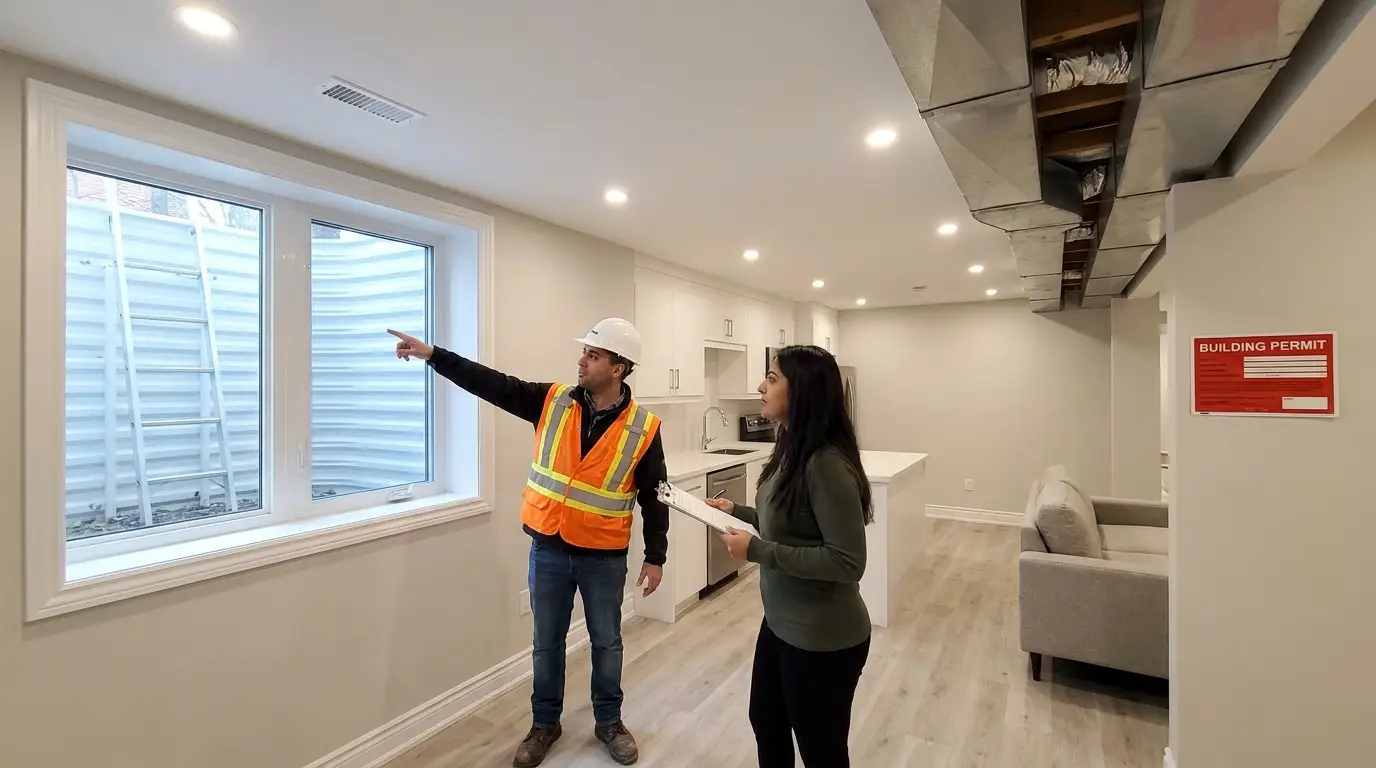
Turning a basement into a legal suite is more than just an upgrade; it’s a strategic decision that safeguards your family, enhances your property’s marketability, and ensures your investment aligns with municipal regulations. In regions like Toronto, Vaughan, Mississauga, Brampton, Oakville, and Richmond Hill, basement conversions are increasingly popular due to housing demands and the desire to maximize livable space. However, beneath the surface lies a web of compliance requirements crucial for the safety and legality of your basement living space.
Understanding the framework of building codes, safety standards, and inspection processes is essential for any homeowner looking to transform their basement into a legal suite. The climate in the Greater Toronto Area (GTA) brings specific challenges like humidity, cold winters, and moisture infiltration, making compliance a critical factor not only for passing inspections but also for maintaining long-term durability and occupant safety. Ignoring these details can lead to significant risks including fire hazards, structural issues, and even insurance complications.
Technical Foundations of a Legal Basement Suite in the GTA
At the core of legally compliant basement suites are stringent building codes and safety regulations that govern every stage of construction, from design to finish. The technical requirements are formulated to protect occupants and the structural integrity of the home. For GTA homeowners, these codes address unique climate factors such as moisture control, insulation efficacy, and the necessity of emergency egress.
One essential element is the emergency escape and rescue openings—commonly known as egress windows or doors. These must meet precise dimensions, typically a minimum clear opening of 5.7 square feet, with specific width and height measurements, and be located no more than 44 inches from the finished floor. The purpose is to ensure a swift and unobstructed exit during emergencies like fires. Many basements require the installation of window wells with secure ladders to comply fully.
Another key technical consideration is ceiling height. A legal basement bedroom must usually maintain a clear height of at least 7 feet. This regulates comfort, air circulation, and structural safety. While low ceilings might seem like a barrier, contractors often explore solutions like recessed lighting, slimmer HVAC ducting, or even floor lowering where feasible, to meet this standard without compromising the home’s framework.
Ventilation plays a pivotal role in controlling air quality and moisture. Basements in the GTA are prone to dampness, requiring strategies such as installing vapor barriers, using mold-resistant drywall, and incorporating mechanical ventilation systems like HRVs or ERVs for continuous fresh air exchange. Without adequate airflow, mold growth becomes a severe health hazard and negatively impacts the structural materials beneath the surface.
Permanent heating sources are mandated for legal basement suites to ensure enduring comfort and energy efficiency. Unlike portable heaters, integrated HVAC systems—whether duct-extended from the main house, baseboard heaters, or ductless mini-splits—guarantee consistent temperatures during the harsh Canadian winters. These systems must also be installed according to code to ensure safety and reliability.
Electrical installations require particular attention, from wiring to outlets and detectors. A properly wired basement includes at least one electrical outlet on every wall, switched lighting at entry, and hardwired smoke and carbon monoxide detectors. Compliance with electrical codes is paramount, as improper wiring could increase fire risks substantially.
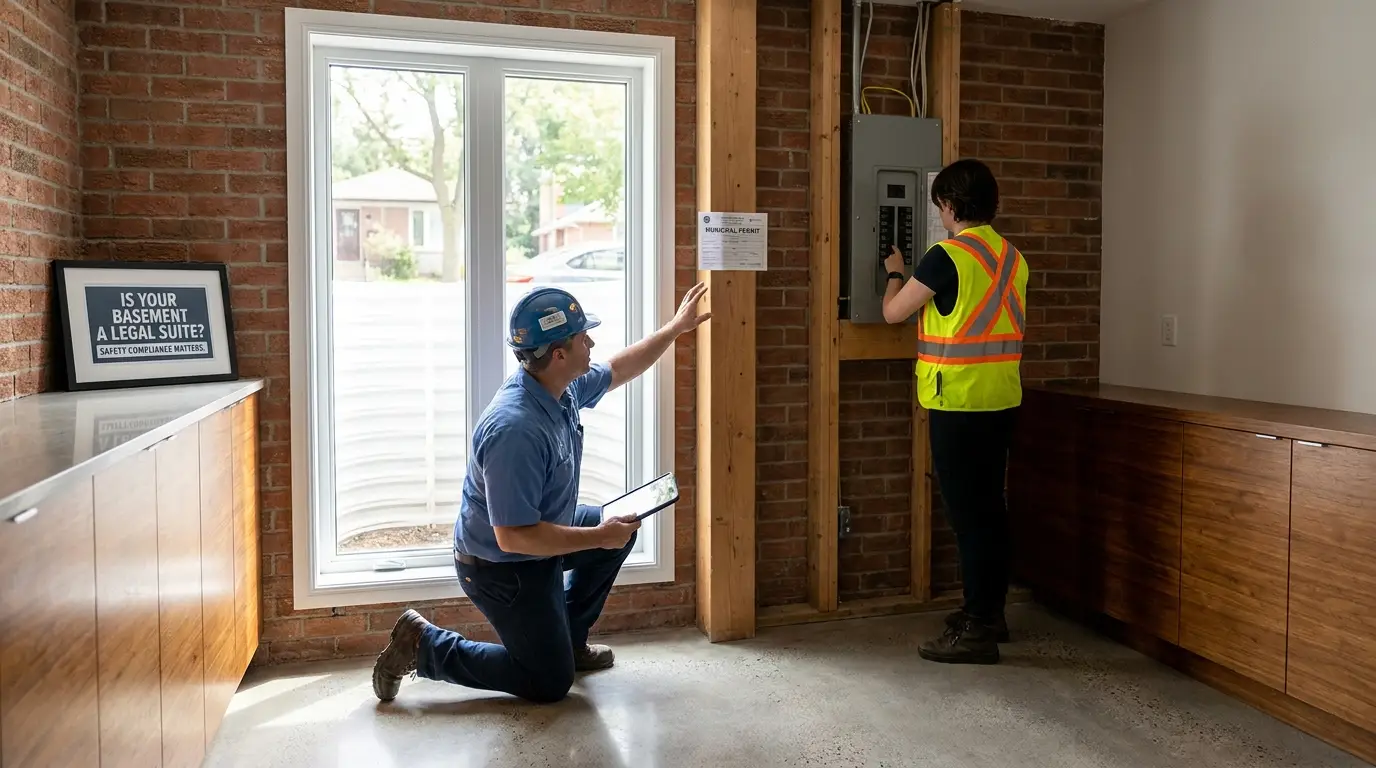
Essential Steps to Achieve Compliance When Converting Your Basement
- Confirm Zoning and Permit Requirements: Contact your local municipal building department in Toronto or surrounding areas such as Vaughan or Oakville to determine if a basement suite is permitted. Understanding zoning bylaws and obtaining necessary permits upfront prevents costly legal issues later.
- Install Code-Compliant Emergency Egress: Prioritize the installation of egress windows or walkout doors that meet dimensional and accessibility standards. Ensure window wells have ladders and proper drainage.
- Assess and Adjust Ceiling Heights: Verify that ceiling heights comply with minimum standards. Where challenges arise, investigate professional options like floor adjustment or duct modifications.
- Address Moisture and Insulation Early: Complete moisture inspections and remediation before framing. Use foam insulation and mold-resistant materials to prevent future problems.
- Hardwire Smoke and Carbon Monoxide Detectors: Install interconnected, hardwired units in compliance with safety regulations for early fire detection and occupant alerting.
- Provide Permanent Heat Sources: Incorporate heating solutions integrated with the main HVAC system or install efficient alternatives such as ductless mini-splits, ensuring year-round comfort.
- Electrical Upgrades for Safety and Functionality: Upgrade wiring as necessary to support outlets on every wall and lighting controlled from the suite’s entry points.
- Framing and Drywall Installation Following Fire Codes: Use fire-rated drywall and maintain proper framing spacing with soundproofing to maximize safety and privacy.
- Choose Suitable Flooring and Finishes: Select materials that withstand humidity typical to the GTA, such as vinyl plank, engineered hardwood, or sealed concrete.
- Schedule Inspections at Each Major Phase: Submit for code inspections after rough-ins and before final finishing to verify compliance and avoid rework.
Contractor Pro-Tip: During pre-inspections, closely examine the access routes to egress windows and doors. It’s common to overlook the dimensions and obstructions around window wells—ensuring a clear, ladder-equipped escape path can be the single difference between a pass and fail in fire safety compliance.
The CNG Professional Solution for Basement Suite Compliance in Toronto and Surrounding Areas
At CNG Contracting, our approach integrates expert knowledge of local regulations in the GTA alongside decades of experience transforming basements into fully legal, safe, and comfortable suites. Our Professional Diagnostic Visit begins with a thorough assessment of your home’s structural integrity, existing utilities, and compliance gaps.
This Diagnostic Visit identifies all required upgrades and potential hidden issues, such as moisture ingress or inadequate ventilation, with the onsite evaluation fee fully credited toward the final project’s scope and cost. We equip homeowners with clear action plans aligned with municipal requirements, eliminating surprises during inspections.
Our team collaborates closely with city inspectors in Toronto, Mississauga, Vaughan, Brampton, Oakville, and Richmond Hill to facilitate smooth permit approvals and ensure that all work meets or exceeds building codes, fire safety standards, and zoning laws. From installing code-approved egress systems to integrating energy-efficient HVAC and electrical upgrades, we emphasize longevity, structural integrity, and occupant safety.
By choosing CNG Contracting, homeowners invest not just in compliant renovations but in peace of mind and long-term property value enhancement.
Comparing Common Basement Suite Scenarios: Risks and Benefits
| Situation/Strategy | Risk Level | Proactive Benefit |
|---|---|---|
| Unpermitted basement suite without egress window | High | Potential fines, increased fire hazard, insurance voidance |
| Basement suite with proper egress but poor moisture control | Moderate-High | Passes initial inspection, but risk of mold and structural damage over time |
| Legal suite meeting all building codes and fire safety standards | Low | Ensures occupant safety, insurability, long-term durability |
| Suite with correct ceiling height but temporary heating solutions | Moderate | Comfort compromised, potential code violation at inspection |
| Fully code-compliant suite with integrated mechanical systems | Very Low | Optimized energy efficiency, comfort, property marketability |
Contact CNG Contracting for Basement Suite Compliance Guidance and Services
Compliance with building codes and fire safety regulations is essential for transforming your basement into a legal suite that safeguards your family and investment. Residents of Toronto, Vaughan, Mississauga, Brampton, Oakville, and Richmond Hill are encouraged to reach out for a Professional Diagnostic Visit. By calling us at (647) 669-7346 or visiting our Contact Us page, you can secure expert guidance tailored to your home.
This visit provides a comprehensive on-site evaluation with the fee credited fully toward the project scope, setting the foundation for a compliant, safe, and lasting basement suite conversion.
Technical Glossary of Key Terms for Basement Legal Suite Compliance
- Egress Window: A window large enough to provide emergency exit from a basement bedroom, meeting specific size and accessibility requirements.
- Fire-Rated Drywall: Specialized drywall designed to resist fire, used to improve fire safety barriers between basement suites and the rest of the home.
- HRV/ERV System: Heat or energy recovery ventilators that provide mechanical ventilation, improving air quality and regulating moisture in tight basement environments.
- Carbon Monoxide Detector: A device that detects CO gas to alert occupants of potentially lethal leaks, mandatory in legal basement suites with fuel-burning appliances.
- Zoning Bylaws: Municipal regulations dictating land use, specifying where basement suites are allowed, their size, and related legal restrictions.
What defines a legal basement suite in Ontario?
A legal basement suite must comply with municipal building codes, including proper egress, minimum ceiling height, ventilation, heating, and fire safety elements, ensuring occupant protection and legal standing.
Why is an egress window crucial for basement bedrooms?
Egress windows provide a secondary emergency exit route, which is vital for occupant safety during fires or other emergencies, and are mandated by building codes.
Can I use temporary heating devices in a legal basement suite?
No. Permanent heating sources are required by code to ensure reliable, safe, and consistent heating throughout the suite.
What are common pitfalls when converting a basement into a legal suite?
Common mistakes include skipping permits, neglecting moisture control, improper egress installation, and using non-code-compliant materials, causing delays and safety risks.
How does converting a basement to a legal suite impact property value?
When done compliant with building codes, basement legal suites increase living space, appeal to buyers, and boost overall property valuation.