

How to prevent ice dams on your roof
Ice dams start with heat leaking into the attic. How to stop them before winter, what to do if one forms, and when to call for help.
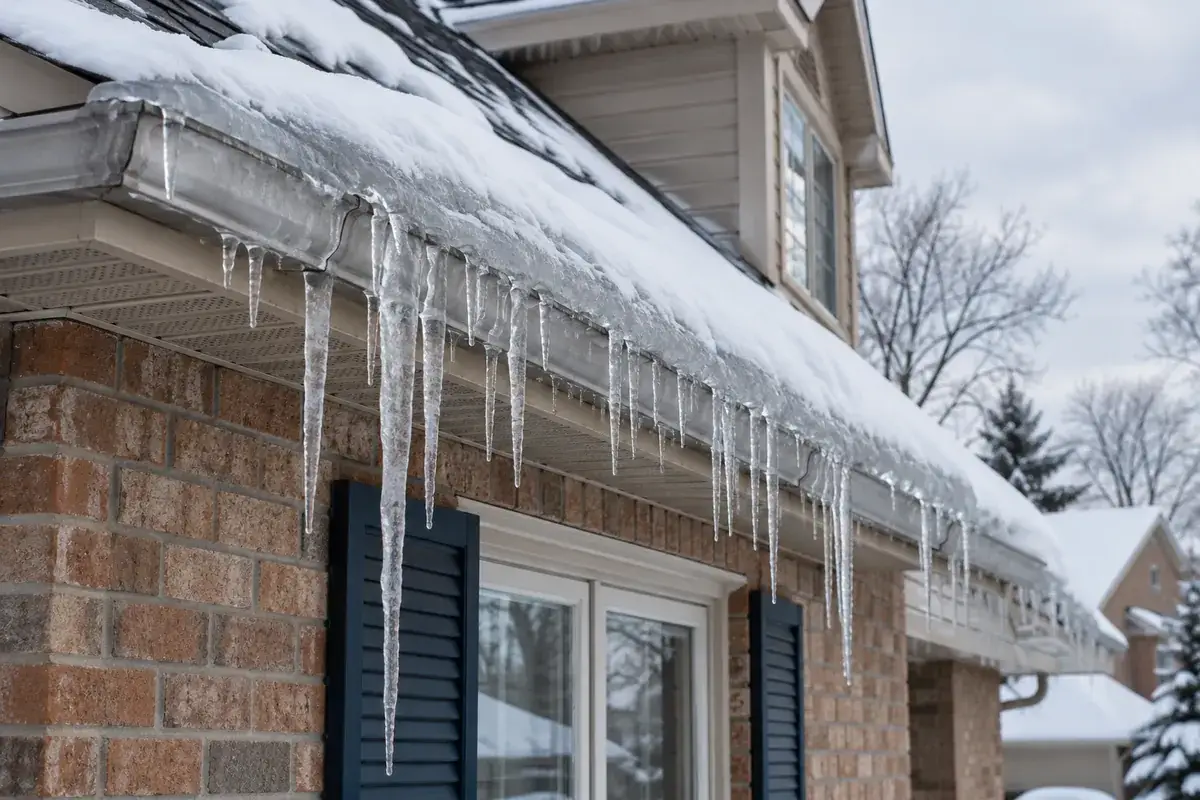
An ice dam is a ridge of ice that builds up along the edge of the roof and stops melting snow from draining off. The water backs up under the shingles and can leak into ceilings and walls. Most ice dams start in the attic, so that is where prevention starts too.
What causes an ice dam?
Warm air from the house leaks into the attic and heats the underside of the roof. The snow on the upper part of the roof melts, the water runs down, and it freezes again when it reaches the eaves, which sit over the cold soffit. Every thaw adds another layer, and after a few weeks the ridge is thick enough to hold back a pool of water.
Blocked gutters make it worse. Water that can’t get into the downspouts sits at the roof edge and turns to ice overnight.
Signs you already have one
- A thick band of ice along the eaves, often with long icicles hanging from it.
- Gutters frozen solid while the rest of the roof still has snow.
- Water stains or peeling paint on ceilings close to the outside walls.
- Frost, damp insulation or dark spots on the roof boards when you look into the attic.
A few small icicles on a sunny day are normal. Long icicles together with a ridge of ice are the combination to watch.
How to prevent ice dams before winter
The goal is a roof that stays cold from top to bottom, plus a clear path for the water at the edge.
- Seal the air leaks into the attic. The usual openings are the attic hatch, pot lights in the top-floor ceiling, plumbing stacks and wiring holes. A hatch with no weatherstripping lets a surprising amount of warm air through.
- Make sure bathroom and kitchen fans vent outside. A fan that dumps warm, wet air into the attic melts snow from below and soaks the insulation.
- Check the attic insulation. It should be even, with no bare patches near the eaves, and it should not cover the soffit vents.
- Keep the roof vents and soffit vents open. Air moving through the attic keeps the roof boards cold.
- Clear the gutters and downspouts in late fall, after most of the leaves are down and before the first freeze.
- Add heat cables on the problem spots if a section of roof gets an ice dam every year. They keep a channel open for the water. They do not fix the heat loss that causes the dam, so we treat them as a backup to the steps above.
What to do if an ice dam forms this winter
Take the snow away from the bottom of the roof. Less snow means less meltwater feeding the dam. A roof rake with a long handle lets you pull the first few feet of snow off from the ground.
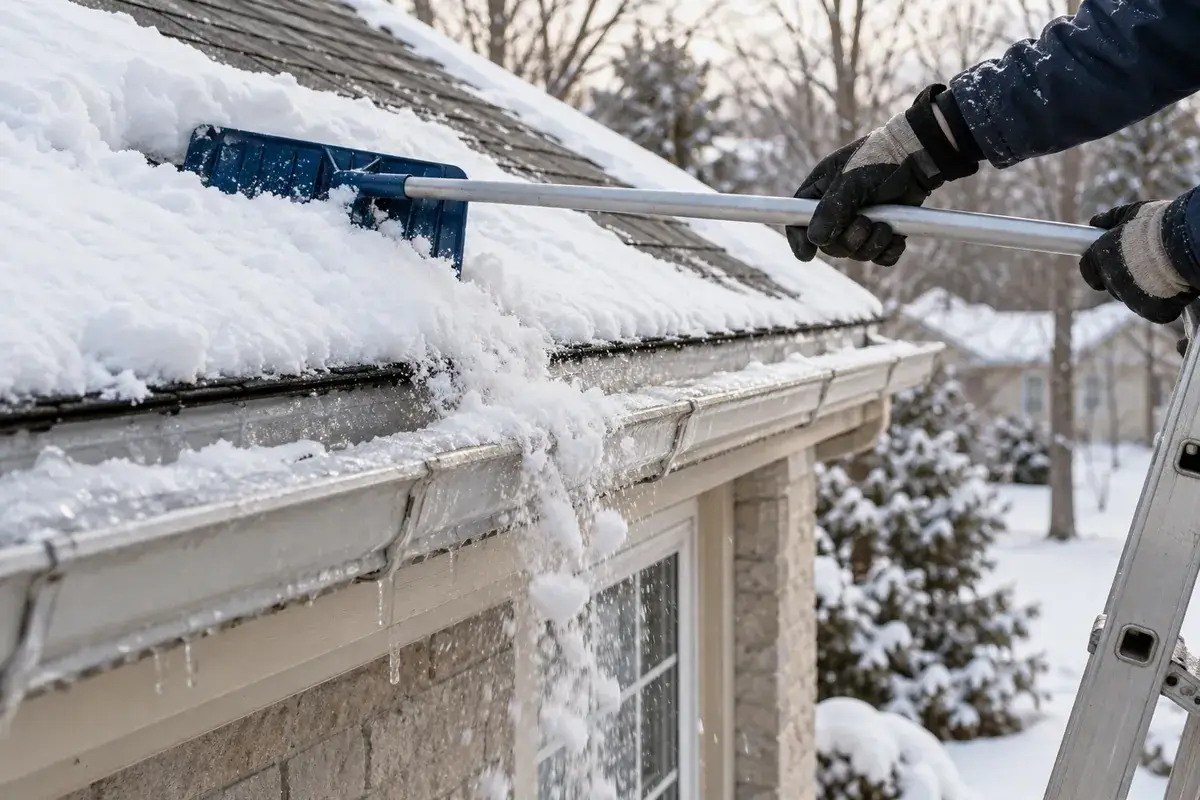
- Don’t chip at the ice with a hammer, an axe or a shovel. It is easy to crack shingles and tear the gutter.
- Don’t climb onto a snowy or icy roof. Falls in winter are the real risk here, much more than the ice itself.
- Don’t use rock salt on the roof. It can damage shingles, gutters and the plants below.
- If water is already dripping inside, put a bucket under it, move anything valuable, take photos for your insurer and call for help.
When to call a professional
Call when water is reaching the inside of the house, when the ice covers long sections of the roof edge, or when the job needs ladder work in the cold. Removing a large ice dam safely takes the right equipment, and the leak usually points to an attic problem that should be fixed once the weather allows.
Our winter home maintenance package covers the roof check, a final gutter clearance and de-icing cables along the roof edge. If you would rather deal with it in the fall, the fall package includes gutter cleaning and weatherstripping. Our fall home maintenance checklist lists everything else worth doing before the snow.
Ice dam questions we hear every winter
Do heat cables stop ice dams?
They keep a path open so meltwater can drain, which helps on roofs that get ice dams every year. They don’t stop the heat loss that causes the dam, so sealing and insulating the attic still matters.
Is it safe to remove an ice dam myself?
Pulling snow off the lower part of the roof with a roof rake from the ground is a reasonable job for most homeowners. Chipping ice, or climbing onto a frozen roof, is not. That part is better left to someone with the right gear.
Will home insurance cover ice dam damage?
It depends on your policy. Call your insurer early, take photos of the ice and of any damage inside, and keep receipts for emergency work.
When is the best time to deal with ice dams?
In the fall, before the first heavy snow. Sealing the attic, checking the insulation and clearing the gutters is much easier in October or November than in the middle of a cold snap.
Keep reading
All posts-
 Seasonal home care
How to winterize outdoor faucets and sprinkler lines
Disconnect the hose, close the valve inside, drain the line and cover the tap. A step-by-step guide to stopping burst pipes before… 3 min read -
 Seasonal home care
Fall home maintenance checklist for Ontario homes
Everything to do before the snow, outside, inside and in the garage. The list we work from on our fall visits. 3 min read -
 Repairs & quick fixes
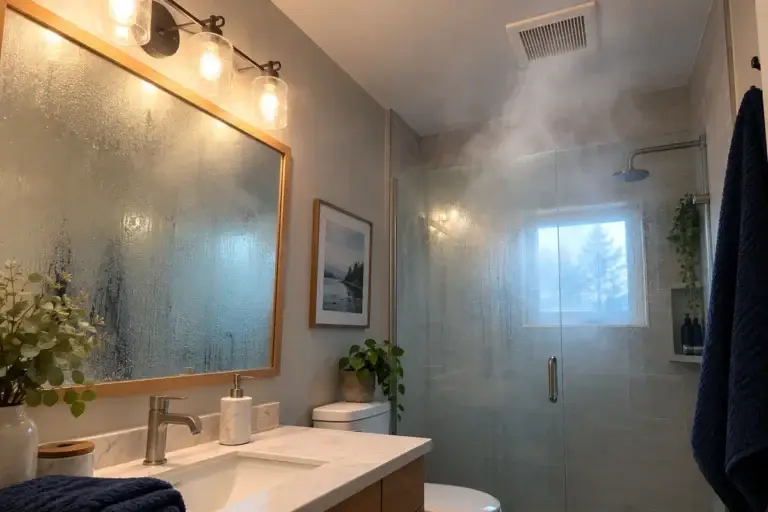
Bathroom fan not clearing steam? When to repair or replace it
If the mirror stays fogged after a shower, the fan isn't moving enough air. Five things to check first, and the signs… 4 min read
Rather have us take care of it?
Send us a photo of the problem on WhatsApp or call us. We will tell you what it needs and what it costs before any work starts.
Call us at (647) 669-7346. The same number works on WhatsApp.