

How to winterize outdoor faucets and sprinkler lines
Disconnect the hose, close the valve inside, drain the line and cover the tap. A step-by-step guide to stopping burst pipes before the first hard frost.
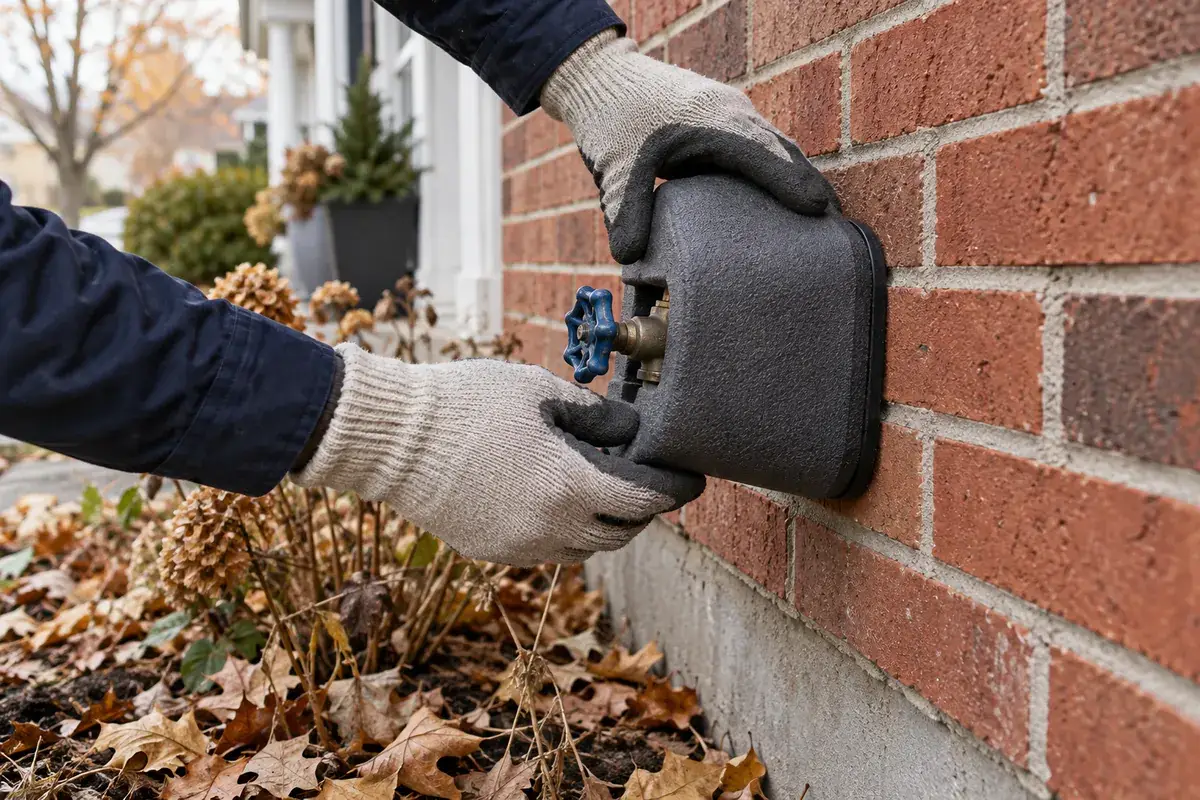
To winterize an outdoor faucet, disconnect the hose, close the shut-off valve inside the house, open the outdoor tap so the pipe drains, and put an insulated cover over it. Do it before the first hard frost. In most of southern Ontario that means late October or November.
Why outdoor faucets burst
Water left in the pipe freezes and expands. The split usually happens inside the wall, where you can’t see it, so nothing looks wrong all winter. The first sign is often in spring, when someone turns on the tap and water runs into the basement instead of out of the hose.
That is why a few minutes in the fall is worth it. A burst outdoor line can mean wet drywall, flooring and insulation on the other side of the wall.
How to winterize an outdoor faucet, step by step
- Disconnect the hose. Drain it and store it. A hose left attached traps water in the faucet, even on frost-free models.
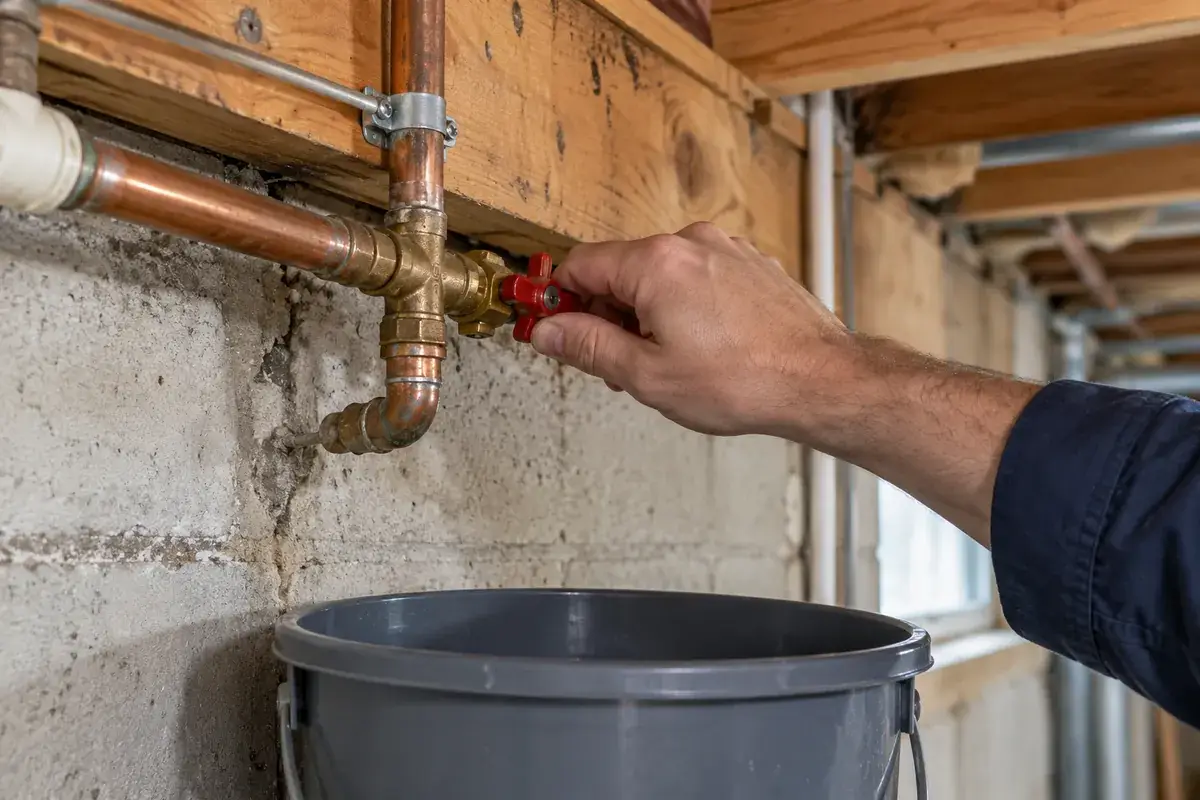
- Find the shut-off valve inside. It is usually in the basement or a utility room, on the pipe that runs to the outside wall where the faucet is.
- Close the valve. Turn the handle clockwise, or a quarter turn on a lever valve, until it stops.
- Open the outdoor tap and let it drain. Some indoor valves have a small bleeder cap. Put a bucket under it, open the cap and let the last of the water out.
- Leave the outdoor tap open on a standard faucet so any water left in the line has room to expand. On a frost-free faucet you can close it once it has drained.
- Put an insulated cover on the faucet. A foam cover is cheap and adds a layer of protection on cold, windy walls.
Frost-free faucets still need attention
A frost-free faucet has a long body that puts the actual valve inside the heated wall. You can spot one because the handle sits on a pipe that sticks out further than usual. They handle cold much better, but they only work if the water can drain out of the end, so the hose still has to come off before winter.
Sprinkler and irrigation lines
In-ground sprinklers need their own shut-down. Turn off the water supply to the system, then drain the lines. Some systems have manual drain valves at the low points. Many need to be blown out with compressed air, which takes a compressor with enough volume and the right pressure setting so the pipes and sprinkler heads aren’t damaged. If you don’t know how your system was installed, have it done by someone who does.
Mistakes we see every fall
- A hose left connected all winter.
- Only one faucet done in a house that has two or three.
- No indoor shut-off at all, which happens in some older homes. A plumber can add one.
- The indoor valve closed but the outdoor tap never opened, so the water stays in the pipe.
Let us take care of it
Draining the sprinkler lines and protecting the outdoor faucets is part of our fall home maintenance package, along with gutter cleaning, weatherstripping and a furnace filter change. You will find the rest of the list in our fall home maintenance checklist, and our post on preventing ice dams covers the roof.
Outdoor faucet questions
When should I winterize outdoor faucets in Ontario?
Before the first hard frost, when overnight temperatures start dropping well below zero. In southern Ontario that is usually late October or November.
Do frost-free outdoor faucets need to be winterized?
Yes. Disconnect the hose so the faucet can drain. A frost-free faucet with a hose attached can still freeze and split.
What if I can’t find the indoor shut-off valve?
Follow the pipe from where the faucet goes through the wall. If there is no valve, the house may not have one. A plumber can install one, and until then a good insulated cover helps.
How do I know if my outdoor faucet pipe burst?
The first time you use the tap in spring, check the basement or the room behind that wall. A wet ceiling, wet drywall or water on the floor means the line split. Turn the water off at the shut-off and call a plumber.
Keep reading
All posts-
 Seasonal home care
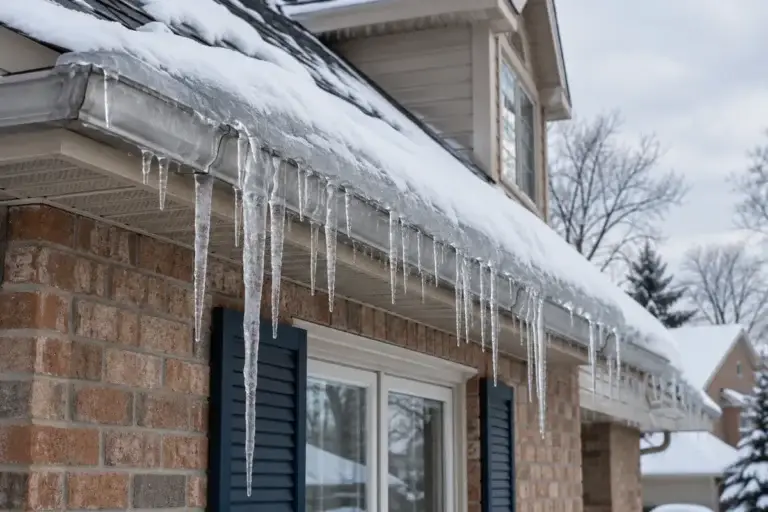
How to prevent ice dams on your roof
Ice dams start with heat leaking into the attic. How to stop them before winter, what to do if one forms, and… 4 min read -
 Seasonal home care
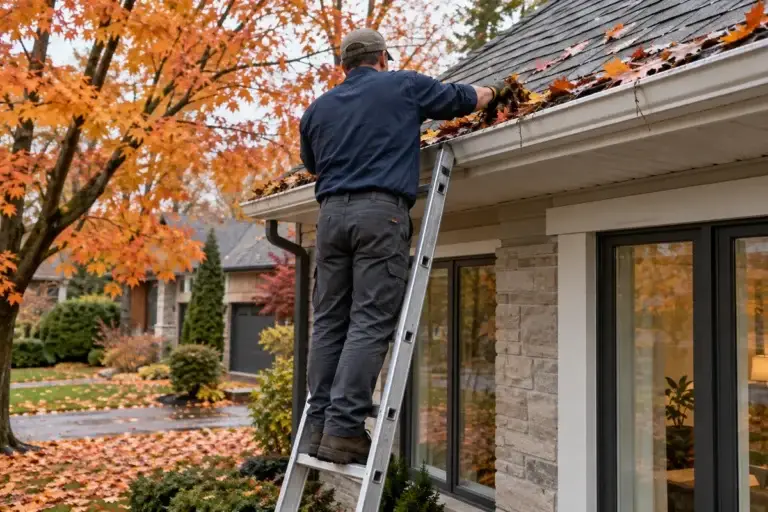
Fall home maintenance checklist for Ontario homes
Everything to do before the snow, outside, inside and in the garage. The list we work from on our fall visits. 3 min read -
 Repairs & quick fixes
Bathroom fan not clearing steam? When to repair or replace it
If the mirror stays fogged after a shower, the fan isn't moving enough air. Five things to check first, and the signs… 4 min read
Rather have us take care of it?
Send us a photo of the problem on WhatsApp or call us. We will tell you what it needs and what it costs before any work starts.
Call us at (647) 669-7346. The same number works on WhatsApp.