
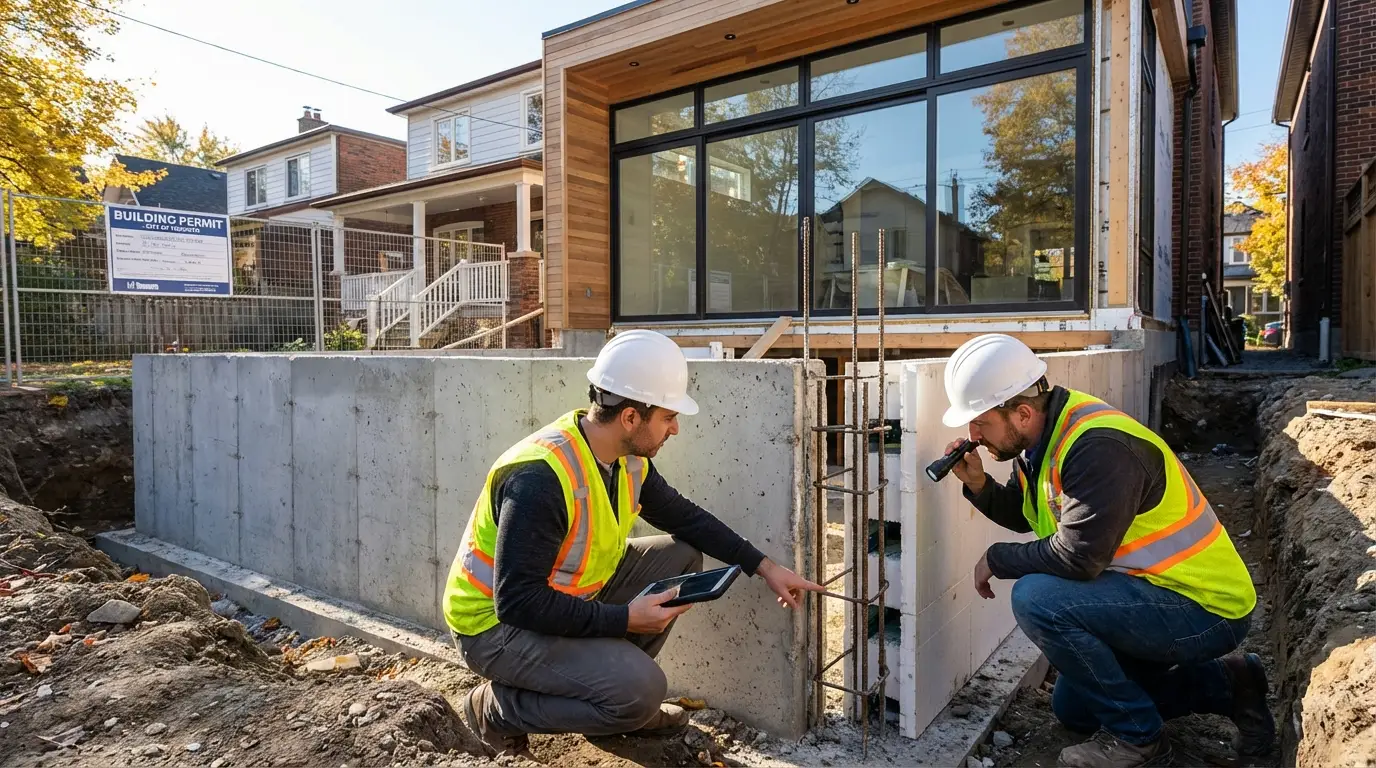
Homeowners across the Greater Toronto Area often envision home additions as a straightforward path to more space and increased property value. Yet, beneath the surface, the structural implications—particularly on the foundation—are frequently underestimated. With varying soil compositions, including the common clay-rich substrates in Toronto, Vaughan, and Mississauga, the risks of foundation stress and related structural damage escalate if additions are not meticulously planned. Understanding the intricate relationship between home additions and foundation health is vital to safeguarding long-term investment and ensuring the structural integrity of the house.
Toronto’s climate, characterized by significant seasonal temperature fluctuations and cycles of freezing and thawing, plays a critical role in foundation stress and soil settlement. The expansive clay soils prevalent in the region swell when saturated with moisture and contract as they dry, exerting dynamic loads on foundations. Without careful engineering, even seemingly minor building extensions can induce foundation cracks or uneven settling, jeopardizing the entire building envelope. This comprehensive discussion explores how to balance home additions with maintaining a resilient, durable foundation, presenting essential knowledge for homeowners and contractors alike.
Why Understanding Foundation Stress Is Crucial for Home Additions in Toronto and Surrounding Areas
When planning home additions in urban and suburban settings like Vaughan or Oakville, one must first understand that the house foundation is not just a concrete base but the cornerstone ensuring overall structural load distribution. Adding extra square footage or modifying existing layouts affects load-bearing dynamics and soil interaction. The local soil conditions, predominantly clay, present unique challenges as this soil type expands and contracts more than most, especially with Toronto’s distinct wet springs and dry summers. These volumetric changes cause the soil to shift and place uneven pressure on foundation walls and slabs.
Structural damage indicators such as foundation cracks or bowing walls often originate from these mismanaged stress points. Without a comprehensive assessment before starting construction, additions can lead to premature settlement or structural distortions. Beyond physical damage, foundation issues also detract from the home’s value and complicate resale, as potential buyers and inspectors prioritize structural soundness. In cities like Brampton and Richmond Hill where real estate markets are competitive, preserving foundation health during home modifications is not just practical but a strategic investment.
The climate in Southern Ontario demands attention to seasonal soil behavior. Freeze-thaw cycles influence frost heave, where frozen ground can lift sections of concrete slab foundations irregularly. Subsequent thawing leads to soil contraction, leaving voids and insufficient support under critical foundation components. These effects are exacerbated when new building extensions do not align with proper foundation design standards or neglect adequate drainage systems. Hence, understanding foundation stress in the context of home additions within the GTA climate is pivotal for ensuring lasting structural integrity and home value.
Technical Analysis: The Structural Impact of Home Additions on Foundations
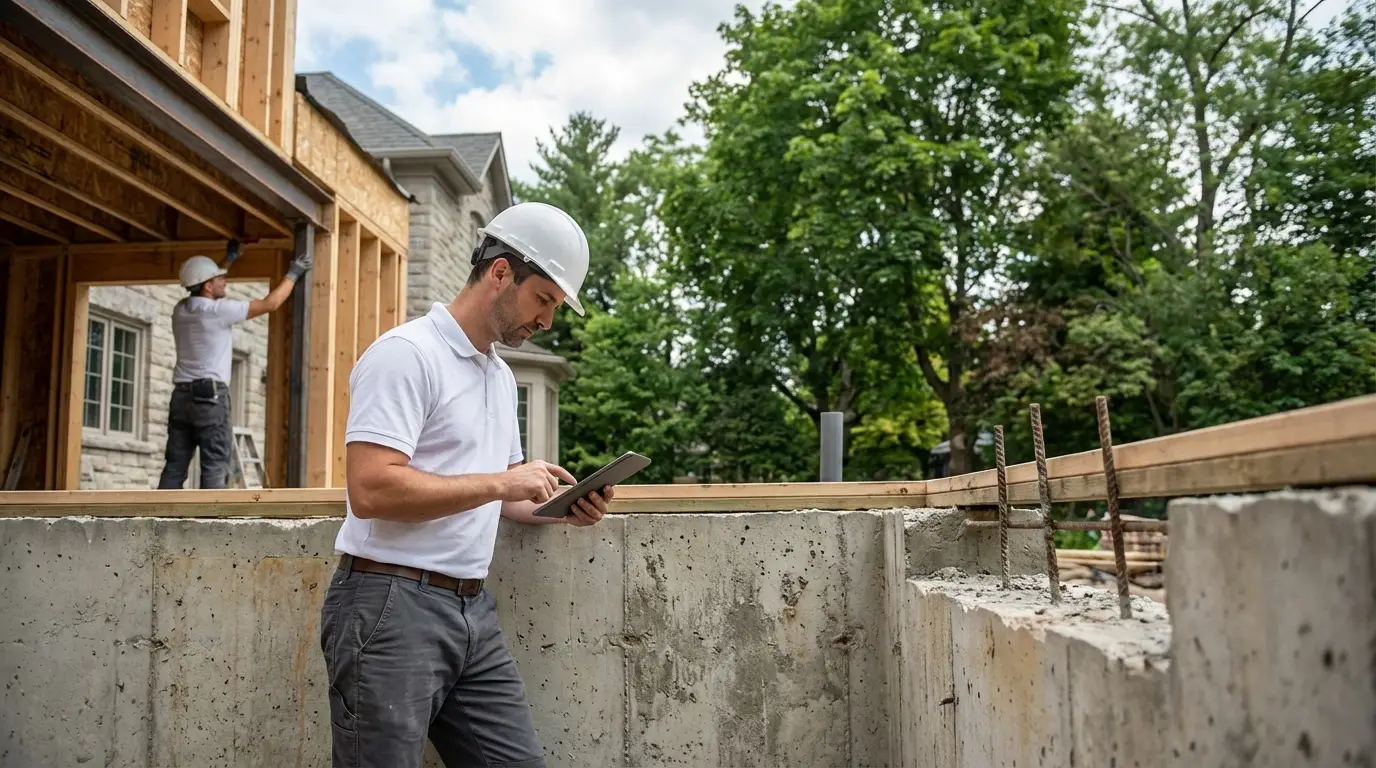
At the core of every home addition lies a complex interplay between new structural loads and existing foundation capacity. Home additions introduce additional weight, which translates into increased pressure on the soil beneath the foundation. Load-bearing walls and columns added during construction must transfer these forces safely to the ground. Failure to account for these new loads results in excessive stress on the foundation system.
The most common foundation types in the Toronto area include slab-on-grade, crawlspace, and basement foundations. Each reacts differently to added load and soil movement. For instance, slab foundations, which are prevalent due to cost and construction simplicity, lack flexibility under differential settlement. When an addition is constructed without reinforcing the slab or properly extending the foundation, differential settlement occurs. This uneven sinking or shifting between old and new foundation sections causes cracks in walls, misaligned doors and windows, and possibly structural framing issues.
Soil settlement adjacent to foundations also plays a major role. Clay soils typical to the GTA experience shrink-swell cycles that exert lateral and vertical forces on foundations. When a building extension disrupts soil moisture patterns—such as by diverting water flow or increasing absorption near the foundation—the soil stabilizes differently on either side. This differential stress can cause foundation walls to bow inward or crack, both indicators of underlying structural damage.
Moreover, foundation moisture management is essential. Water penetration through inadequately waterproofed foundation walls or slabs not only weakens concrete and structural steel reinforcement but also causes mushrooming freeze-thaw damage in the region’s long winters. Consequently, thorough waterproofing and installation of proper drainage mechanisms like French drains are technical musts.
In vertical expansions like adding a second story, the challenge intensifies. The existing foundation must sustain significantly increased loads from the additional floor. This requires engineering assessments and often foundation reinforcement—such as underpinning or installing drilled piers—to enhance load-bearing capacity. Ignoring this step invites severe foundation stress that can manifest as cracking, settling, or catastrophic failure. Thus, a holistic structural plan integrating foundation evaluation, soil analysis, and engineering design is indispensable for any successful home addition project.
Professional Contractor Recommendations for Foundation-Friendly Home Additions
- Conduct Comprehensive Soil Testing: Ensure soil type and moisture variations are thoroughly assessed to determine the best foundation system for your addition, particularly in clay-heavy regions like Toronto and Mississauga.
- Engage Structural Engineers Early: Their expertise is critical for calculating new load distributions, foundation reinforcement requirements, and ensuring structural code compliance.
- Utilize Reinforced Footings or Deep Piers: For sunrooms, bump-outs, or garages, deep piers or thickened footings help distribute the weight adequately and prevent differential settlement.
- Integrate Drainage Solutions: Implement French drains, gutters, and grading strategies to channel water away from foundations, protecting against moisture-induced deterioration and frost heave.
- Match New Foundations Seamlessly to Existing Ones: Proper alignment and connection between old and new foundation work prevent stress concentration points and structural mismatches.
- Choose Durable, Climate-Appropriate Materials: For example, in Toronto’s humidity, subfloor materials resistant to warping and mold enhance longevity.
- Plan for Long-Term Maintenance: Regular inspections and timely repairs keep foundations stable after additions, avoiding minor issues escalating into costly structural damage.
- Avoid Overloading Foundations: Carefully calculate total load including future modifications to prevent exceeding the foundation’s capacity.
- Obtain All Necessary Permits and Inspections: Municipal requirements protect your property asset and ensure safety standards are upheld.
- Coordinate with Experienced Contractors: Engage teams familiar with local soil conditions, seasonal climate effects, and GTA building codes for best outcomes.
Contractor Pro-Tip: Always inspect foundation connections at junctions between new and existing structures for hairline cracks or separation within the first six months post-construction. Early detection allows for preventative reinforcements before significant settlement occurs.
The CNG Contracting Approach to Safe and Value-Boosting Home Additions in the GTA
At CNG Contracting, our method revolves around prioritizing foundation stability while delivering functional, aesthetic home additions that enhance long-term property value. Servicing cities like Toronto, Vaughan, Brampton, and Oakville, our comprehensive diagnostic visits assess soil conditions, foundation integrity, and load-bearing requirements with precision. This pre-construction step is crucial to detect potential foundation stress points and customize engineering solutions that safeguard your investment.
Our team implements durable foundation reinforcements, integrates efficient drainage systems, and selects construction materials optimized for the local climate’s temperature and humidity fluctuations. We understand that each home and plot of land has unique challenges, particularly on clay soils prone to shifting. Our specialist knowledge in building extensions, combined with a rigorous focus on code compliance, protects homeowners from later structural damage and mitigates construction risks.
We invite homeowners to book a Professional Diagnostic Visit, where a thorough on-site inspection is conducted, fully credited toward any subsequent foundation repairs or additions managed by us. This transparent approach ensures clarity and confidence before the project begins. Our portfolio of expert construction services illustrates our dedication to combining structural integrity with impeccable craftsmanship tailored to GTA demands.
Technical Comparison of Common Home Addition Strategies and Their Impact on Foundations
| Situation / Strategy | Risk Level | Proactive Benefit |
|---|---|---|
| Sunroom with proper deep piers | Low | Even weight distribution, reduces soil pressure, increased resale appeal |
| Bump-out with cantilevered support | Moderate | Cost-effective, minor disruption to foundation, increases usable space |
| Garage expansion with thickened slab edges | Moderate to High | Supports vehicle weight, prevents slab cracking, enhances property functionality |
| Second-story addition without reinforcement | High | Risks foundation failure, structural damage, costly repairs |
| Outdoor living space with frost line footings | Low | Protects foundation from frost heave, improves drainage, boosts curb appeal |
Request a Comprehensive Evaluation to Protect Your Home Foundation
When contemplating home additions in Toronto, Vaughan, or any GTA neighborhood, investing in a full foundation and structural evaluation is essential. Call (647) 669-7346 today or visit our Contact Us page to schedule your Professional Diagnostic Visit. This strategic first step ensures your project begins on a solid footing, literally, and any diagnostic fee is credited toward the final scope of work. Protect your property’s foundation, enhance structural integrity, and secure your home’s value for decades.
Glossary of Key Technical Terms
- Foundation Stress: The pressure and forces exerted on a home’s foundation due to additional load or shifting soil.
- Load Bearing: Structural elements that carry the weight of a building’s components and transfer it safely to the foundation.
- Soil Settlement: The gradual sinking or shifting of soil supporting a foundation, which can lead to uneven floors and structural damage.
- Frost Heave: The upward swelling of soil during freezing conditions caused by ice formation that can damage foundations.
- Underpinning: A construction method to reinforce and stabilize existing foundations by extending their depth or breadth.
How can I tell if my home addition is causing foundation stress?
Look for signs such as new or enlarging foundation cracks, uneven or sloping floors, sticking doors or windows, and visible gaps between walls. Early detection helps prevent serious damage.
Are permits required for home additions in the Greater Toronto Area?
Yes, most home addition projects require permits to ensure compliance with local building codes and safety regulations. Skipping this step can result in fines and structural risks.
What foundation type is best for home additions in clay soil areas?
Deep pier foundations or reinforced concrete footings are typically recommended for areas with expansive clay soils like Toronto to mitigate soil movement impacts.
Can I convert my garage into living space without foundation issues?
Yes, but you need to ensure the garage foundation is properly reinforced and that moisture control is addressed to prevent soil settlement and structural problems.
How important is drainage around new home additions?
Proper drainage is crucial to channel water away from foundations, preventing moisture problems, frost heave, and settlement that degrade structural integrity.