
In the Greater Toronto Area, where seasonal shifts impose cycles of freezing, thawing, and precipitation, a home’s structural health is crucial to its enduring value and safety. The interplay of climate, urban density, and aging residential buildings creates a unique environment where unnoticed structural problems can rapidly escalate from minor inconveniences to major safety hazards. Ensuring a professional structural health check becomes a strategic move for homeowners aiming to safeguard their investment and family wellbeing amidst these challenges.
Toronto homes, from the heart of the city to suburbs like Vaughan and Richmond Hill, face complex stressors such as soil movement, heavy snow loads, and moisture infiltration, which threaten foundational stability and framing integrity. Understanding and addressing these issues through thorough, engineered inspections helps prevent costly repairs and preserves property value over time.
Key takeaways for Toronto homeowners:
- Environmental impacts like freeze-thaw cycles demand resilient construction and diligent inspection.
- Professional structural assessments go beyond surface-level inspections, offering detailed engineering analysis.
- Timely detection of structural weaknesses protects safety and avoids escalated repair costs.
- Local expertise is critical to address Toronto-specific building practices and climate effects.
- Integrating inspections into renovation or purchase plans ensures responsible decision-making.
Understanding the Technical Foundation Behind Toronto Home Structures
Behind every solid Toronto home lies a carefully engineered framework designed to withstand the region’s distinct environmental pressures. Structural integrity encompasses the ability of the foundation, framing, and load-bearing components to safely transfer and resist loads imposed by occupancy, snow accumulation, wind forces, and seismic activity.
Most residential structures in Toronto consist of a concrete foundation supporting a wooden or steel-framed superstructure. The concrete foundation’s resilience is continually tested by soil expansion during wet seasons and contraction in dry periods, often leading to differential settlement or cracks. Wood framing must contend with humidity fluctuations common in the GTA, which can lead to warping or rot if not properly protected or maintained.
Load-bearing walls and beams serve as the home’s skeleton, channeling vertical and lateral forces while supporting floors and roofs. Any alteration to these elements, such as removing a load-bearing wall during renovation, without proper reevaluation can compromise the entire structure. Structural engineers utilize detailed load path analysis and comply with the Ontario Building Code to ensure modifications maintain safety and durability.
Environmental factors such as hydrostatic pressure acting on basement walls require integrated waterproofing solutions to prevent moisture-induced deterioration. Without addressing these concealed concerns, visible symptoms like ceiling cracks or floor sagging may only be the tip of the iceberg.
Essential Steps for a Comprehensive Structural Health Check
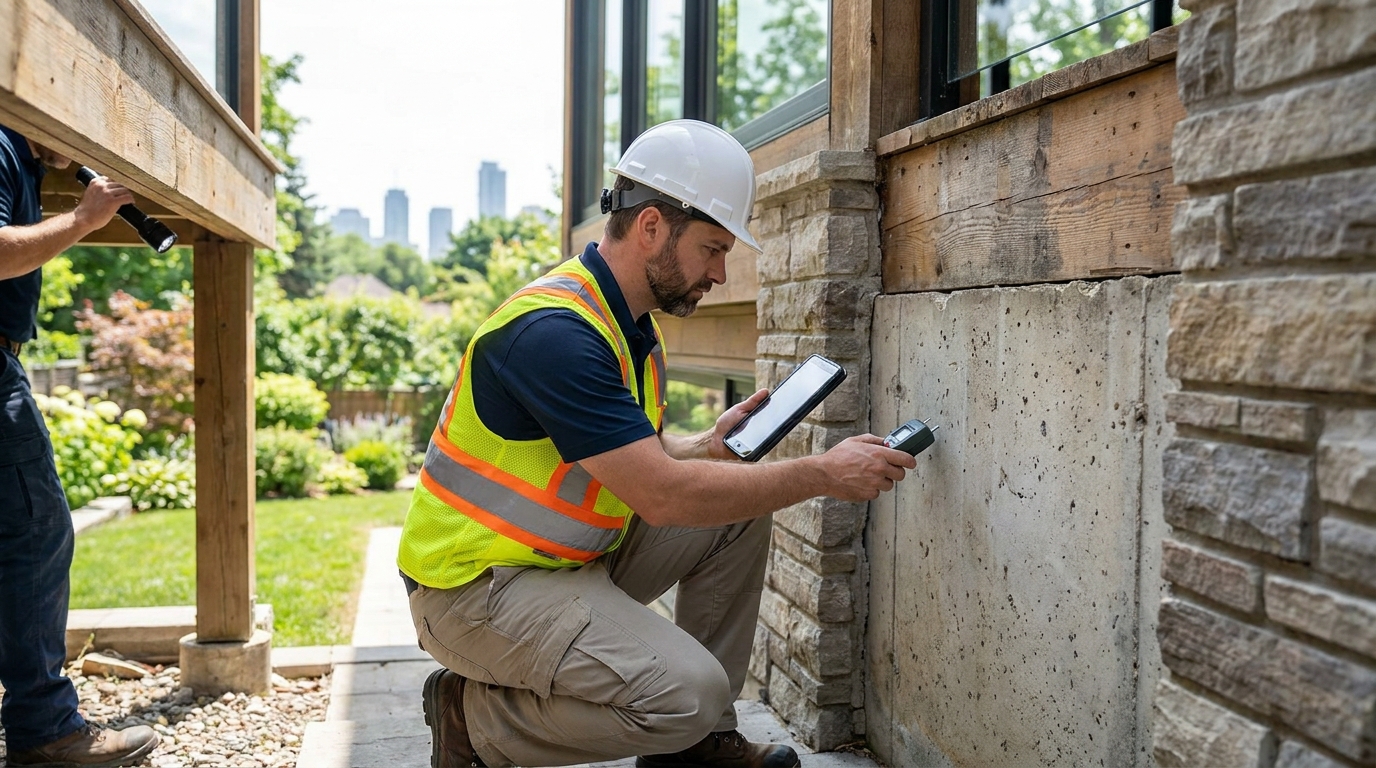
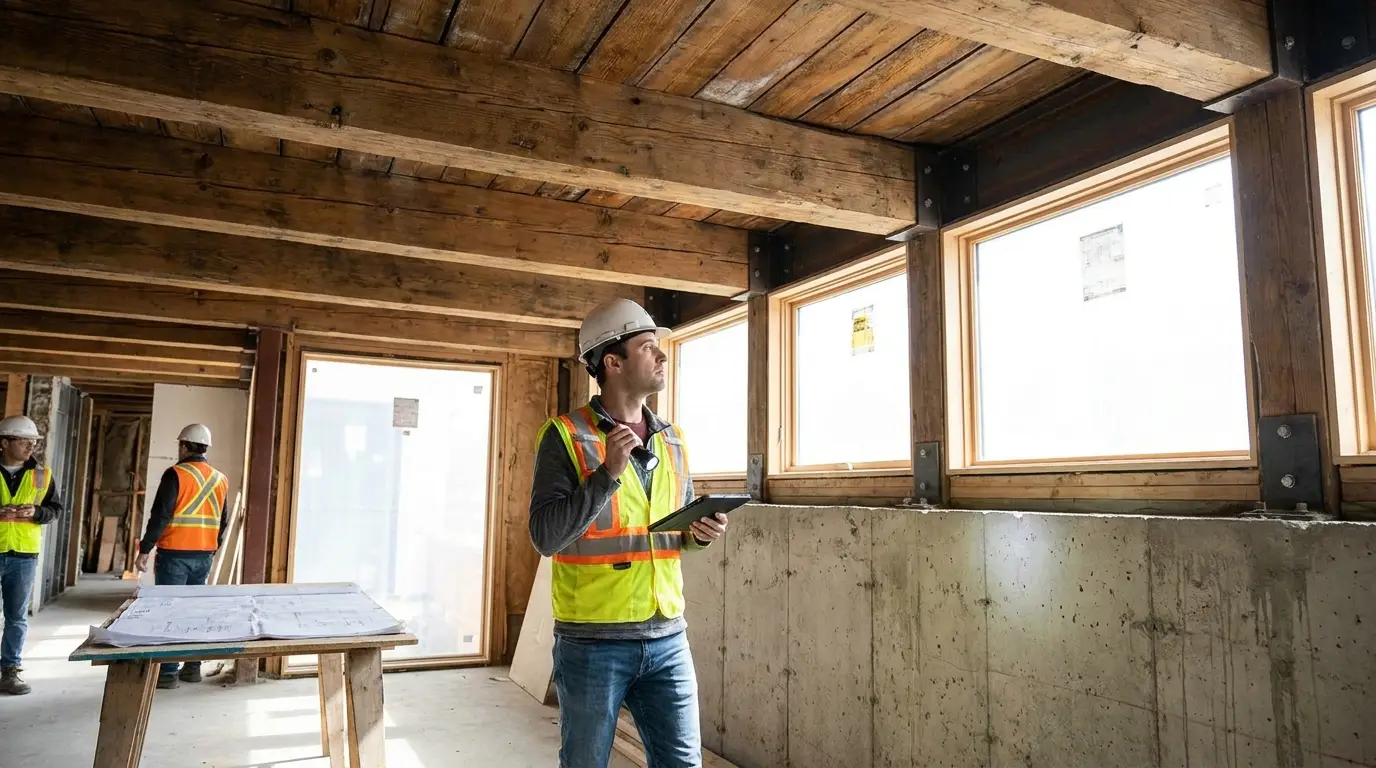
- Initial Site Evaluation: A licensed structural engineer conducts an extensive on-site assessment to identify visible signs of distress including cracks, misalignments, and water damage, documenting conditions meticulously.
- Foundation Inspection: Detailed examination of foundation walls and footings to diagnose cracking patterns, settlement, and moisture intrusion under Toronto’s varying soil conditions.
- Framing System Review: Assessment of floor joists, roof trusses, and wall studs for signs of deflection, rot, or inadequate sizing relative to load requirements.
- Load Path Analysis: Mapping and verification of structural load transfer pathways to ensure stability, especially when renovations are planned that involve removing or altering structural elements.
- Moisture and Drainage Audit: Evaluation of basement and crawl space waterproofing efficacy, including checks for signs of hydrostatic pressure or poor drainage that might undermine the structure.
- Material Durability Assessment: Identification of materials’ condition relative to Ontario’s climatic demands, with recommendations to upgrade substandard or compromised components.
- Code Compliance Verification: Ensuring all elements meet or exceed Ontario Building Code and CSA standards for wood, concrete, and steel structural components.
- Report and Recommendations: Provision of clear, engineering-based findings with repair, reinforcement, or upgrade options tailored to the property and homeowner goals.
- Follow-Up Support: Availability for consultation throughout repairs or renovations to validate ongoing structural integrity and adherence to engineering recommendations.
Each step provides essential data that forms the basis for informed decision-making, reducing risks that often arise from relying solely on visual home inspections or unlicensed evaluations.
An experienced structural engineer’s eyes can reveal hidden tensions within a home’s framework long before any visible problems appear. Look for signs like stair-step cracks in masonry or doors that no longer close properly—these subtle indicators often precede major foundational shifts.
The CNG Contracting Professional Structural Health Check Solution in Toronto
CNG Contracting delivers comprehensive structural health checks tailored to the specific needs of Toronto homeowners. Our approach integrates licensed Professional Engineers’ expertise with practical construction experience, ensuring that every assessment highlights critical concerns and optimizes the home’s future safety and value.
We recommend scheduling a Professional Diagnostic Visit, which allows our team to conduct a thorough on-site evaluation. This visit involves detailed inspection and structural analysis to uncover any weak points, from foundation cracks to framing inadequacies. Importantly, the fee for this initial visit is fully credited towards any subsequent repairs or projects, making it an investment rather than a cost.
Our services extend beyond diagnostics. At CNG Contracting, we provide trusted guidance throughout the entire process—whether you require engineered repair designs, assistance with permit applications, or selective reinforcement to maintain compliance with local codes and enhance longevity.
With a footprint spanning Toronto, Vaughan, Mississauga, and the surrounding GTA, our team leverages local expertise to address typical regional challenges like frost heave and moisture-related deterioration, delivering solutions crafted for sustained performance.
Comparing Structural Health Check Strategies and Their Impacts for Toronto Homes
| Situation/Strategy | Risk Level | Proactive Benefit |
|---|---|---|
| Ignoring Minor Cracks | High – May indicate foundation settlement or load shifts | Risk of worsening damage and costly repairs averted with early intervention |
| Basic Visual Home Inspection Only | Medium – Limited scope misses concealed structural threats | Professional structural assessment uncovers hidden issues and guides remediation |
| Periodic Licensed Structural Assessments | Low – Continuous monitoring of structural integrity | Preserves property value and provides assurance through predictive maintenance |
| DIY Renovations Without Structural Review | Very High – Potential for load-bearing wall removal or framing compromise | Avoids structural failure by ensuring inspections precede modifications |
| Early Professional Intervention After Damage Observed | Medium – Timely repairs but some hidden damage may have progressed | Mitigates safety hazards and restores home functionality efficiently |
Call for Professional Structural Consultation in Toronto and the GTA
For Toronto homeowners committed to maintaining their property’s structural integrity and maximizing its long-term value, expert assessment is indispensable. Contact CNG Contracting today by phone at (647) 669-7346 or visit our Contact Us page to schedule your professional diagnostic visit. Taking this proactive step ensures your home remains safe, sound, and a solid investment amidst Ontario’s demanding climate.
Technical Glossary of Structural Health Check Terms
- Differential Settlement: Uneven ground movement causing parts of a building to sink at different rates, which may lead to structural cracks and misalignments.
- Load Path: The directed route through which structural loads travel from the roof and floors down to the foundation.
- Hydrostatic Pressure: The force exerted by standing water in soil against basement walls or foundations, potentially causing leaks or structural damage.
- Truss: A pre-engineered framework of triangles used in roof construction to support loads efficiently while minimizing material use.
- PEO (Professional Engineers Ontario): The regulatory body licensing engineers who ensure inspections comply with safety and code standards.
Understanding the role of structural engineering in maintaining home safety can empower homeowners to make informed decisions. This video explores fundamental principles and common challenges faced in residential environments, especially in climates like Toronto’s.
Early detection of foundational issues is critical. This video demonstrates practical tips and professional advice for spotting warning signs before significant damage occurs, aligning with recommendations for routine structural health checks.
When is the best time to schedule a structural health check?
It is recommended to have a professional structural assessment every few years, or before buying, selling, or undertaking major renovations to catch potential issues early.
Can a structural health check prevent costly repairs?
Yes, early identification of weaknesses can guide timely interventions that avoid extensive damage and expensive fixes down the road.
What makes a professional structural inspection different from a regular home inspection?
Unlike a general home inspection, a structural assessment is performed by a licensed engineer who evaluates load-bearing components and compliance with building codes, going beyond surface observations.
Is my home’s foundation susceptible to the GTA’s climate?
Yes, Ontario’s freeze-thaw cycles and soil moisture variations create stresses that can lead to foundation settlement, necessitating regular inspection.
Does CNG Contracting provide documentation for permit applications?
Yes, after inspection, we can supply PEO-stamped reports and drawings required to obtain building permits and meet regulatory demands.