
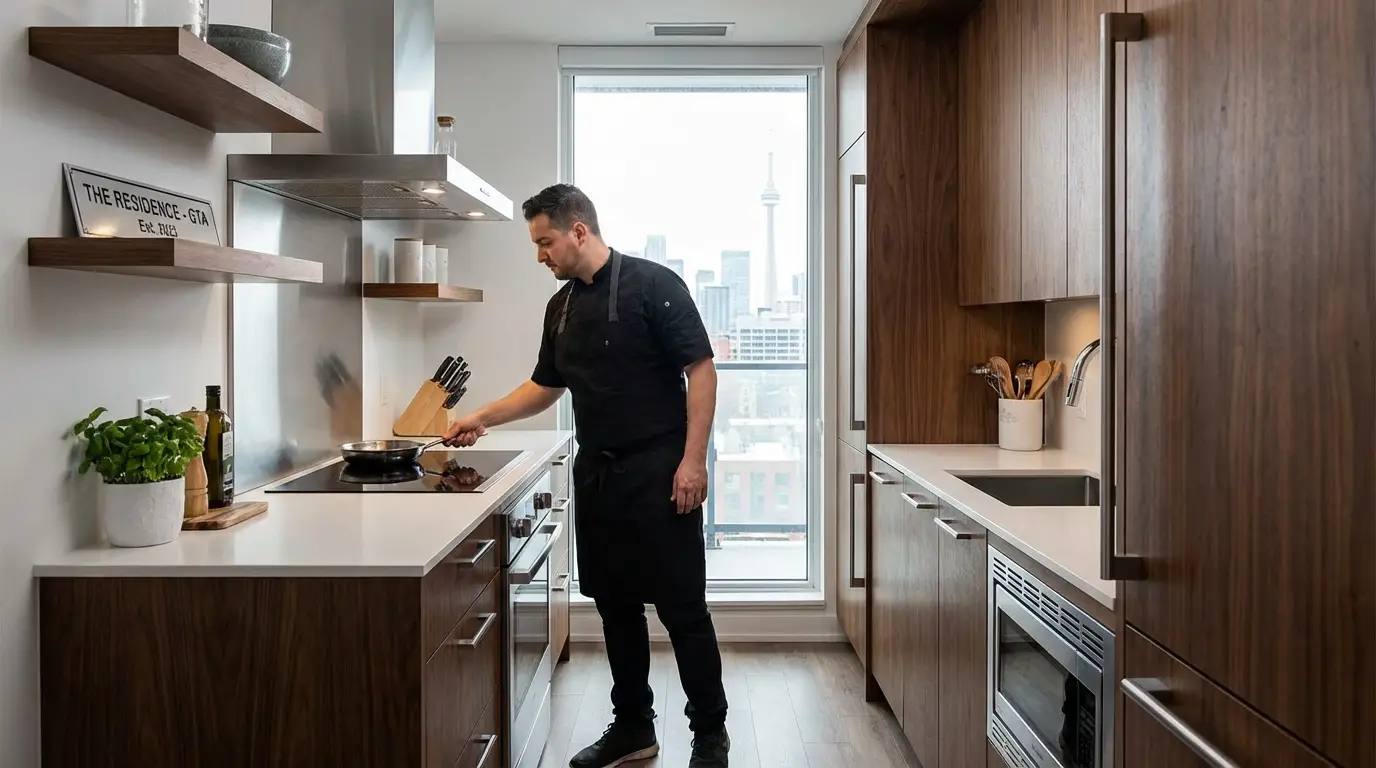
Mastering the art of a high-performance kitchen layout in a compact area is a pressing challenge for homeowners across Toronto and its surrounding cities. With urban living spaces tightening due to cost and availability, crafting a kitchen that optimizes every inch is no longer a luxury but a necessity. The Greater Toronto Area (GTA) climate mandates durability in materials and strategic design choices to resist humidity and temperature variations affecting kitchen longevity. This article unfolds a detailed guide that balances form and function, empowering homeowners in Vaughan, Mississauga, Brampton, Oakville, and Richmond Hill to harness efficient kitchen design as a value-enhancing investment for their properties.
Small space kitchen configurations carry an inherent complexity. While space limitations restrict expansive layouts, they simultaneously inspire innovative approaches to work zones, storage solutions, and kitchen workflow. The goal extends beyond merely fitting appliances and cabinetry into a tight footprint. Instead, it requires a meticulous spatial choreography that fosters an ergonomic kitchen environment, reduces redundant movements, and maximizes storage prowess. In such environments, every centimetre translates directly to usability and aesthetic appeal, making the difference between a functional cooking hub and a cramped, cumbersome zone.
Understanding the Criticality of Intelligent Small Space Kitchen Layouts in the GTA
Living in Toronto or nearby cities presents unique constraints and opportunities for kitchen design. The variable climate, characterized by cold winters and humid summers, impacts material selection and layout decisions. Utilizing moisture-resistant cabinetry and engineered hardwood subfloors that withstand Toronto’s humidity protects against warping and premature wear. This durability consideration is essential when evaluating kitchen layout alternatives. It’s not solely about aesthetics but about the structural integrity and long-term performance of the kitchen environment.
Moreover, the compact kitchens typical in many GTA residences demand space optimization techniques tailored to urban lifestyles. For instance, choosing a design that facilitates a smooth kitchen workflow — the seamless movement between refrigerator, stove, and sink — reduces user fatigue and improves cooking efficiency. Recognizing the importance of the work triangle principle in small kitchens allows designers to create setups that save time and effort within constrained footprints. The challenge is crafting layouts that honor these principles while still satisfying stylistic and storage needs peculiar to each household.
Delving into the Mechanics: What Makes a Kitchen Layout High-Performance in Tight Quarters?
Above and beyond aesthetics, the technical foundation of a high-performance kitchen layout in small spaces lies in strategic zoning, integration of multi-functional elements, and intelligent material choices. Behind the walls and beneath counters, it matters what sits in wood grain or engineered stone. Expert contractors emphasize selecting cabinetry and subfloor materials engineered to endure moisture and wear common in GTA homes. For instance, opting for engineered hardwood flooring that resists swelling avoids the pitfalls of cheaper alternatives in the province’s seasonal humidity.
Ergonomics take center stage—in a well-designed small kitchen, zones for preparation, cooking, and cleaning should align with minimal physical strain. This manifests in ensuring an unobstructed flow between key appliances and ample counter space for prep work. Incorporating customized cabinets maximizes vertical storage, while pull-out shelves and lazy Susans transform previously unusable corners into practical storage assets. Such technical refinements directly translate to higher daily performance and better space utilization in tight kitchen footprints.
In parallel, the intricate ballet between layout and kitchen workflow is vital. From Toronto condos to townhomes in Oakville, efficient kitchen design must balance spatial constraints with user patterns. For example, positioning the refrigerator door so it does not block the oven or main prep areas during operation prevents bottlenecks and hazards. This devil-in-the-details approach embodies the artisan contractor’s realism—combining functionality, safety, and longevity.

Strategic Steps to Achieve Efficient and Functional Small Kitchen Layouts
- Optimize Vertical Storage: Extend kitchen cabinets up to the ceiling to capitalize on every inch of space. Incorporate pull-down racks for easy access to upper shelves, especially effective in compact kitchen wall layouts common throughout Mississauga.
- Implement the Work Triangle Rule Meticulously: Ensure the sink, stove, and refrigerator are placed to form a balanced triangle, minimizing walking distance and obstructions, a crucial consideration in narrow Toronto kitchen layouts.
- Choose Durable, Moisture-Resistant Materials: Invest in engineered hardwood subfloors and waterproof cabinetry to withstand the GTA’s seasonal shifts without warping or damage.
- Select Compact, Multi-Functional Appliances: Incorporate space-saving appliances with integrated features such as convection microwaves or combination fridge/freezers that deliver versatility without consuming extra footprint.
- Utilize Sliding or Pocket Doors: Replace traditional swinging doors with sliding mechanisms to preserve precious clearance zones and maintain flow in kitchen entries, which is especially effective in smaller homes in Brampton and Richmond Hill.
- Create a Seamless Visual Palette: Use a unified color theme with reflective surfaces such as glossy cabinetry or glass backsplashes to visually expand the compact kitchen space.
- Integrate Smart Lighting Layers: Combine under-cabinet lighting, recessed ceiling lights, and pendant fixtures to enhance visibility and create an ambient workspace without cluttering the design.
- Add a Narrow Kitchen Island or Peninsula: Use a streamlined island with built-in storage or seating to maintain openness while augmenting prep and social space, suitable even for tight layouts.
- Harness Flexible Storage Accessories: Incorporate pull-out pantry shelves, lazy Susans, and drawer dividers to streamline organization and optimize each cabinet’s capacity.
- Employ Open Shelving Wisely: Replace some upper cabinets with open shelves to encourage decluttering and lighten the visual weight, a method often applied in small kitchens located in high-rise Toronto apartments to great effect.
Pro Contractor Tip: When designing a compact kitchen, allocate corner cabinets for rotating lazy Susans or deep pull-out baskets. These create unseen storage ‘nooks’ that rescue underutilized space and improve direct access, elevating everyday usability without compromising structural integrity.
The CNG Approach to Crafting High-Performance Kitchens in Small Spaces
At CNG Contracting, the approach to small kitchen layouts is rooted in precision diagnostics and customized solutions tailored to each GTA home’s unique spatial and lifestyle parameters. Our team conducts a thorough Professional Diagnostic Visit, assessing current space utilization, workflow efficiency, and material condition. This onsite evaluation is strategic and client-focused, with the diagnostic visit fee fully credited towards the final kitchen remodel or upgrade project.
Our expertise in creating high-performance kitchens merges technical refinements with aesthetic finesse. From custom cabinetry designed specifically for Toronto’s urban condos to durable, moisture-resistant material selections essential for Vaughan climates, our solutions prioritize longevity and functional elegance. The result: kitchens that balance compact footprints with spacious workflows and integrated storage solutions. Homeowners benefit not only from increased daily comfort and usability but also long-term property value appreciation.
We invite prospective clients to explore how our professional remodeling services can transform their spatial struggles into optimized culinary spaces. Booking a diagnostic visit through our dedicated platform allows seamless scheduling tailored to each home’s needs. The session offers a comprehensive master plan that respects your investment while unlocking maximum small space kitchen potential.
Evaluating Kitchen Layout Scenarios: Risk Versus Reward in Compact Space Planning
| Situation/Strategy | Risk Level | Proactive Benefit |
|---|---|---|
| Single-wall kitchen without island | Medium | Maximizes open floor plan, but limits prep and storage areas |
| U-shaped kitchen with custom pull-out corner units | Low | Optimizes storage and work zones, improving workflow efficiency |
| Galley kitchen with narrow aisle | High | May cause cramped movement and block appliance doors if poorly planned |
| Peninsula breakfast bar addition | Low | Provides additional counter space and dining area while enhancing social flow |
| L-shaped kitchen with open shelving | Medium | Encourages decluttering and lightens visual weight, but requires diligent maintenance |
Take Action: Refining Your Kitchen Space with Expert Guidance
Maximizing the potential of a small space kitchen requires deliberate planning and professional insight—two pillars provided by CNG Contracting. Homeowners in Toronto, Vaughan, and nearby cities are encouraged to perform a detailed assessment of their existing kitchen layout, considering improvements that enhance space optimization and ergonomic benefit.
Contact CNG Contracting today to schedule your Professional Diagnostic Visit at https://cngcontracting.com/booking/. This visit is a critical first step enabling technicians to tailor a robust plan to your home’s unique conditions. By leveraging expert craftsmanship and optimized kitchen layouts, you safeguard your investment, ensuring longevity and increased property desirability across the GTA. Reach out by phone at (647) 669-7346 or visit our Contact Us page for further assistance.
Technical Glossary: Key Terms in High-Performance Small Kitchen Layouts
- Work Triangle: A kitchen design principle that links the sink, stove, and refrigerator to promote efficient movement and workflow.
- Lazy Susan: A rotating tray installed in corner cabinets for easier access to stored items.
- Engineered Hardwood: A composite flooring material designed to withstand changes in humidity and temperature better than solid wood.
- Pull-Down Racks: Adjustable shelving units mounted in upper cabinets that lower for easy reach.
- Peninsula: An extended countertop attached to the main kitchen layout that provides additional prep space and seating, distinct from an island as it is connected on one end.
What is the best kitchen layout for a small urban home?
Layouts like U-shaped, galley, or single-wall kitchens with added peninsula or narrow islands are preferred for compact urban homes, optimizing both space and usability.
How can I maximize storage in a small kitchen?
Utilize vertical cabinetry, pull-out shelves, lazy Susans, and drawer organizers to make the most of every inch of cabinet space.
Are compact appliances effective in small kitchens?
Yes, modern compact appliances offer multifunctionality and performance comparable to their larger counterparts while saving valuable space.
How does lighting affect small kitchen design?
Layered lighting, including task and ambient sources, enhances visibility, spatial perception, and mood without cluttering the kitchen.
Why is the work triangle important in tight kitchen layouts?
It minimizes unnecessary movement between the sink, stove, and refrigerator, improving efficiency and making cooking less taxing in limited space.