

Range hood venting: ducted or recirculating, and why it matters
A ducted hood takes smoke, grease and moisture outside. A recirculating hood only filters some of it. How to choose, and what a good duct run looks like.
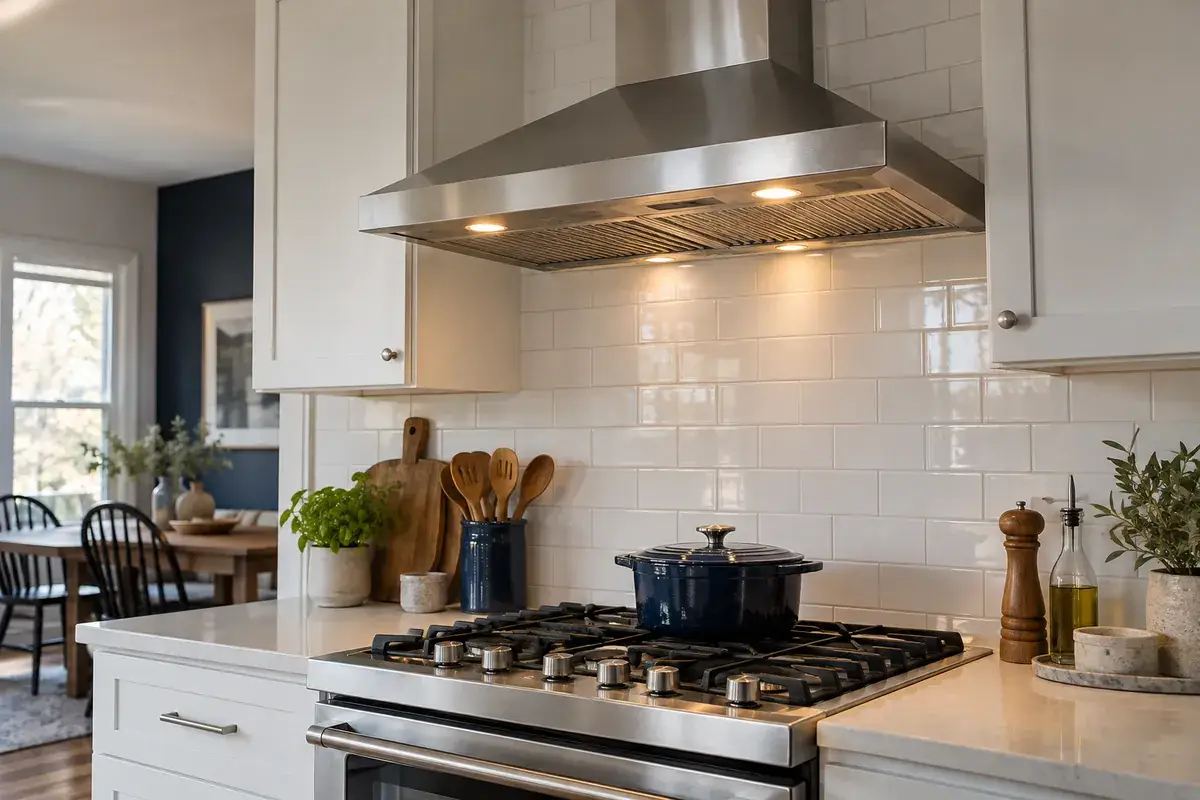
A ducted range hood sends smoke, grease, steam and cooking smells outside. A recirculating hood pulls the air through a grease filter and a charcoal filter and blows it back into the kitchen. It takes some of the grease and odour, but none of the moisture or heat. If you cook often, cook on gas, or fry and sear, a hood ducted to the outside is the better choice whenever the kitchen layout allows it.
How each type works
| Ducted | Recirculating | |
|---|---|---|
| Where the air goes | Outside, through a wall or roof cap | Back into the kitchen |
| Removes moisture and heat | Yes | No |
| Removes grease and odour | Yes | Partly, through the filters |
| Maintenance | Wash the metal filters | Wash the metal filters and replace the charcoal filters |
| Installation | Needs a duct path to the outside | Can go almost anywhere |
What a good duct run looks like
Most of the problems we see with ducted hoods are in the duct, not the hood.
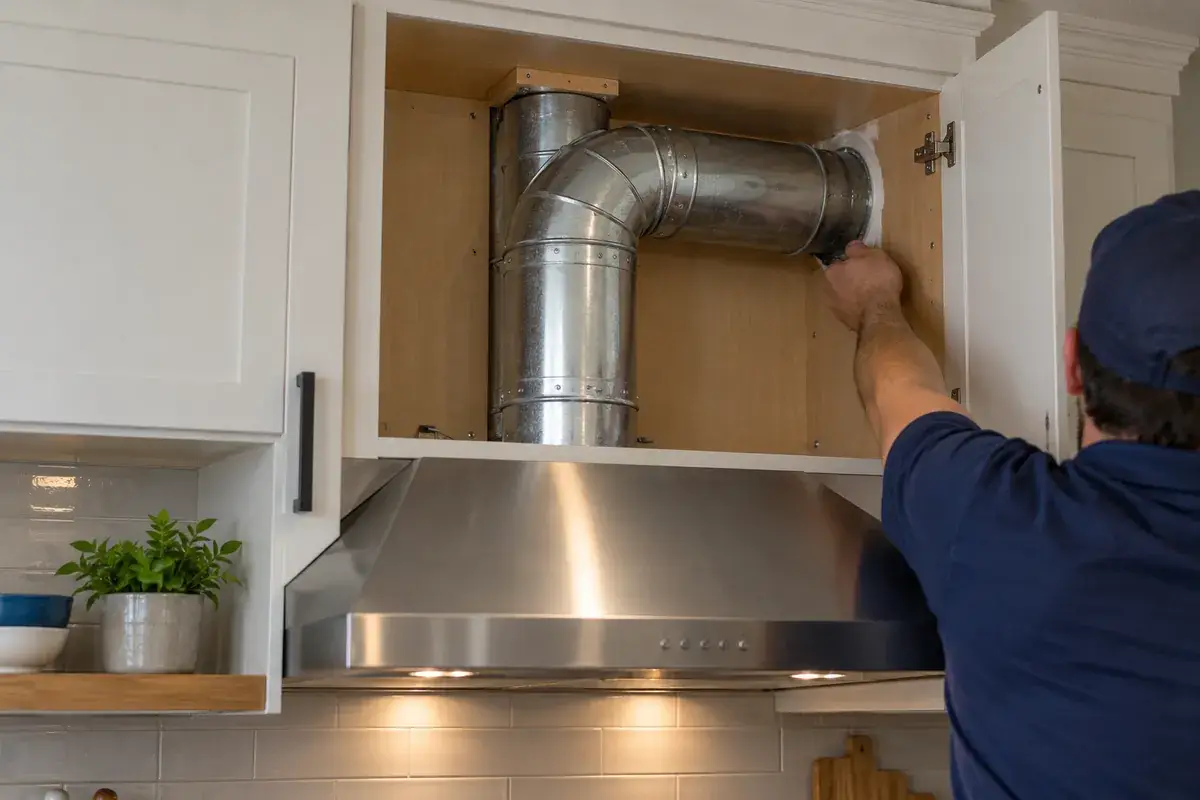
- It uses smooth, rigid metal duct, not the thin flexible kind.
- The duct is the size the hood manufacturer asks for. Many hoods need 6 inches, and larger hoods often need more. Reducing it to fit an old opening chokes the airflow.
- It takes the shortest path to the outside, with as few elbows as possible.
- It ends at an exterior cap with a damper, so cold air and insects can’t come back in.
- It never ends in the attic, a soffit or the space above the cabinets. Grease and moisture in those spaces cause stains, mould and fire risk.
How powerful does the hood need to be?
The hood should be at least as wide as the cooktop. Follow the manufacturer’s mounting height, because a hood mounted too high misses most of the smoke. More power isn’t always better. A very strong hood pulls a lot of air out of the house, and that air has to be replaced from somewhere. In a tight house, or one with a fireplace or other fuel-burning appliances, ask your installer whether the hood needs make-up air before you buy the biggest one.
Signs your hood isn’t doing its job
- The smoke alarm goes off when you sear or fry.
- Cooking smells hang around the house for hours.
- A sticky film builds up on the cabinets around the stove.
- The windows fog up while you cook. Our post on window condensation explains why.
- The fan is loud but you can barely feel air at the filter.
Keeping it working
Wash the metal grease filters about once a month in hot soapy water or the dishwasher. If the hood is recirculating, replace the charcoal filters as often as the manufacturer recommends, usually every few months. Once a charcoal filter is saturated it stops removing smells.
Switching from recirculating to ducted
It is often possible when the stove is on an outside wall, or when there is a path through the cabinets or the ceiling to the outside. The job involves cutting the exterior wall, running the duct, installing a cap and sealing it against water and drafts. We install and replace range hoods and can tell you on the first visit whether a ducted hood is possible in your kitchen. If the bathroom has the same moisture problem, our post on bathroom fans covers it.
Range hood questions
Can a range hood vent into the attic?
No. A range hood has to vent outside. Grease and moisture in the attic or a soffit lead to mould, stains and a fire risk.
Is a recirculating hood OK with a gas stove?
It isn’t ideal. A gas cooktop adds moisture and combustion gases that a recirculating hood doesn’t remove. Use a ducted hood if the kitchen allows it.
How often should I clean range hood filters?
Wash the metal filters about once a month, more often if you fry a lot. Replace charcoal filters on recirculating hoods every few months, following the manufacturer.
Can I convert a recirculating range hood to ducted?
Often, yes, if there is a route to an outside wall or the roof. Some hoods can be switched with a kit, and others have to be replaced.
Keep reading
All posts-
 Repairs & quick fixes
Bathroom fan not clearing steam? When to repair or replace it
If the mirror stays fogged after a shower, the fan isn't moving enough air. Five things to check first, and the signs… 4 min read -
 Repairs & quick fixes
Condensation on the inside of your windows: normal or a problem?
A little fog on cold mornings is normal. Water that runs onto the sill, ice on the inside or stained wood is… 3 min read -
 Seasonal home care
How to prevent ice dams on your roof
Ice dams start with heat leaking into the attic. How to stop them before winter, what to do if one forms, and… 4 min read
Rather have us take care of it?
Send us a photo of the problem on WhatsApp or call us. We will tell you what it needs and what it costs before any work starts.
Call us at (647) 669-7346. The same number works on WhatsApp.