

Condensation on the inside of your windows: normal or a problem?
A little fog on cold mornings is normal. Water that runs onto the sill, ice on the inside or stained wood is not. Here is what causes it and how to bring it down.
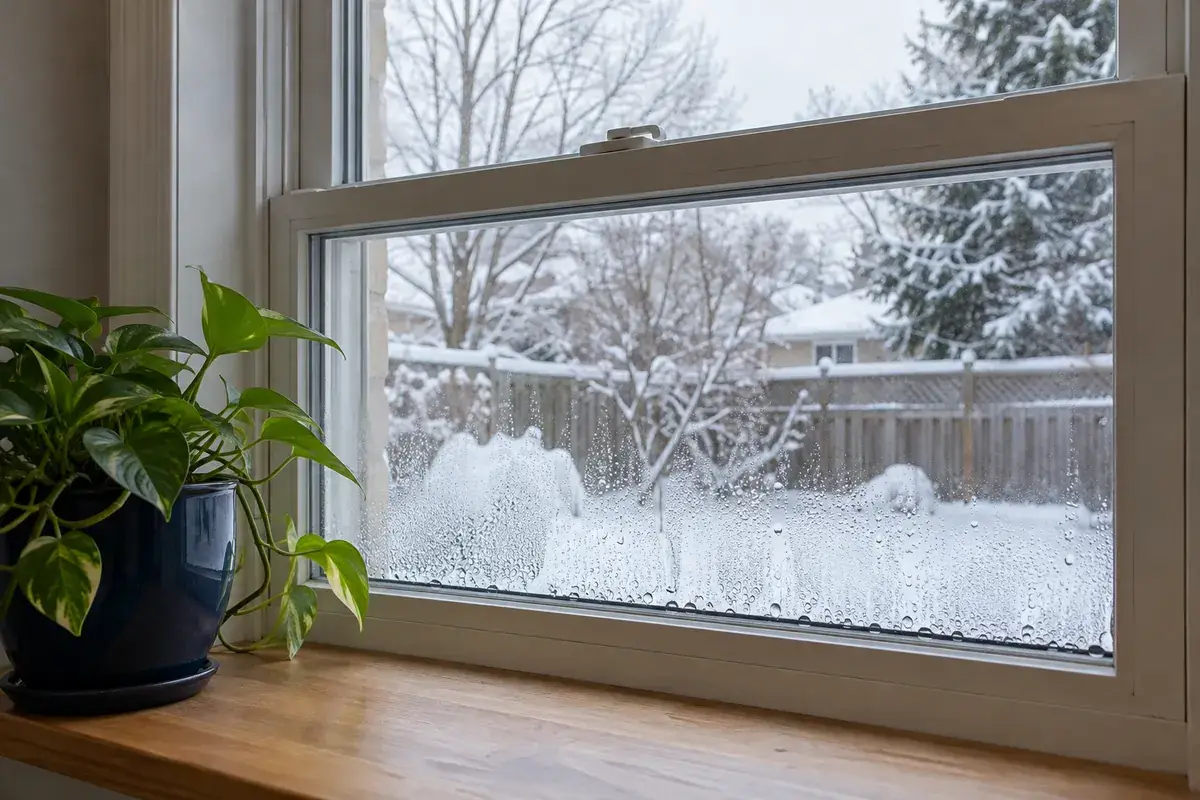
A little condensation on the inside of the windows on a cold morning is normal, especially along the bottom of the glass. It becomes a problem when the windows are wet most of the day, when water runs down onto the sill, when ice forms on the inside, or when the wood around the window starts to stain or peel. That means the air in the house is too humid for the weather, the window is losing a lot of heat, or both.
Why windows sweat in winter
Warm indoor air holds moisture. When it touches a surface colder than its dew point, the moisture turns to water. In an Ontario winter the coldest surface in most rooms is the window glass, and the coldest part of the glass is the bottom edge. The colder it gets outside, the less humidity it takes to fog the windows.
Where the moisture comes from
- Showers and baths, especially when the bathroom fan is weak or not used.
- Cooking, mostly boiling and frying without a range hood vented outside.
- Drying laundry inside, or a dryer vent that leaks into the house.
- A furnace humidifier set too high for the outdoor temperature.
- A lot of people, pets or plants in a small space.
- New drywall, plaster or concrete, which give off moisture for the first year after a renovation.
How to bring it down
- Measure the humidity. A small hygrometer costs a few dollars. A common winter target is around 30 to 40 percent, lower on the coldest days.
- Turn the humidifier down when it gets very cold outside.
- Run the bathroom fan and the range hood every time, and keep them running for a while after.
- Let warm air reach the glass. Open blinds and curtains during the day and keep heat registers under the windows clear.
- Check the dryer vent and make sure it goes all the way outside.
When the window is the problem
If the humidity is reasonable and one window still runs with water, look at the window itself. Older double-pane units, single-pane windows with storms, and aluminum frames all have cold surfaces. Gaps around the frame let cold air in and make the glass colder still. Fog or moisture between the two panes of glass means the seal has failed, and the sealed unit needs to be replaced. Cleaning won’t fix that.
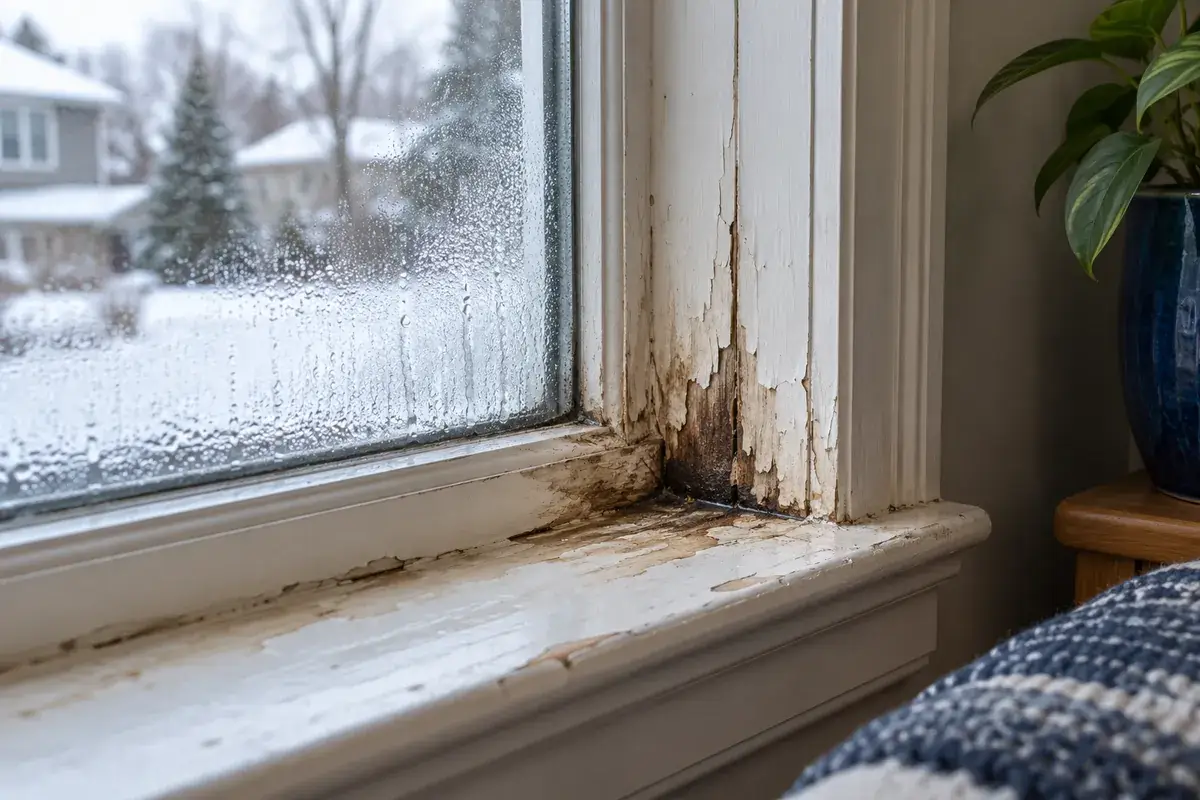
Watch the sills
Water that runs off the glass every morning ends up in the sill and the bottom of the frame. Over a few winters the paint peels, the wood darkens and goes soft, and mould grows in the corners. Catching it while the damage is on the surface means a repair instead of new trim or a new window.
We repair and replace window frames and sills, and our fall maintenance package includes window caulking and sealing the gaps that let cold air in. For the rest of the house, see our fall home maintenance checklist.
Window condensation questions
Is condensation on the inside of windows bad?
A little on cold mornings is normal. Water that stays all day, runs onto the sill or freezes on the glass is a sign of high humidity or a cold window. Over time it damages paint, wood and drywall.
Why do only some of my windows get condensation?
Bathrooms, kitchens and bedrooms have the most moisture. North-facing windows and windows with closed blinds stay the coldest. Older or damaged windows have colder glass than newer ones.
Does condensation mean I need new windows?
Usually not. Lowering the humidity and improving ventilation fixes most cases. Replacement makes sense when the seal between the panes has failed or the frames are rotting.
What does moisture between the panes of glass mean?
The seal of the double-pane unit has failed. The glass unit, and sometimes the sash, has to be replaced.
Keep reading
All posts-
 Repairs & quick fixes
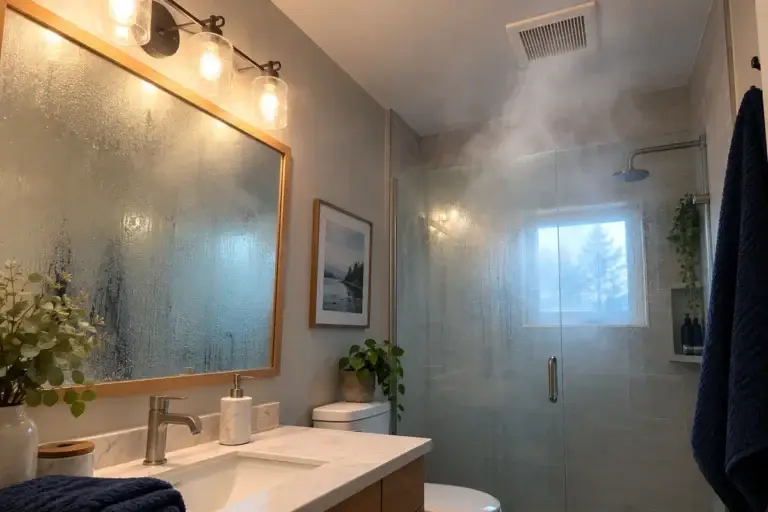
Bathroom fan not clearing steam? When to repair or replace it
If the mirror stays fogged after a shower, the fan isn't moving enough air. Five things to check first, and the signs… 4 min read -
 Repairs & quick fixes
Range hood venting: ducted or recirculating, and why it matters
A ducted hood takes smoke, grease and moisture outside. A recirculating hood only filters some of it. How to choose, and what… 3 min read -
 Seasonal home care
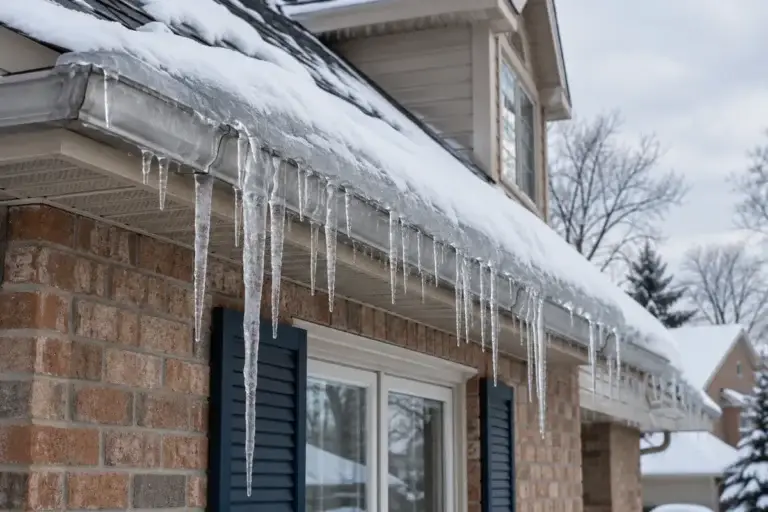
How to prevent ice dams on your roof
Ice dams start with heat leaking into the attic. How to stop them before winter, what to do if one forms, and… 4 min read
Rather have us take care of it?
Send us a photo of the problem on WhatsApp or call us. We will tell you what it needs and what it costs before any work starts.
Call us at (647) 669-7346. The same number works on WhatsApp.