
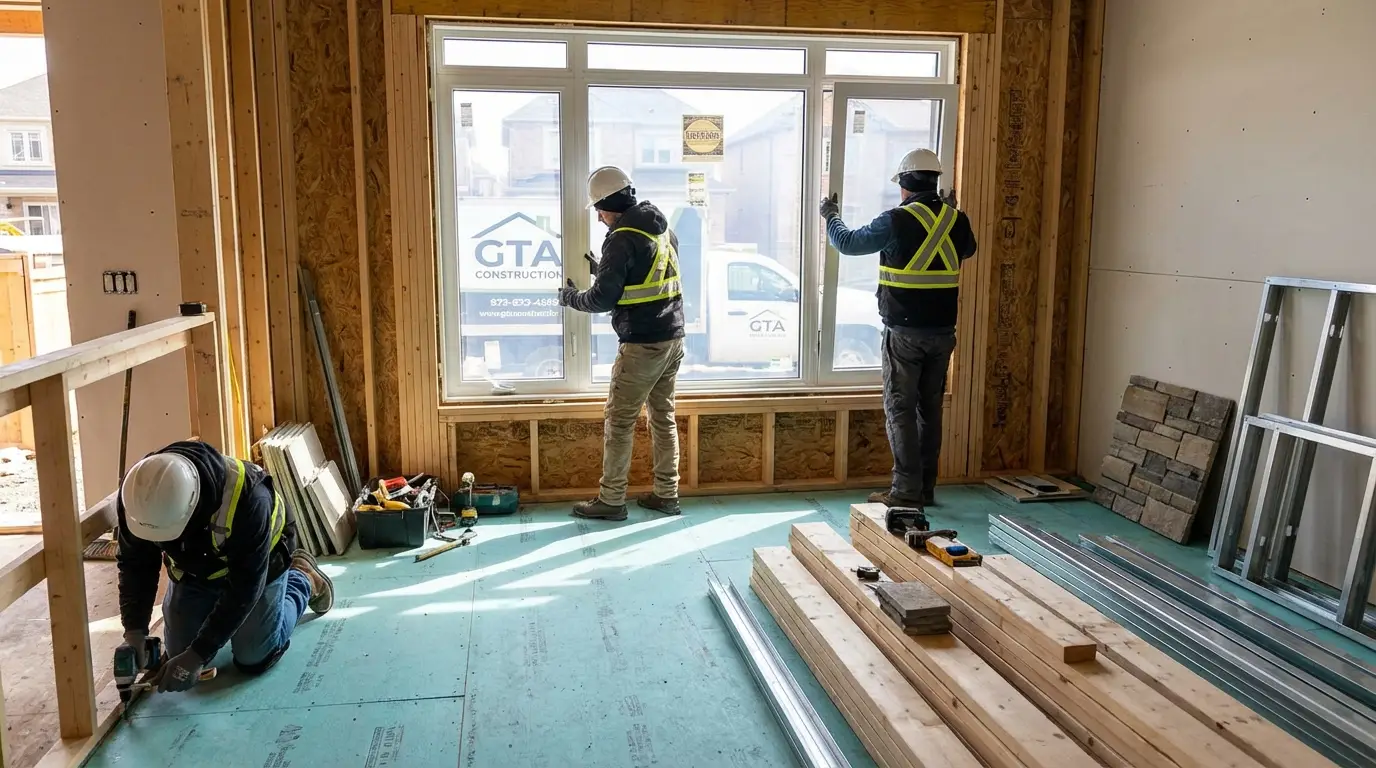
In the Greater Toronto Area, where changing seasons and urban lifestyles shape how homes are used, remodeling projects often prioritize aesthetics over efficiency. However, integrating both aspects is essential for homeowners seeking lasting value. The climate in cities like Toronto, Vaughan, and Mississauga subjects properties to seasonal extremes that demand durable, energy-conscious upgrades. Efficiency in design and execution not only enhances comfort but directly contributes to energy savings, cost-effectiveness, and sustainability—elements that elevate a home’s long-term appeal and performance.
As modern home improvement trends evolve, efficiency merges with style in a way that respects the structural integrity and future-proofing needs of properties across Brampton, Oakville, and Richmond Hill. Homeowners who focus solely on style risk costly maintenance and energy inefficiencies down the line. This article emphasizes why strategic efficiency is a non-negotiable master plan piece in any remodeling initiative, offering an authoritative view on balancing aesthetics with robustness for optimal functionality and value.
The Technical Importance of Efficiency in Home Remodeling Projects
Behind every successful remodel in the GTA lies a complex interplay of structural engineering, material science, and environmental considerations. Efficiency entails more than merely installing energy-saving appliances or insulation; it’s an integrated approach encompassing the entire building envelope, mechanical systems, and workflow strategies that work harmoniously to secure longevity and sustainable operation.
Consider the local Toronto climate: seasonal fluctuations from humid summers to frigid winters stress building materials differently. Inefficient foundations, improperly sealed windows, and outdated HVAC configurations lead to moisture intrusion, thermal bridging, and excessive energy consumption. A detailed assessment during your remodel uncovers these hidden inefficiencies behind walls or beneath floors, which, without intervention, could compromise performance and durability.
The choice of materials matters deeply. For instance, subfloors constructed with moisture-resistant engineered wood or composites fare better against the GTA’s humidity compared to cheaper plywood alternatives that may warp or swell. Similarly, using high-performance low-E glass windows with proper thermal breaks reduces heat loss during cold spells and limits solar gain in summer, contributing to superior energy savings without sacrificing style.
Efficient remodels also incorporate modern design principles like optimal building orientation and smart placement of insulation and ventilation systems. The goal is to achieve a balance where natural light enhances aesthetics but does not increase cooling loads drastically. Integrating energy-efficient lighting, appliances, and smart home controls further refines this balance, resulting in a home that marries comfort with lower utility demands.
Beyond materials and systems, the workflow of the remodel itself is a technical matter. Sequencing demolition, mechanical upgrades, finishing, and inspection correctly prevents unnecessary delays or damage to newly installed components. Efficient project management methods have a direct impact on reducing labor waste and protecting investments in new materials and craftsmanship.
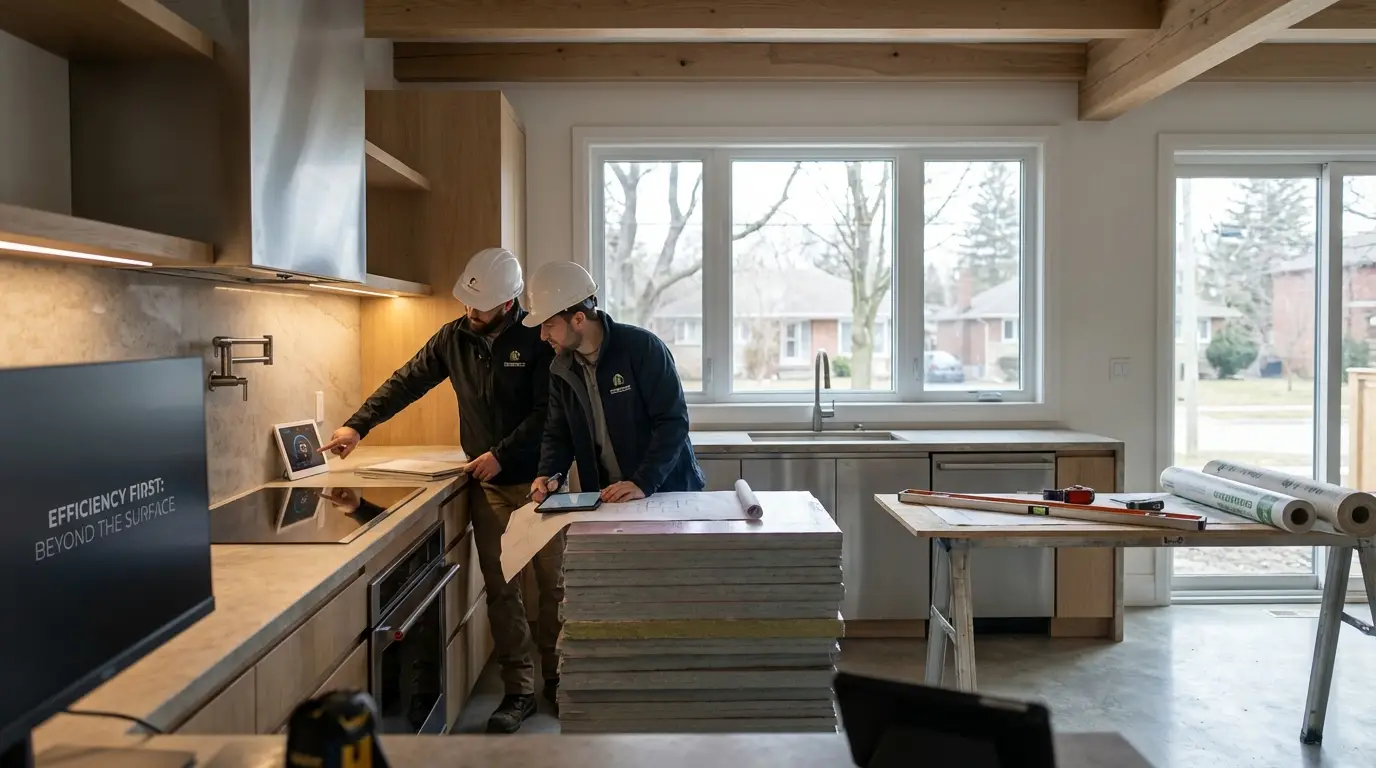
Concrete Steps to Prioritize Efficiency in Your Remodel
- Define Clear Performance Goals: Begin by establishing measurable objectives such as improved energy savings, enhanced indoor air quality, or increased home durability to guide design choices.
- Perform a Professional Diagnostic Visit: Engage experts for a detailed on-site assessment that identifies structural weaknesses, energy loss points, and opportunities for modernization—a crucial step that can be credited toward your project cost.
- Invest in Quality Subflooring Solutions: Select moisture-resistant engineered materials proven to withstand Ontario’s climate extremes for lasting structural integrity.
- Adopt Smart Layouts: Focus on maximizing natural light and optimizing room flow to reduce reliance on artificial lighting and mechanical heating or cooling. Visit smart layouts save space for insightful arrangements that enhance efficiency.
- Upgrade Insulation and Windows: Use materials with excellent R-values and thermal breaks to minimize heat transfer, suited for local weather patterns experienced in Toronto and its surroundings.
- Sequence Construction Phases Logically: Plan work so that structural and mechanical elements are installed first, followed by finishes to avoid rework and protect new fixtures.
- Implement Energy Efficiency Solutions: Explore renewable energy options, efficient HVAC systems, and smart controls to reduce long-term operating costs. Learn more at energy efficiency services.
- Integrate Sustainable Materials: Prioritize products that offer environmental benefits while maintaining durability to support sustainability goals without compromising modern design.
- Maintain a Clean Worksite: Ensure tools and waste are managed to protect surfaces and optimize workflow.
- Schedule Regular Inspections: Conduct frequent quality checks to ensure adherence to plans and catch any inefficiencies early.
Pro Contractor Tip: During the diagnostic assessment, employ infrared thermal imaging to detect hidden insulation deficits and air leaks that conventional inspections might miss. This technology helps target efficiency upgrades precisely, maximizing energy savings and comfort amid the GTA’s volatile climate.
The CNG Contracting Approach to Efficient Remodeling in the GTA
At CNG Contracting, projects begin with a comprehensive Diagnostic Visit, where our experts assess the unique characteristics of your home in communities such as Vaughan, Mississauga, and Richmond Hill. This visit is more than an inspection—it’s foundational to crafting an efficient remodeling master plan tailored to your property’s needs.
The Diagnostic Visit fee is fully credited toward your final project, reinforcing our commitment to transparency and long-term investment focus. We identify problem areas—from inefficient layouts and energy leaks to vulnerable materials—and propose durable, cost-effective solutions that respect your style preferences while prioritizing functionality and sustainability.
Our teams align construction phases to ensure minimal disruption and optimize workflow, a critical factor given the busy urban environments of Toronto and Oakville. By adhering to an efficient sequence, we reduce the chances of rework or material damage, preserving your investment over time.
Whether modernizing a historic Toronto home or executing a full-scale renovation in Brampton, efficiency stands at the core of our value proposition. Partner with us for a remodeling journey that enhances your property’s comfort, energy profile, and overall market value through strategic, professional intervention.
Comparing Remodeling Strategies: Efficiency Impact and Benefits
| Situation/Strategy | Risk Level | Proactive Benefit |
|---|---|---|
| Ignoring Energy-Efficient Window Installation | High – Increased heating/cooling costs and interior damage over time | Enhanced thermal comfort, reduced utility bills, and improved longevity of surfaces |
| Using Low-Quality Subfloor Materials | Moderate to High – Moisture damage and warping causing structural repairs | Durable foundation resisting humidity-related damage, preserving structural integrity |
| Skipping Diagnostic Visit | High – Undetected issues leading to costly fixes and delays | Comprehensive project planning, identifying hidden inefficiencies before construction |
| Failing to Sequence Construction Tasks Properly | Moderate – Rework and increased labor lead to extended timelines | Streamlined workflow minimizing waste and delays, optimizing budgets |
| Neglecting Smart Layout Principles | Moderate – Poor room flow and unnecessary energy consumption | Optimized spatial efficiency increasing home comfort and reducing energy use |
Expert Guidance to Book Your Professional Diagnostic Visit Today
Embarking on a remodel with an emphasis on efficiency provides measurable advantages in comfort, sustainability, and property value within the Greater Toronto Area. Homeowners across Vaughan, Mississauga, and Richmond Hill are encouraged to connect with professionals for a detailed Diagnostic Visit that sets the stage for successful projects.
Contact CNG Contracting at (647) 669-7346 or visit our Contact Us page to schedule your assessment. Our team will guide you through every step, helping implement a master plan focused on enhancing your home’s functionality, energy profile, and modern aesthetic.
Key Technical Terms to Understand Efficient Remodeling
- Thermal Bridging: The transfer of heat across materials that are poor insulators, leading to energy loss and condensation issues.
- Low-E Glass: Glass coated with a thin metallic layer that reflects infrared energy, improving insulation without compromising visibility.
- Subfloor: The structural layer beneath the finished flooring that supports weight and contributes to moisture control.
- Infrared Thermal Imaging: A technology used to visualize heat patterns and detect insulation gaps or air leakage.
- Lean Construction: A methodology focusing on waste reduction, efficient resource allocation, and optimizing workflow efficiency.
Integrating energy efficiency into home remodeling elevates both operational savings and comfort. This video illustrates how smart choices in design and materials contribute to long-term sustainability across climates like Toronto’s.
This presentation details project management techniques that streamline remodeling workflows, ensuring timely completion with minimal waste and disruptions.
{“@context”:”https://schema.org”,”@type”:”FAQPage”,”mainEntity”:[{“@type”:”Question”,”name”:”Why should efficiency take priority over style in remodeling?”,”acceptedAnswer”:{“@type”:”Answer”,”text”:”Efficiency impacts the homeu2019s long-term durability, energy consumption, and maintenance costs. Prioritizing it ensures the project remains cost-effective and sustainable while enabling style to enhance lasting value.”}},{“@type”:”Question”,”name”:”How does a Diagnostic Visit improve the remodeling process?”,”acceptedAnswer”:{“@type”:”Answer”,”text”:”A Diagnostic Visit helps uncover hidden inefficiencies, structural concerns, and opportunities for energy savings early in the project, allowing precise planning and avoiding costly changes later.”}},{“@type”:”Question”,”name”:”What materials are best suited for Torontou2019s climate?”,”acceptedAnswer”:{“@type”:”Answer”,”text”:”Moisture-resistant subfloor materials, high-performing low-E glass, and quality insulation with proper R-values are ideal for mitigating humidity and thermal fluctuations common in the GTA.”}},{“@type”:”Question”,”name”:”Can efficient layouts improve a homeu2019s energy profile?”,”acceptedAnswer”:{“@type”:”Answer”,”text”:”Yes, optimizing room flow and natural light exposure reduces reliance on artificial lighting and mechanical systems, leading to enhanced energy savings and comfort.”}},{“@type”:”Question”,”name”:”How does cleanliness affect remodeling efficiency?”,”acceptedAnswer”:{“@type”:”Answer”,”text”:”A clean, organized worksite prevents hazards, protects materials, and ensures smooth workflow, directly contributing to project speed, safety, and quality.”}}]}Why should efficiency take priority over style in remodeling?
Efficiency impacts the home’s long-term durability, energy consumption, and maintenance costs. Prioritizing it ensures the project remains cost-effective and sustainable while enabling style to enhance lasting value.
How does a Diagnostic Visit improve the remodeling process?
A Diagnostic Visit helps uncover hidden inefficiencies, structural concerns, and opportunities for energy savings early in the project, allowing precise planning and avoiding costly changes later.
What materials are best suited for Toronto’s climate?
Moisture-resistant subfloor materials, high-performing low-E glass, and quality insulation with proper R-values are ideal for mitigating humidity and thermal fluctuations common in the GTA.
Can efficient layouts improve a home’s energy profile?
Yes, optimizing room flow and natural light exposure reduces reliance on artificial lighting and mechanical systems, leading to enhanced energy savings and comfort.
How does cleanliness affect remodeling efficiency?
A clean, organized worksite prevents hazards, protects materials, and ensures smooth workflow, directly contributing to project speed, safety, and quality.