
Maximizing living space in the Greater Toronto Area’s diverse housing market is a pressing concern for many homeowners and renovators. The region’s blend of urban density and suburban spread demands solutions that optimize existing floor plans without necessitating costly expansions or structural additions. In tight markets such as Toronto, Vaughan, or Mississauga, where property footprints can be limited, focusing on smart layouts rather than mere square footage expansion offers a more nimble, cost-effective, and sustainable approach to home improvement. Efficient design strategies not only conserve space but also enhance overall livability by improving flow, natural light penetration, and multi-functionality of rooms.
Especially in a city like Richmond Hill or Brampton, where seasonal weather fluctuations impose structural and material stresses, smart layout choices can contribute to superior indoor comfort and longevity of finishes. The challenge is to convert small areas into versatile, welcoming environments through intelligent interior planning that prioritizes space optimization over brute spatial increase. This article investigates these design principles in detail, showing how thoughtful arrangements enhance property value and homeowner satisfaction without the complexity and expense of major additions.
How Smart Layouts Harness Space More Efficiently Than Expensive Additions
Behind every transformative home improvement lies an understanding of space as a three-dimensional element shaped by architecture and function. Smart layouts focus on reimagining how space flows and serves its inhabitants rather than simply adding square footage. For professional contractors in the Toronto area, the emphasis is often on maximizing existing footprints while preserving structural integrity and complying with local building codes.
Consider traditional homes with compartmentalized rooms. Between walls, hallways, and unused corners, valuable space often remains concealed or underutilized. Removing non-load-bearing walls to create open-concept living areas is a common technique that bathroom renovations or kitchen upgrades exploit to amplify visual volume and real usable area. The resulting free-flowing layout not only makes rooms appear larger to the human eye but facilitates better air circulation, natural daylight penetration, and modern living patterns.
From a technical point of view, this requires an expert evaluation of the subfloor, wall assemblies, and support structures. For example, in regions like Oakville, where humidity and temperature variations are substantial, seasoned contractors select moisture-resistant subfloor materials that resist warping, ensuring long-term flooring stability. Removing or repositioning walls also demands precise load transfer solutions such as adding steel beams or reinforced lintels to maintain building safety.
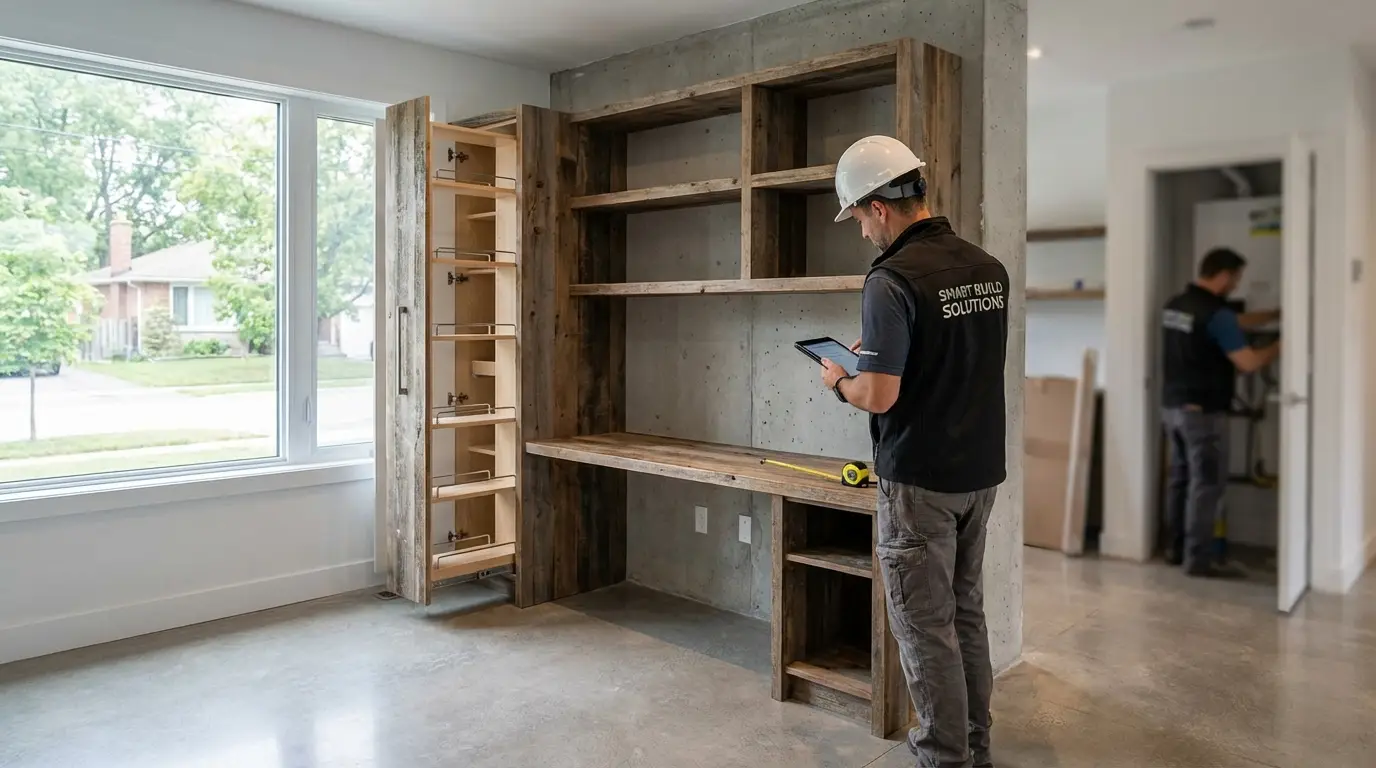
Furthermore, integrating vertical space through built-in shelving, floating cabinets, or wall-mounted storage units transforms what was once dead space along walls or above doorframes into functional areas. Such an efficient design strategy reduces clutter, a common cause of spatial perception issues in small homes across Toronto and its suburbs. The emphasis on verticality must be balanced with appropriate lighting choices and color palettes, as aggressive accumulation of built-ins without adequate light can suffocate an interior.
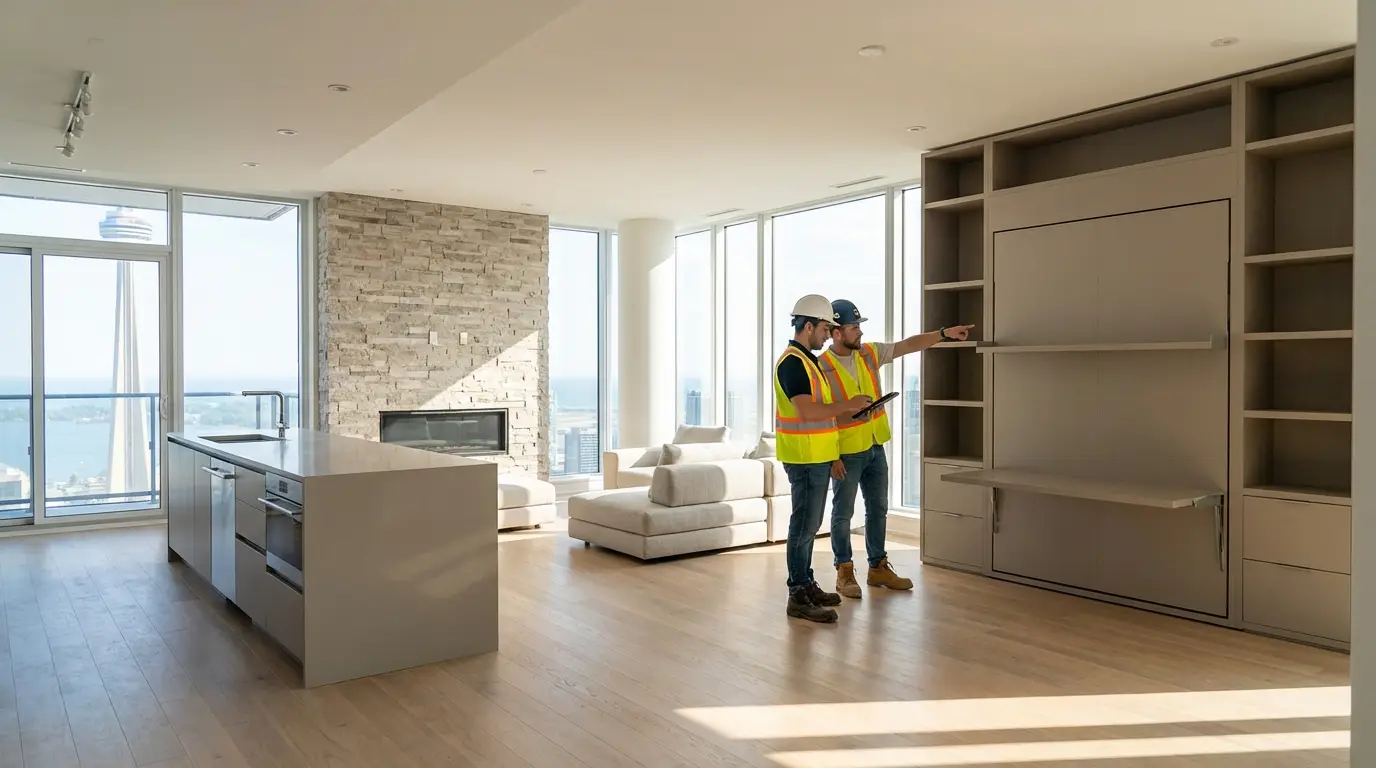
An illustrative example is a small condo in downtown Toronto, where reorienting furniture layout, introducing multi-functional cabinetry, and removing a non-structural partition radically boosted usable floor area. This approach sidesteps the complications of costly additions that require permits, foundational work, and potential neighborhood zoning variances. Thus, smart layouts operate at the confluence of architectural savvy, cosmetic appeal, and structural prudence.
Advanced Interior Planning Techniques for Maximum Space Optimization
Expert interior planning goes beyond surface aesthetics by applying design theories that optimize every inch of a residential space. This involves analyzing traffic flow patterns, sightlines, and functional zoning to arrange rooms and furnishings harmoniously. In the GTA’s varied climates—ranging from humid summers to cold snowy winters—material choices also influence spatial effectiveness and longevity.
For instance, strategic placement of sliding or pocket doors instead of traditional swinging doors saves precious square footage traditionally claimed by door arcs. Such seemingly minor changes improve mobility and accessibility, especially important in compact layouts often seen in suburban Oakville or Richmond Hill properties. Additionally, floating fixtures like wall-hung vanities or nightstands clear up floor area, facilitating easier cleaning and contributing to a sleek, modern aesthetic.
Light colors and reflective surfaces amplify ambient natural light, crucial in smaller spaces where windows are limited by external constraints like urban proximity or lot shapes. This technique aligns with efficient design goals by creating visual depth and enhancing occupant well-being.
One notable approach employed during full renovation projects is incorporating multi-functional furniture designs—beds with built-in storage, fold-down desks, extendable dining tables, and nesting tables all serve dual purposes, maximizing utility without expanding the footprint.
The use of niche spaces or awkward corners provides further opportunities for space saving. Custom shelving units or built-in cabinetry leverage these otherwise lost areas into functional storage or usage hubs. This layout prowess results in homes feeling roomier and more intentional in their design.
Interior planners and contractors in Toronto and its suburbs recognize that efficiency is not just about space economy but ergonomic ease and longevity. For example, using moisture-resistant plywood or composite materials ensures that cabinetry and fixtures resist warping and degradation driven by seasonal humidity changes common in the region.
Top 9 Contractor-Recommended Strategies to Maximize Home Space Without Expensive Additions
- Remove Non-Structural Walls: Open up living spaces by eliminating unnecessary wall partitions while preserving structural supports with steel reinforcements.
- Implement Vertical Storage Solutions: Use tall bookshelves, floating shelves, and wall-mounted cabinets to increase storage without encroaching on floor area.
- Choose Multi-Functional Furniture: Incorporate pieces that combine seating, sleeping, and storage functions to save floor space.
- Replace Swing Doors with Sliding or Pocket Doors: Enhance flow and reclaim space lost to door swings.
- Light-Colored Paint and Reflective Surfaces: Optimize natural and artificial light reflection to expand perceived space.
- Utilize Nooks and Corners Intelligently: Convert awkward or unused areas into storage, workstations, or seating zones with custom built-ins.
- Floating Fixtures: Choose wall-hung sinks, vanities, and nightstands to free floor space and modernize appearance.
- Declutter and Maintain Minimalism: Adopt a ‘less is more’ philosophy and store seasonal or infrequently used items out of sight.
- Define Zones Without Walls: Use rugs, lighting, and furniture arrangement to create functional sub-areas in open layouts, promoting clear organization.
Pro-Tip: When removing partitions, inspect underlying subfloor and joists for any hidden damage or moisture issues commonly affecting GTA homes after winter. Addressing these early prevents costly repairs during renovation.
How CNG Contracting Brings Smart, Space-Saving Layouts to Life
At CNG Contracting, we focus on delivering tailored solutions that prioritize space efficiency and durability — key concerns for homeowners across Toronto, Vaughan, and Mississauga. Our expert teams combine detailed site assessments with years of experience in full renovations to ensure your existing home layout evolves into a more functional and expansive environment without unnecessary structural additions.
Booking a Professional Diagnostic Visit allows our specialists to analyze your property’s unique limitations and opportunities, offering custom design strategies that are as practical as they are aesthetically pleasing. This visit includes a thorough evaluation of load-bearing walls, material conditions, and potential multi-use configurations. The diagnostic visit fee is fully credited toward the final project cost, reinforcing our commitment to transparency and client investment satisfaction.
Whether your project targets open layout transformations, basement finishing, or custom cabinetry to unlock hidden space potential, our refined approach guarantees work quality aligned with local climate considerations, including humidity control and thermal efficiency — crucial factors when working in areas like Oakville or Richmond Hill. Our streamlined process reduces disruptive expansions and leverages smart interior planning principles to optimize flow and function.
Clients interested can learn more about our dedication to superior craftsmanship and strategic remodeling by visiting our website, exploring our portfolio, and embracing a design philosophy that values space-saving intelligence over costly additions.
Technical Comparison: Smart Layout Choices Versus Traditional Additions
| Situation/Strategy | Risk Level | Proactive Benefit |
|---|---|---|
| Removing Non-Load-Bearing Walls | Low when inspected by qualified professionals | Improves flow and increases visible space rapidly |
| Adding Vertical Storage (Shelves, Cabinets) | Minimal structural impact | Maximizes clutter-free storage, maintaining floor space |
| Installing Sliding or Pocket Doors | Low risk, minor structural modifications | Increases navigable area and improves room accessibility |
| Building a Home Addition | Moderate to High – requires permits, foundation work, and compliance checks | Adds square footage but risks zoning issues and expense |
| Using Multi-Functional Furniture | Low risk, no structural change | Enhances room utility without spatial penalty |
Take Your Smart Space-Saving Project Further with Professional Support
Engaging a qualified professional ensures that your home improvement project aligns with both your lifestyle needs and structural safety requirements. Whether you reside in Brampton, Oakville, or elsewhere in the GTA, CNG Contracting offers comprehensive consultation and execution services that help materialize your vision for efficient design and smart layouts. Contact us today by calling (647) 669-7346 or visiting our Contact Us page to schedule your diagnostic assessment and gain expert insights tailored to your home.
Essential Terms to Understand Smart Layout and Space Efficiency
- Non-Load-Bearing Wall: A partition wall that does not support the structure’s weight, thus removable without compromising building integrity in many cases.
- Floating Fixtures: Wall-mounted furniture or accessories that create the illusion of more floor space and facilitate easier cleaning.
- Vertical Storage: Storage solutions that utilize wall height rather than floor area, such as tall shelving or cabinets.
- Open Concept: A floor plan where walls between main living areas are removed or minimized to create a seamless, flowing space.
- Multi-Functional Furniture: Furniture designed to serve multiple purposes, such as a bed with storage or a fold-away desk, enhancing space utility.
How can removing walls save more space than adding a room?
Removing non-structural walls opens up circulation and maximizes existing floor plans without expanding the home’s footprint, making the space feel larger without expensive construction.
What types of furniture are best for small homes?
Furniture that serves multiple functions—such as beds with drawers, foldable desks, and nesting tables—can maximize utility while reducing clutter in small homes.
Why are sliding doors preferable in compact layouts?
Sliding or pocket doors eliminate the swing space required by traditional doors, increasing usable room area and improving flow in tight spaces.
Can a diagnostic visit really help in planning home renovations?
Absolutely. A professional diagnostic visit identifies structural opportunities and challenges early, enabling a tailored renovation plan that maximizes functionality and complies with safety codes.
How does CNG Contracting ensure longevity in GTA homes?
By selecting materials suited for local humidity and temperature conditions, and implementing design strategies that improve airflow and reduce wear, CNG helps homes maintain structural integrity over time.