
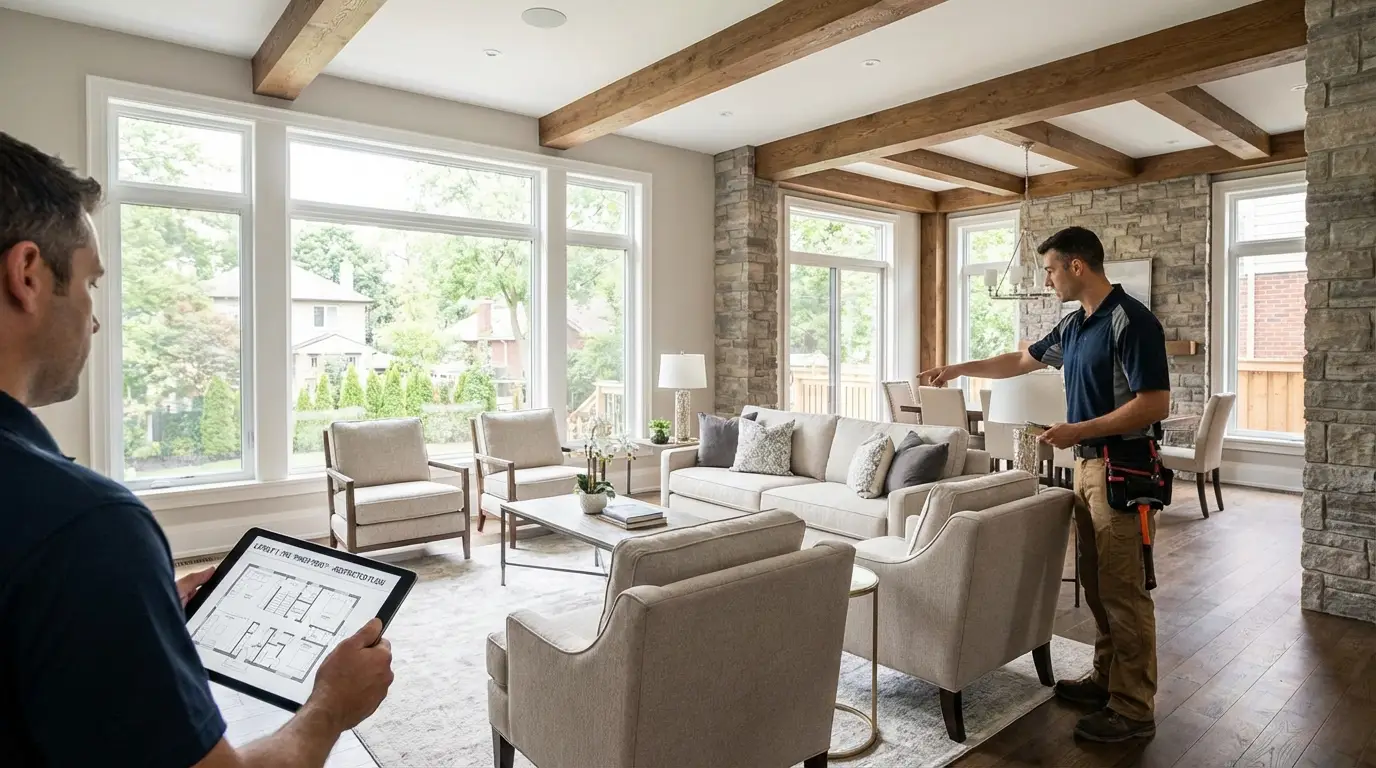
In the dynamic residential environments of Toronto, Vaughan, Mississauga, Brampton, Oakville, and Richmond Hill, the design and layout of home interiors have a substantial impact on daily living and long-term property value. Homeowners often underestimate how the subtle arrangement of rooms—whether in an open-concept plan or more traditional layouts—can either support or hinder the natural flow throughout a residence. With Greater Toronto Area’s diverse climate involving humid summers and cold winters, the functional circulation of air and movement among spaces is crucial for comfort and home longevity.
Understanding the relationship between room layouts and a home’s natural flow is essential for optimizing interior arrangement and ensuring that the space is both functional and inviting. Poor space planning can result in bottlenecks, awkward transitions, and underused areas, diminishing the livability and perceived quality of a property. For home improvement initiatives in the GTA, this knowledge forms the foundation for smart investments that preserve structural integrity and enhance daily comfort.
Identifying Room Layouts That Disrupt Natural Flow in GTA Homes
The challenge of achieving seamless traffic flow and room functionality is often underestimated in residential construction and renovation projects. Three room layouts commonly found in homes across the GTA frequently contribute to impaired natural flow:
- The Closed-Off Box Layout: Characterized by rigid, enclosed rooms separated by solid walls, this layout restricts easy movement and visual connection, leading to cramped spaces and inefficient circulation routes.
- The Long Corridor Funnel: This design funnels movement through narrow hallways, often leading to dead ends or forcing awkward turns, which can feel claustrophobic and disrupt the continuity of the space.
- The Islanded Furniture Zone: When furniture placement creates isolated “islands” in a large room, it blocks natural pathways and interrupts the intuitive movement among different functional zones.
These layouts, often the legacy of outdated design trends, may have been conceived without comprehensive space planning strategies that consider modern living patterns and maintenance demands typical to Greater Toronto Area homes. For example, the closed-off box layout can trap moisture during humid months, raising risks for mold while complicating HVAC performance. Meanwhile, islanded furniture configurations inhibit natural lighting flow, essential for health and energy efficiency given the long Canadian winters.
Addressing these hidden pitfalls begins with analyzing how rooms communicate at both physical and visual levels. Effective home design integrates the movement path of occupants with the functional purpose of each room, ensuring doorways, windows, and furniture create a balanced, flowing environment. This approach leads to a more harmonious dwelling that respects both the climatic challenges and the lifestyle needs of GTA families.
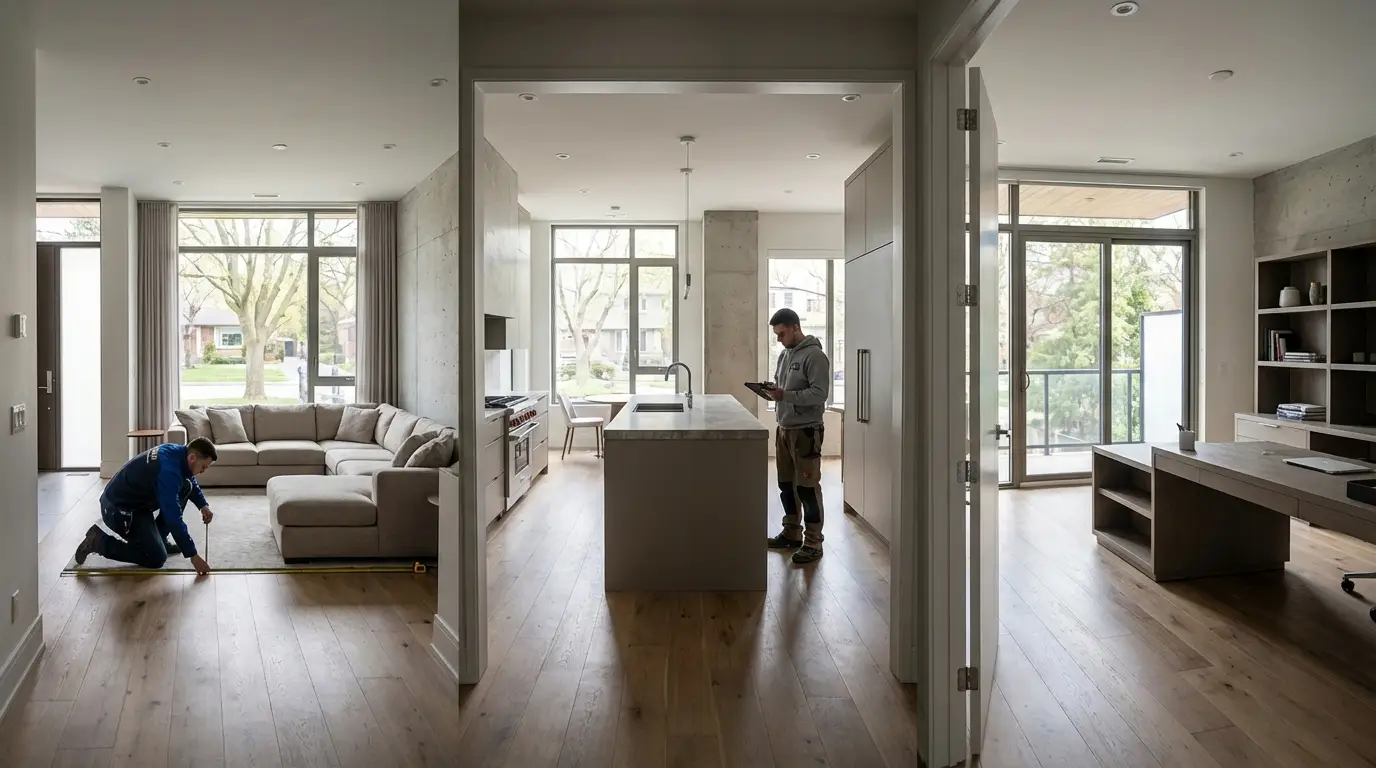
The Technical Reasons Behind Disrupted Home Traffic Flow in Common Room Layouts
Optimizing traffic flow and room functionality requires understanding the structural and mechanical factors influencing interior movement. Behind the walls and under the floors of GTA homes, several technical elements contribute to whether a layout supports or impedes natural flow:
1. Structural Constraints and Ceiling Heights
Older homes, particularly in Toronto and Richmond Hill, often feature load-bearing walls that limit options for creating open floor plans. These constraints mean that certain walls cannot be removed without significant reconstruction, affecting circulation. Additionally, varying ceiling heights in different rooms can cause visual disconnection, which psychologically interrupts the perception of flow. Designers must consider these factors to balance openness with structural integrity.
2. HVAC and Moisture Management
The Greater Toronto Area experiences diverse weather extremes, requiring efficient heating, ventilation, and air conditioning. Poor room layouts can create stagnant air pockets, especially in long corridors or closed-off spaces. This impedes moisture control, heightening risks of condensation and mold growth. Balanced air pathways must be integrated with spatial planning so that natural flow extends beyond foot traffic to air movement, preserving home durability.
3. Door and Window Placement
Natural light and outdoor access are vital for healthy interiors and contribute heavily to the perception of spaciousness. Misaligned doorways or windows often correlate with inefficient traffic flow because they prevent a clear path through rooms. For example, a door positioned directly opposite a large piece of fixed furniture may obstruct routine passage, triggering frustrating user experiences and complicating furniture placement strategies.
4. Flooring Materials and Subfloor Quality
Subflooring materials and the finishes applied affect comfort and long-term maintenance. For instance, high humidity in the GTA can warp inexpensive subfloors, causing uneven surfaces that discourage smooth movement. Choosing durable and moisture-resistant flooring aligns with the objective of preserving uninterrupted flow, particularly in high-traffic rooms like kitchens, living areas, and entryways.
Combined, these technical considerations shape why some room layouts function poorly despite seemingly adequate square footage. Without addressing structural, mechanical, and material factors, interior arrangement efforts risk remaining superficial, failing to deliver sustainable improvements.
Professional Recommendations to Restore and Enhance Natural Flow in Key Room Layouts
- Conduct a Comprehensive Traffic Flow Analysis: Examine how occupants move through the home daily. Identify pinch points and underused spaces, particularly in homes located in Mississauga and Oakville where multi-generation living is common.
- Prioritize Open and Connection-Friendly Designs: Where possible, integrate wider openings or archways to replace solid walls, fostering visual and physical connectivity between living, dining, and kitchen areas.
- Optimize Door and Window Alignment: Reposition or replace doors and windows to create direct sight lines, enhancing natural light penetration and intuitive navigation.
- Select High-Quality, Moisture-Resistant Materials: Use engineered hardwood or treated subfloors to combat the GTA’s humidity impact, especially in basements and lower levels.
- Integrate Multi-Functional Furniture Placement: Avoid islanded furniture blocks by connecting pieces with clear passage paths, aligning with the home’s natural traffic patterns.
- Enhance Lighting Strategies: Combine natural daylight with well-placed artificial lighting to accentuate spatial flow and mitigate dark or isolated corners.
- Use Transitional Zones Effectively: Employ buffer spaces such as open landings or foyer areas to ease movement between heavily used rooms.
- Address HVAC Ventilation Design: Ensure heating and cooling vents complement room layout to maintain air movement consistent with physical traffic flows.
- Maintain Structural Integrity When Modifying Walls: Consult with qualified contractors to safely remove or adjust walls, preserving load-bearing elements critical in GTA housing stock.
- Plan for Future Adaptability: Design layouts with flexibility to accommodate changing family needs or seasonal adjustments, maximizing investment longevity.
Quiz: Discover How Room Layouts Affect Your Home’s Flow
Answer the following questions to test your understanding of room layouts and their impact.
Please answer all questions before submitting.
‘; resultContainer.focus(); return; }// Calculate score let score = 0; quizData.forEach((q, index) => { if (answers[`question${index+1}`] === q.correctAnswer) { score++; } });// Feedback message const percent = (score / quizData.length) * 100; let message = ”;if (percent === 100) { message = “Excellent! You have a perfect grasp of how room layouts affect natural flow.”; } else if (percent >= 60) { message = “Good job! You understand many important aspects but there’s room to improve.”; } else { message = “Keep learning! Understanding layout flow is essential to improve your home environment.”; }// Show detailed results with correct answers let detailHTML = `You scored ${score} out of ${quizData.length} (${percent}%).
- `;
quizData.forEach((q, index) => {
const userAnswer = answers[`question${index+1}`];
const isCorrect = userAnswer === q.correctAnswer;detailHTML += `
- `;
detailHTML += `Q${index+1}: ${q.question}
`; detailHTML += `Your answer: ${userAnswer}) – ${q.options.find(o => o.startsWith(userAnswer))?.slice(3)}
`; if (!isCorrect) { detailHTML += `Correct answer: ${q.correctAnswer}) – ${q.options.find(o => o.startsWith(q.correctAnswer))?.slice(3)}`; } detailHTML += ` `;
});
detailHTML += ‘
${message}
${detailHTML}`;// Scroll to results for screen reader users resultContainer.scrollIntoView({behavior: ‘smooth’}); resultContainer.focus(); }// Initialization – Create quiz interface and bind event handlers renderQuiz(quizData); document.getElementById(‘quizForm’).addEventListener(‘submit’, handleSubmit);Another critical aspect of home design in the GTA is the ability to reimagine spaces with smart furniture placement and adjustments that do not require major structural renovations. Many homeowners discover improved natural flow by reorganizing existing elements without expensive rebuilds.
Professional contractors emphasize the importance of analyzing not just the visible room dimensions, but also the underfloor systems, HVAC routes, and structural constraints. This comprehensive inspection often uncovers hidden causes of poor natural flow and allows tailored solutions that balance design trends with >long-term home durability.
How CNG Contracting Enhances Home Natural Flow Across the Greater Toronto Area
CNG Contracting takes a master-planning approach to home renovations and new construction in Toronto, Vaughan, Mississauga, Brampton, Oakville, and Richmond Hill. Our seasoned teams specialize in diagnosing complex flow issues that are often invisible to homeowners. We conduct thorough on-site analysis covering structural integrity, air circulation, and furniture placement strategies.
Our Professional Diagnostic Visit offers precise evaluations of room layouts affecting natural flow and circulation. Importantly, this visit fee is fully credited toward any subsequent renovation projects, ensuring clients receive unmatched value for their investment.
From small design adjustments to full custom renovations including complete home redesign or tailored basement finishing services, CNG Contracting integrates practical solutions with durable materials chosen to withstand the challenges of the GTA climate. Our commitment to enhancing structural integrity and livability positions homeowners to maximize their property value and everyday comfort.
Comparative Analysis of Room Layout Scenarios Impacting Home Flow
| Situation / Strategy | Risk Level | Proactive Benefit |
|---|---|---|
| Closed-off box layout with limited doorways | High | Open archways improve light and movement, reducing moisture risks and creating spaciousness |
| Long corridor funnel without transitional zones | Medium-High | Buffer zones such as foyers ease traffic, reduce bottlenecks, and improve functional connectivity |
| Islanded furniture blocking natural pathways | Medium | Furniture rearrangement enables free movement and better spatial perception |
| Misaligned doors and windows | Medium | Strategic repositioning restores intuitive navigation and maximizes natural light |
| Durable, moisture-resistant flooring with optimized HVAC flow | Low | Enhances comfort, reduces maintenance, and supports long-term structural integrity |
Maximize Your Home’s Natural Flow with Expert Guidance from CNG Contracting
Residents across the GTA seeking to resolve persistent challenges with their home’s natural flow can rely on CNG Contracting’s comprehensive expertise. Contact us by calling (647) 669-7346 or visit the Contact Us page to book a Professional Diagnostic Visit. This service provides a detailed assessment and actionable insights, laying the foundation for restful, functional, and high-value living spaces tailored to your lifestyle and the local climate.
Technical Glossary: Essential Terms for Understanding Room Layout Flow
- Natural Flow: The unobstructed, intuitive movement of occupants, air, and light throughout a home, enhancing comfort and usability.
- Space Planning: The strategic arrangement of rooms, furniture, and pathways to optimize function and circulation.
- HVAC Integration: Aligning heating, ventilation, and air conditioning systems with room layout to ensure balanced air distribution.
- Subfloor Quality: The structural base beneath finished flooring that impacts durability and moisture resistance.
- Transitional Zones: Areas such as foyers or landings that serve as buffers between main rooms, aiding natural traffic flow and spatial cohesion.
How can poor room layouts affect home value in the GTA?
Rooms that interrupt natural flow create discomfort and inefficiencies, which over time decrease a property’s appeal and resale value. Proper layout adjustment enhances both comfort and investment return.
What are the signs of disrupted natural flow in a home?
Common indications include awkward furniture placement, narrow hallways, isolated rooms, poor lighting, and difficult navigation between commonly used spaces.
Is knocking down walls necessary to improve home flow?
Not always. Many flow issues can be addressed through non-structural interventions such as furniture rearrangement, door repositioning, and lighting enhancements.
How does climate influence room layout choices in the GTA?
Humidity and temperature extremes affect material choices and ventilation needs, which directly influence layout decisions to maintain structural integrity and occupant comfort.
What role does professional assessment play in home layout improvements?
A professional diagnostic visit helps uncover hidden issues related to structure, airflow, and design, ensuring that solutions are effective, sustainable, and aligned with local building standards.