
Key Takeaways:
- Toronto’s unique humidity levels strongly impact subfloor materials, often leading to warping and moisture damage in cheaper products.
- Subfloor durability is critical for maintaining flooring integrity and overall structural health, especially in GTA homes.
- Understanding moisture-related flooring issues helps homeowners proactively address potential problems and avoid costly remediation.
- Proper material selection, installation, and home maintenance are essential to withstand the effects of fluctuating humidity.
- Regular professional assessments and moisture control measures reduce risks and increase the longevity of your investment.
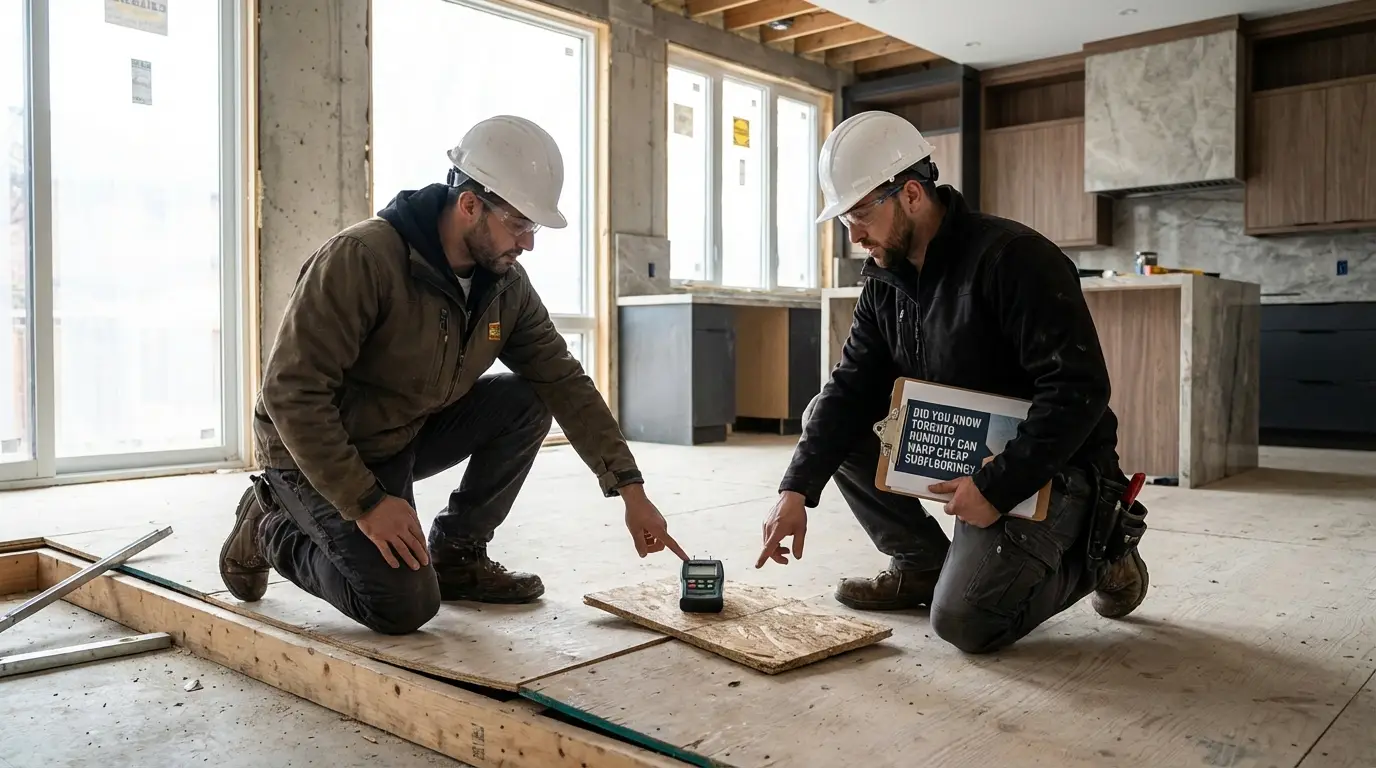
Did You Know Toronto Humidity Can Warp Cheap Subflooring?
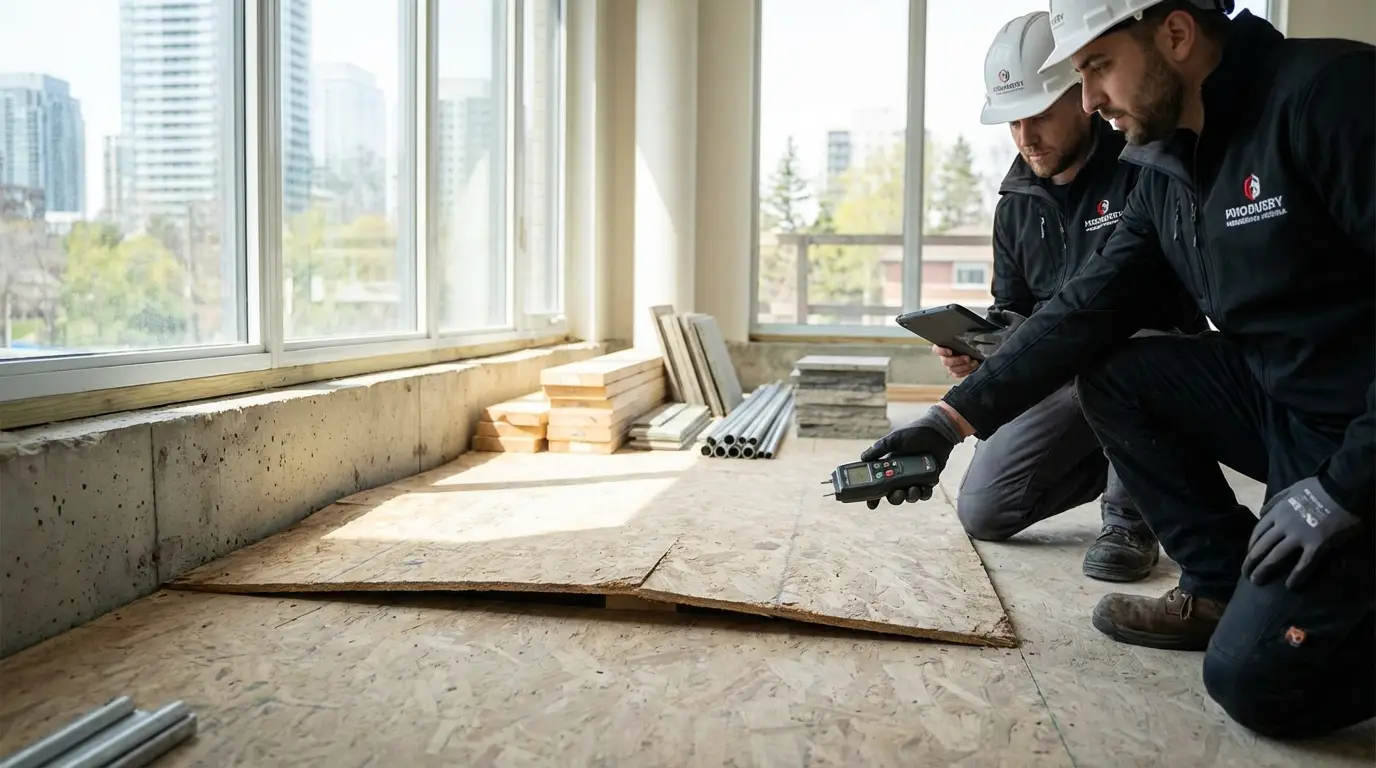
Toronto homeowners face a unique environmental challenge: seasonal humidity fluctuations that can severely affect the integrity of their flooring foundations. The Greater Toronto Area’s climate imposes dynamic moisture variations, especially from spring through autumn, that can cause significant problems for subflooring materials—especially those made from low-grade plywood or oriented strand board (OSB). These inexpensive subfloor options often deform, warp, or degrade when exposed to persistent moisture, undermining the structural stability of the entire floor system.
Ignoring how local humidity influences subsurface building materials can lead to unwelcome consequences like uneven floors, mold growth, and costly repairs in homes across Toronto, Vaughan, Mississauga, Brampton, Oakville, and Richmond Hill. Homeowners who understand these humidity effects gain an edge in ensuring their flooring installation not only looks exceptional but also remains durable over time, safeguarding the value of their property investment.
The Science Behind Humidity Effects on Subfloor Durability in Toronto Homes
Humidity is more than just a comfort issue; it plays a pivotal role in affecting building materials underneath your feet. Hardwood floors, prized for their timeless elegance, depend on a firm, stable subfloor to maintain their appearance and longevity. However, Toronto’s variable humidity levels can cause cheap subflooring to absorb moisture unevenly, leading to significant structural deformation.
At a technical level, subflooring typically comprises plywood or OSB panels—engineered wood products designed to provide stability and support. However, these wood-based materials are hygroscopic, meaning they absorb water from humid air or direct moisture exposure. When humidity rises, wood fibers swell unevenly, which can cause warping, cupping, or buckling within days or weeks.
This irregular expansion stresses the integrity of the flooring materials affixed above. For example, hardwood planks may buckle upwards, creating unsightly gaps or pronounced ridges that compromise both function and aesthetics. Moreover, persistent moisture trapped in subflooring fosters mold and rot, weakening structural integrity and inviting potential health hazards.
In Toronto’s climate—characterized by humid summers and varying rainfall—this process gets amplified. Inadequate ventilation or moisture barriers exacerbate water vapor accumulation beneath flooring, making cheap subflooring highly vulnerable to these humidity effects. Meanwhile, subfloor materials vary significantly in their resistance to moisture absorption, with premium engineered options offering better resilience due to multi-layer construction and enhanced adhesives.
Understanding the “why” behind these processes arms homeowners and contractors alike with the technical knowledge necessary to select and install subfloor materials suited for the climatic demands of the GTA, ensuring longevity and safeguarding property value.
7 Professional Contractor Recommendations to Combat Flooring Issues from Humidity
- Choose Quality Engineered Subfloor Materials: Select multi-layer plywood or engineered wood panels designed to resist moisture absorption, avoiding low-grade OSB that warps easily under Toronto humidity.
- Install Vapor Barriers Properly: Use high-grade vapor barriers between the subfloor and ground or concrete slab to block upward moisture transmission, especially in basements and crawl spaces.
- Allow Adequate Acclimation Time: Acclimate flooring materials indoors at least 72 hours before installation, enabling the wood to adjust to local humidity levels and minimizing post-installation warping.
- Maintain Home Humidity Between 30% and 50%: Use dehumidifiers, air conditioning, and proper ventilation to control indoor moisture levels throughout seasonal shifts.
- Leave Sufficient Expansion Gaps: During installation, allow strategic spacing between planks and around room perimeters to accommodate natural wood expansion resultant from humidity changes.
- Regularly Inspect Subfloor Moisture Levels: Utilize pinless moisture meters to monitor subfloor moisture content, especially in high-risk areas, addressing problems early before they escalate.
- Schedule Annual Maintenance Visits: Professional inspections and maintenance allow early detection of moisture intrusion, ensuring timely remediation and extending flooring lifespan.
- Integrate Proper Drainage Systems Around Your Foundation: Redirect surface water with gutters and grading to prevent water infiltration that undermines subfloor stability.
- Use Dehumidifiers with Auto-Drain Pumps: These reduce the burden of manual emptying and help maintain consistent moisture levels in basements or crawl spaces prone to humidity.
- Educate Contractors and Homeowners on Material Selection: Promote awareness of how cheap subflooring materials fail under Toronto humidity, and why investing in premium products is a long-term value proposition.
Pro Contractor Tip: Always check for hidden water infiltration points—such as tiny leaks in plumbing or condensation behind walls—that silently introduce moisture to the subfloor. Moisture sensors strategically placed during installation can provide early warnings before visible damage appears.
How CNG Contracting Tackles Humidity-Induced Subfloor Challenges in the GTA
CNG Contracting leverages extensive experience working in Toronto and its neighboring cities like Mississauga and Richmond Hill to address subfloor moisture problems comprehensively. We prioritize a thorough Professional Diagnostic Visit, employing advanced moisture detection tools and detailed on-site evaluations to uncover hidden or emerging moisture issues.
This diagnostic visit serves as the foundation of a custom-tailored remediation and installation plan, ensuring the home’s subfloor is fully prepared to resist Toronto’s well-known humidity effects. Importantly, the fee for this diagnostic analysis is credited towards the final project cost, emphasizing our commitment to transparent, value-driven service.
Following diagnostics, CNG Contracting customizes solutions—from moisture remediation and subfloor replacement using premium materials to implementing modern ventilation and vapor barrier systems. Our team crafts long-term strategies that safeguard the investment in your flooring.
Whether working in Vaughan or Oakville, the goal remains consistent: to mitigate moisture damage while maximizing subfloor durability. Homeowners benefit by preserving the integrity of their floors and avoiding more extensive repair costs over time.
Technical Comparison of Common Strategies to Manage Subfloor Humidity Issues in Toronto
| Situation / Strategy | Risk Level | Proactive Benefit |
|---|---|---|
| Using Cheap OSB Subflooring Without Vapor Barrier | High | Low initial cost but rapid warping and mold growth leading to flooring failure within a few years. |
| Installing Plywood Subfloor with Proper Vapor Barrier | Moderate | Improved moisture resistance and extended lifespan with controlled humidity interaction. |
| Engineered Hardwood Subfloors with Multi-Layer Construction | Low | Excellent dimensional stability and resistance to humidity effects in GTA climate. |
| Regular Moisture Monitoring and Maintenance | Low | Early detection of moisture issues, allowing immediate intervention and preventing costly repairs. |
| Ignoring Moisture Control in Humid Basements or Crawl Spaces | Very High | Leads to severe structural damage, compromised indoor air quality, and accelerated flooring failure. |
Taking Action Against Toronto Humidity-Related Subfloor Problems
For homeowners in the Greater Toronto Area experiencing flooring issues potentially caused by moisture or warped subflooring, professional expertise is invaluable. Call us at (647) 669-7346 or visit our Contact Us page to schedule a thorough subfloor assessment.
Our Professional Diagnostic Visit comprehensively evaluates moisture content and structural health throughout your home’s flooring system. Remember, the diagnostic fee is fully credited toward any subsequent repair or remediation project, ensuring no wasted upfront costs.
Don’t hesitate—early detection and targeted intervention are key to protecting your home’s structural integrity, maintaining flooring aesthetics, and preserving your investment in one of the GTA’s most dynamic property markets.
Key Technical Terms Explained for Better Homeowner Understanding
- Subfloor: The foundational layer beneath finished flooring that supports structural loads and provides a stable surface for floor installation.
- Warping: Distortion of wood or subfloor panels caused by uneven moisture absorption, resulting in bending or twisting.
- Vapor Barrier: A material layer installed to block moisture movement, preventing moisture intrusion from ground or surface.
- Acclimation: The process of allowing wood flooring and subflooring materials to adjust to local temperature and humidity prior to installation.
- Moisture Meter: A device used to measure the moisture content of wood or building materials, helping detect dampness before it causes damage.
Why is cheap subflooring more susceptible to warping in Toronto’s humidity?
Lower-grade subfloor materials, like certain OSB products, absorb moisture unevenly and lack the engineered layers or adhesive technology to resist swelling. Toronto’s humid climate exposes these materials to constant moisture changes, increasing warping risk.
How can I tell if my subfloor is damaged by humidity?
Warning signs include warped or uneven flooring surfaces, musty odors, visible mold growth, water stains on floorboards, and soft spots when pressing on floors. Professional moisture testing confirms suspicions.
Can I mitigate humidity effects by controlling indoor air quality alone?
While maintaining indoor humidity between 30-50% eases stress on flooring materials, subfloor material choice and proper installation practices are equally essential to prevent damage caused by Toronto humidity.
Is the diagnostic visit by a professional necessary before flooring installation?
Absolutely. A diagnostic visit identifies hidden moisture issues and guides the right material and installation approach. This proactive measure protects your investment and ensures long-lasting floor performance.
What steps does CNG Contracting take to ensure durable subflooring solutions?
CNG Contracting conducts detailed moisture assessments, applies premium materials tailored to local climate realities, installs effective vapor barriers, and recommends humidity control strategies customized for GTA homes.